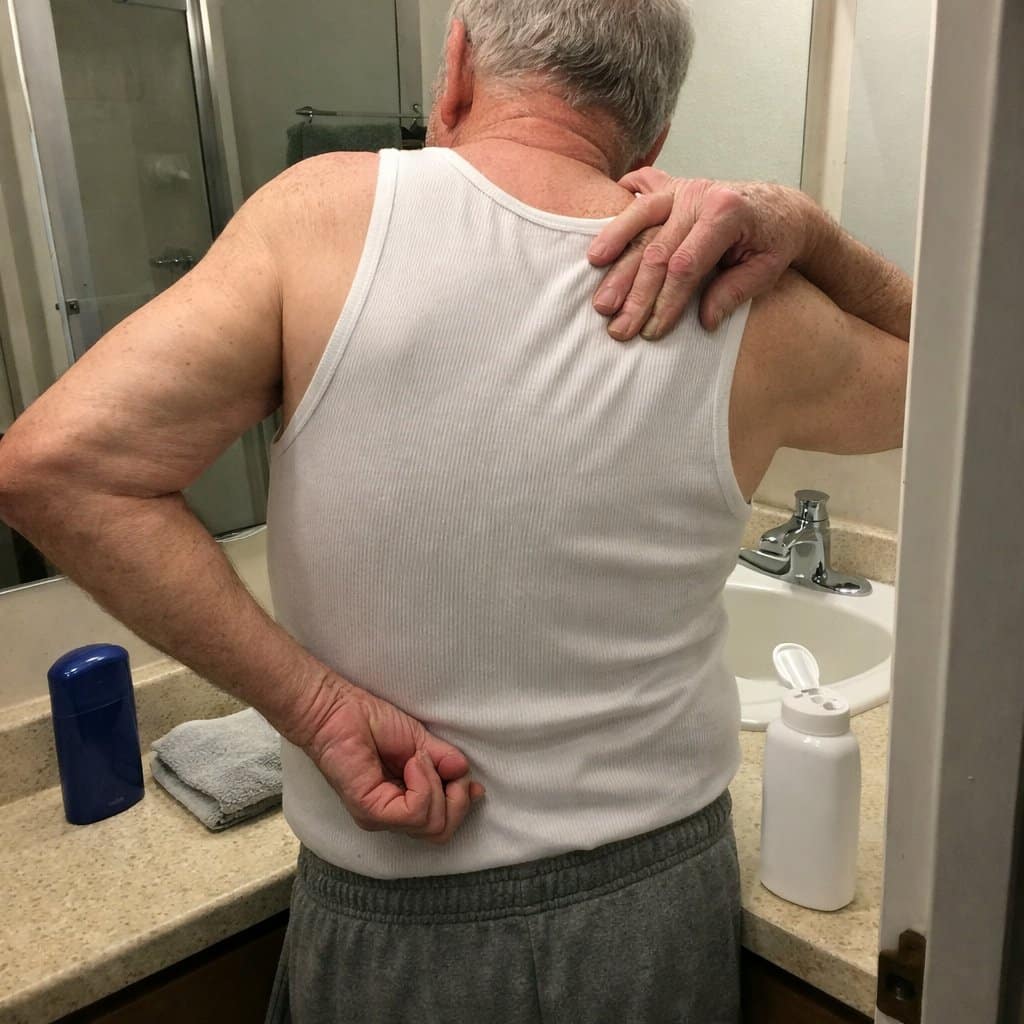
You’ve just stepped out of the shower. Lotion in hand, arm twisted behind you at an angle that used to feel effortless — and now just feels impossible. You get partway across your mid-back, give up, and move on.
Nobody talks about this.
It’s not a medical crisis. Nobody ends up in the emergency room over dry skin on their shoulder blades.
But that small, quiet frustration — the sense that a part of your own body is just out of reach — chips away at something real. It chips away at the feeling of being fully in charge of your own daily routine.
Here’s what I’ve come to understand after years of working with older adults on exactly these kinds of challenges: most people treat “I can’t reach” as one problem. It’s not. It’s five or six distinct problems — each happening in a specific zone of the body, each with its own targeted solution. Once you match the right tool to the right zone, most of these frustrations just disappear.
What follows is a zone-by-zone map. Not a product list — a practical guide to each spot, why it’s hard, and exactly what solves it.
The Hard-to-Reach Body Care Checklist: 5 Body Zones, the Right Tool for Each, and a Daily Routine That Keeps You Fully Independent
Download this practical checklist to identify exactly which body care zones challenge you most—and get the specific, affordable tool that solves each one, so you can maintain your independence and dignity without asking for help.
The Mid-Back — Your Hardest-to-Reach Real Estate


Why This Zone Is Uniquely Difficult
The mid-back sits in a kind of anatomical no-man’s land. Your left arm can only reach so far across from the left, and your right arm mirrors that limitation from the right. The zone in the middle is genuinely difficult for most people to access — and that was true even before shoulder flexibility became part of the conversation.
After 60, shoulder range of motion narrows for most people. Reaching across and upward at the same time becomes a real physical constraint, not just a minor inconvenience. The mid-back is the first zone where that change becomes obvious in daily life.
Why It Actually Matters
The stakes here go beyond comfort. The mid-back is one of the most common zones for dry, itchy winter skin. It’s where post-surgical wound care sometimes needs to happen. It’s the zone that gets skipped when applying sunscreen before outdoor activities — and the one that shows up as a sunburn the next day.
For people who live alone, “just ask someone” isn’t a real solution for a task that needs to happen every single day. Personal care is personal. Privacy matters.
The Tool That Changes Everything Here
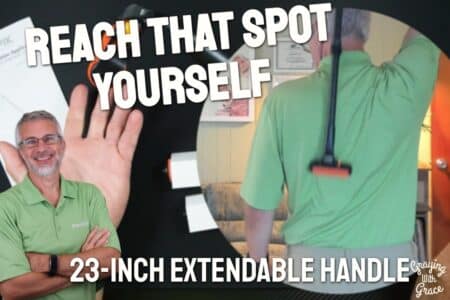
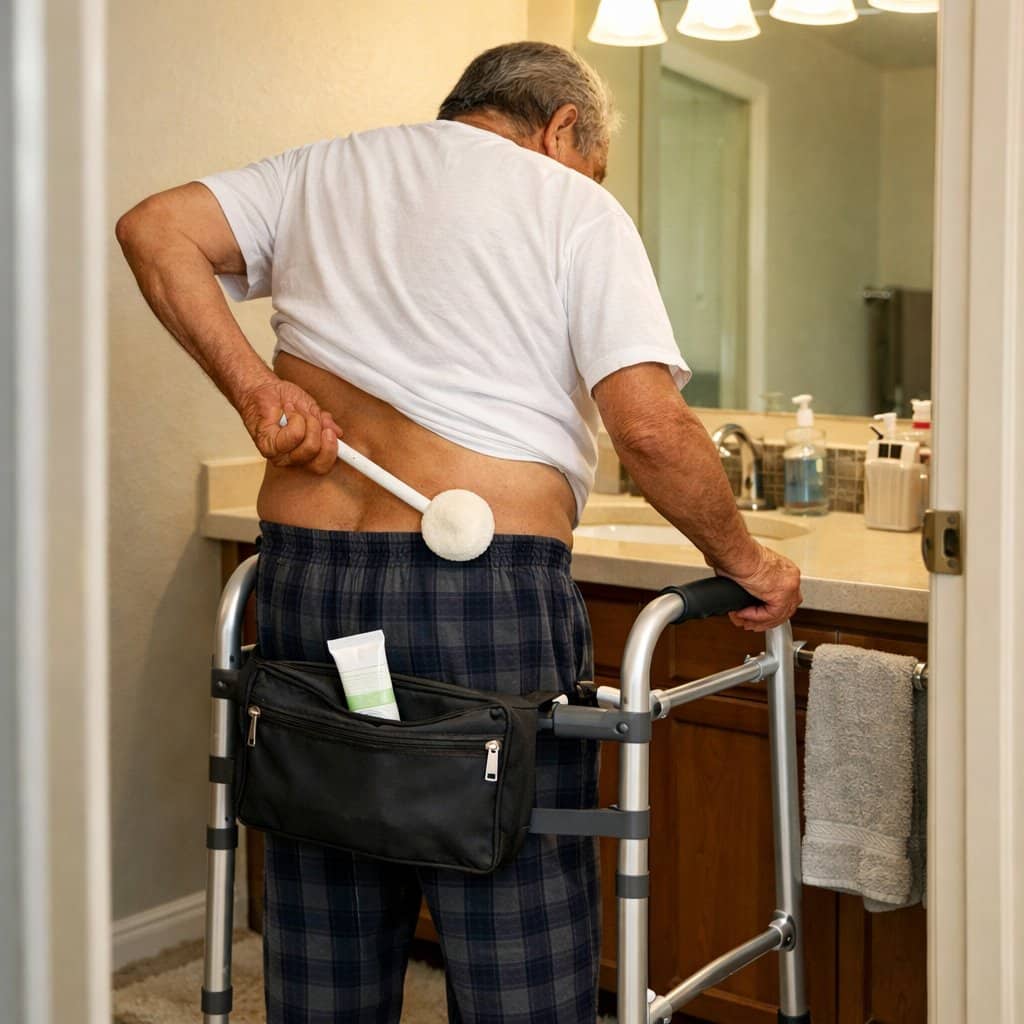
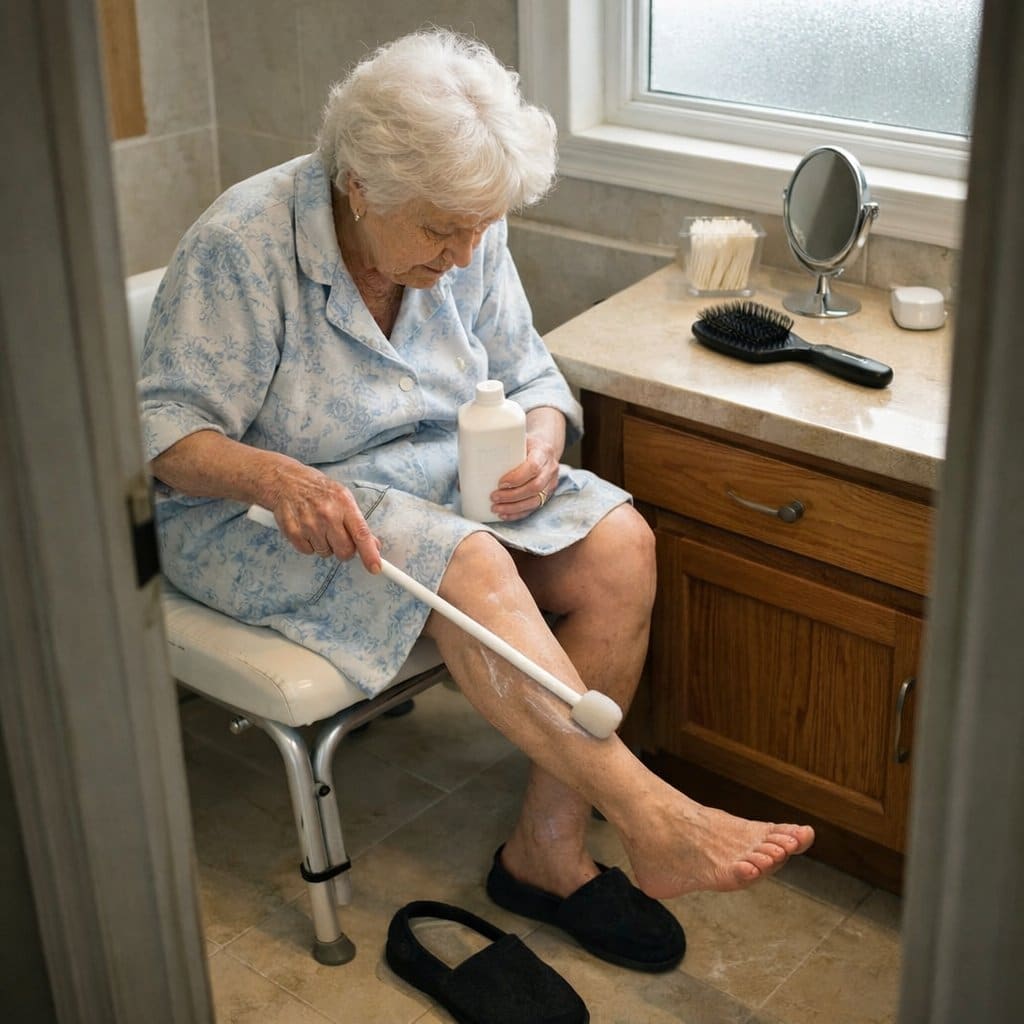
A back lotion applicator — specifically one with a long handle and a soft, conforming pad or sponge head — changes the geometry of this task entirely. You load it with lotion or cream, reach it behind you, and apply product evenly across the full mid-back without twisting or straining. The right head shape distributes product rather than just smearing it, and the handle length is designed to clear the shoulder entirely.


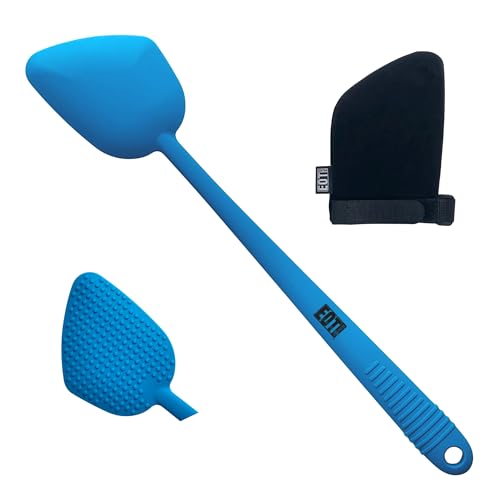
Think of it the way you’d think of a pastry brush versus using your fingers. The tool doesn’t compensate for a limitation — it makes the job cleaner, faster, and genuinely better.
What to Look For
When choosing a back lotion applicator for self-application, look for three things: a head that conforms to the curve of the back rather than lying flat, a handle long enough to clear your shoulder (typically 16–18 inches), and a material — terry cloth, foam, or microfiber — that holds enough product to cover a full section without constant reloading.
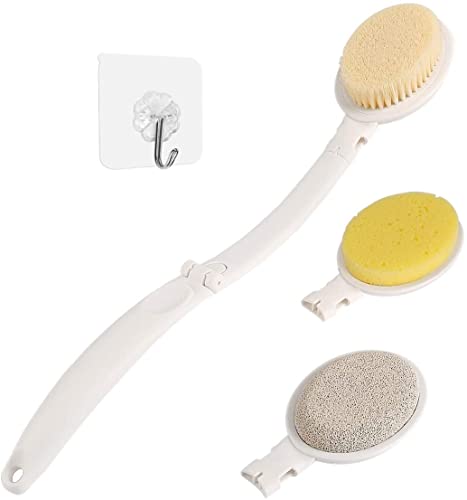
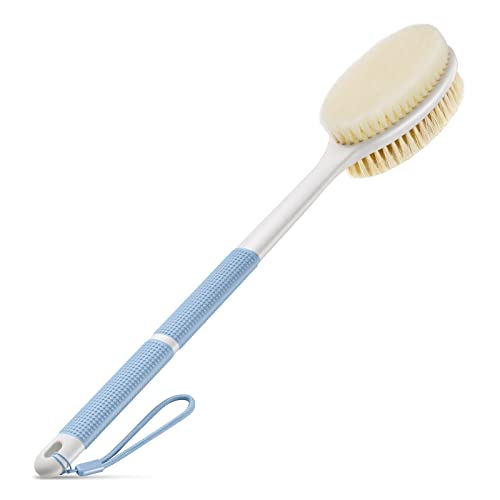
A long-handle body sponge serves a complementary role in the shower, addressing the same zone for washing. The two tools together give you complete coverage of the mid-back — dry and wet — without asking anyone for help.



The Lower Legs and Feet — Why Bending Down Shouldn’t Be Part of Your Routine

The Overlooked Importance of Lower Leg Care
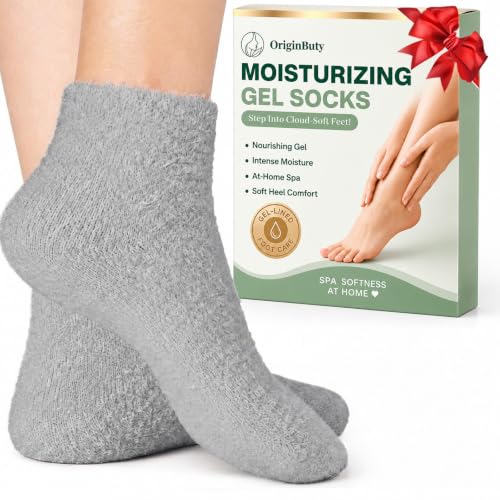
Circulation changes after 60 are real and well-documented. Skin on the lower legs becomes thinner, drier, and slower to heal. Moisturizing lower legs and feet regularly matters more as you age, not less — and yet it’s one of the first tasks people quietly scale back.
Cracked heels left untreated become sore, then painful, then a factor in how you walk. Dry shins in winter become itchy and irritated. These aren’t vanity issues. They’re comfort and mobility issues.


The Real Risk Isn’t Skipping the Lotion
The real risk is what happens when someone bends repeatedly to reach their lower legs on a damp bathroom floor, in socks, after a shower. That combination — wet floor, off-balance posture, repeated bending — is exactly the kind of scenario that fall prevention checklists flag as high-risk. The lotion itself is almost beside the point.
Eliminating unnecessary bending from your bathroom routine isn’t laziness. It’s removing one of the most common causes of bathroom falls before it ever becomes one.
How to Moisturize Lower Legs Without Bending
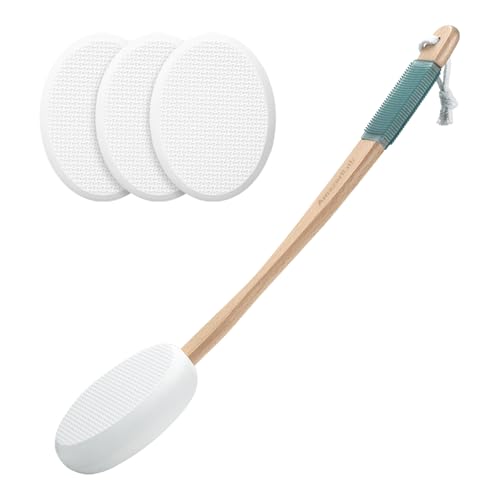
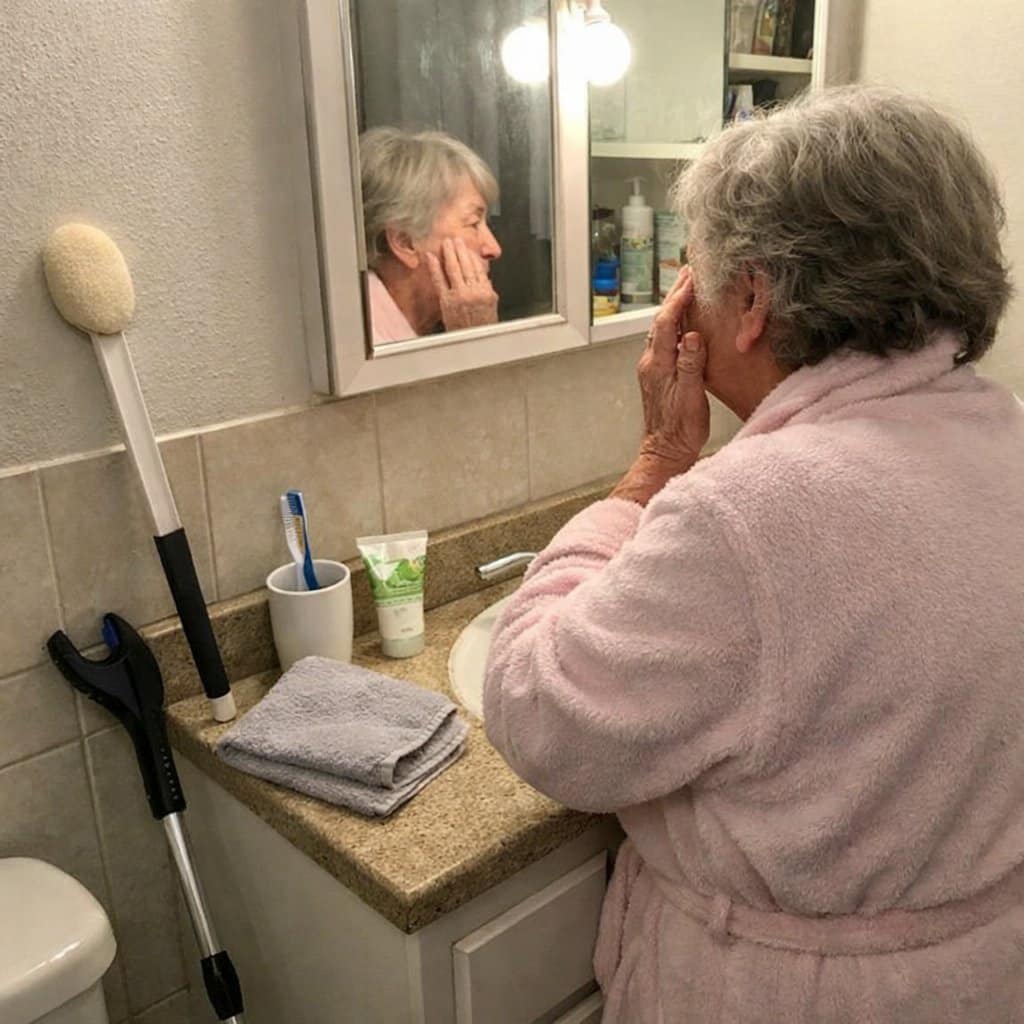
The same back lotion applicator that works for your mid-back works here too — and that’s by design. A long-handled applicator that extends 18 or more inches reaches the shins, ankles, and tops of feet while you stand or sit in a stable chair. You stay in an upright, balanced position the entire time.
The most effective approach I’ve seen: dry off fully, sit in a sturdy chair just outside the bathroom, and apply lotion to legs and feet using the long-handled applicator before putting on socks. The whole process takes under two minutes and requires zero bending.
Adjacent Tools Worth Knowing
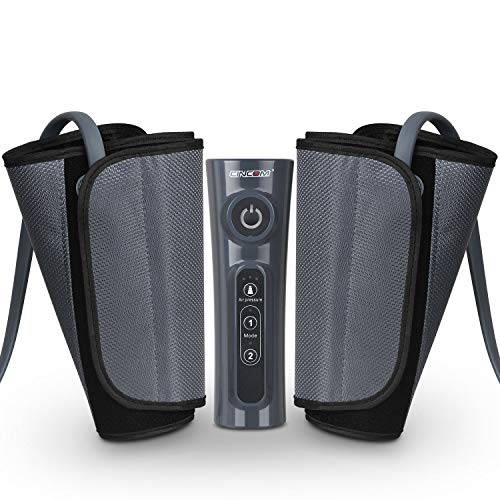
A leg circulation massager — used seated, requiring no bending whatsoever — also addresses lower leg health directly and pairs naturally with a moisturizing routine. It’s another way to care for the same zone without any compromise to stability or posture.



Ready to discover more practical tools and strategies for independent living at home? Subscribe to our newsletter for expert-tested tips and product recommendations designed specifically for older adults.
Feet and Toenails — The Zone Most People Just Give Up On
Why Foot Care Gets Quietly Abandoned
Of all the grooming tasks older adults scale back on, foot care is the one that happens most silently. It doesn’t feel like a dramatic change. Toenails grow slowly. A few missed months feel manageable — until they’re not.
Overgrown toenails affect how shoes fit. Poorly fitting shoes affect how you walk. Altered gait increases fall risk. That chain of consequences, starting with one skipped grooming task, is worth taking seriously.
The Mechanics of the Problem
Reaching your feet requires a specific combination of hip flexion, balance, and fine motor control that becomes genuinely harder with age. For anyone with knee stiffness, reduced hip flexibility, or balance concerns, sitting on the floor to reach your feet isn’t safe. And perching on the edge of a tub while holding clippers isn’t a stable position either.
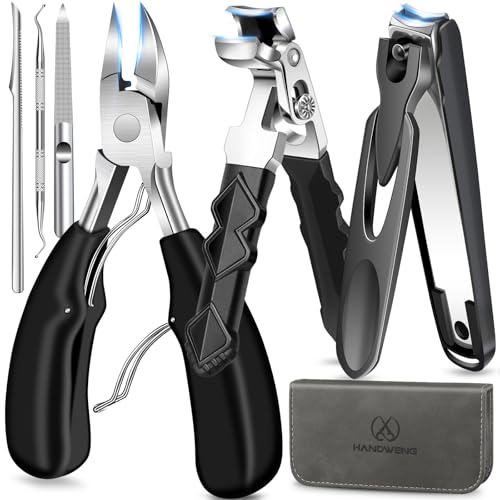
This is exactly why occupational therapists consistently recommend adaptive toenail clippers as a first-line tool for maintaining foot care at home. It’s not a niche workaround — it’s a widely used, specifically designed solution.
Long Handle Toenail Clippers Change the Geometry
Long handle toenail clippers with extended grips allow you to reach your feet without needing to fold forward. The angle of the cutting head is designed to reach toes from above rather than requiring you to hover directly over them. You sit in a chair, extend, clip — and stay stable throughout.


Turn Foot Care Into One Seated Session
The most practical approach is to pair a full foot care session — trim, moisturize, inspect — into one seated routine. Lay out your tools in advance: long-handle clippers, a long-handled applicator loaded with foot cream, a hand mirror if needed for inspection. Everything within arm’s reach, everything handled from a stable seated position.
Staying on top of foot care is directly connected to staying mobile. And with the right equipment, you can stay in charge of it far longer than most people expect.
Getting Dressed — The Hidden Reach Problem Nobody Mentions
Why Dressing Is Where Range of Motion Becomes Real
For many people, getting dressed — not grooming, not exercising — is the moment each morning when they feel most acutely that something has changed. There’s something about wrestling with socks at 7 a.m. that accumulates into quiet anxiety about independence over time.
It’s worth naming exactly why socks and shoes are hard: they require bending, balancing on one foot, and fine motor control — all at the same time, on a surface (bedroom floor) that isn’t always stable. Remove any one of those requirements and the task gets dramatically easier. Remove all three and it becomes routine again.
The Sock Aid Tool
A sock aid tool is one of the most underappreciated adaptive tools available for independent living. You load the sock onto the aid’s frame, drop it to the floor in front of you, slide your foot in, and pull the cords to draw the sock up — all without bending, all from a seated position, all without balancing on one foot.

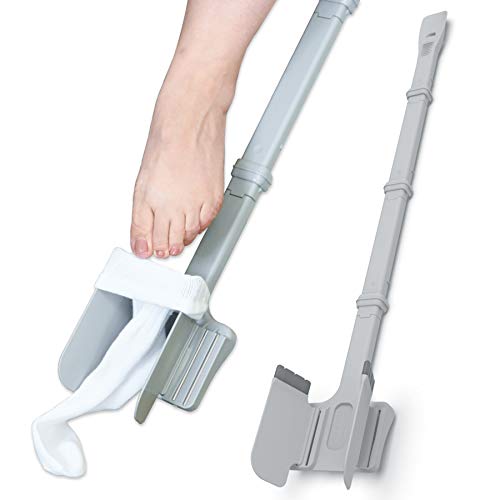
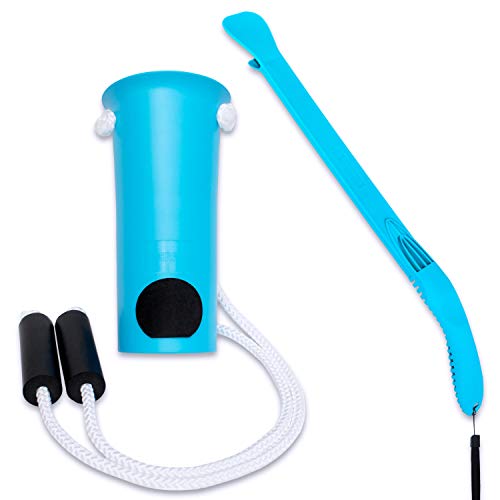


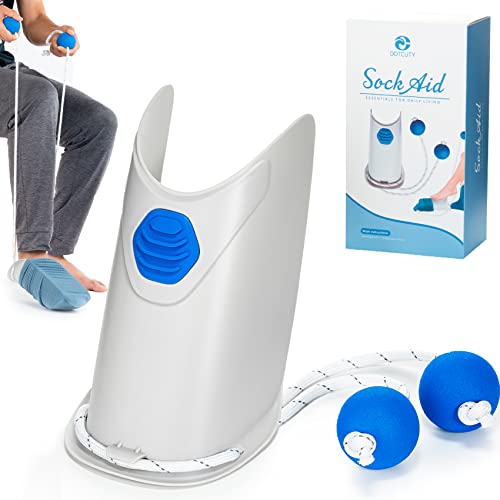
Using a sock aid isn’t admitting defeat on dressing. It’s the same logic as using a can opener instead of your hands. The goal is the outcome, not the effort required to get there.
The Long Handle Shoe Horn
A long handle shoe horn eliminates the heel-crushing habit that most people develop when shoes become hard to get on — a habit that shortens shoe lifespan and creates pressure points that affect comfort all day. A shoe horn with an 18–24 inch handle lets you guide your heel in while standing upright or seated, without bending at all.


The Reacher’s Role in Dressing
Items dropped during dressing — a sock that misses the foot, a shoe kicked out of reach, clothing retrieved from a low drawer — are exactly what a reacher grabber tool handles. It’s the versatile companion to the whole dressing kit.
Build a Bedside Dressing Kit
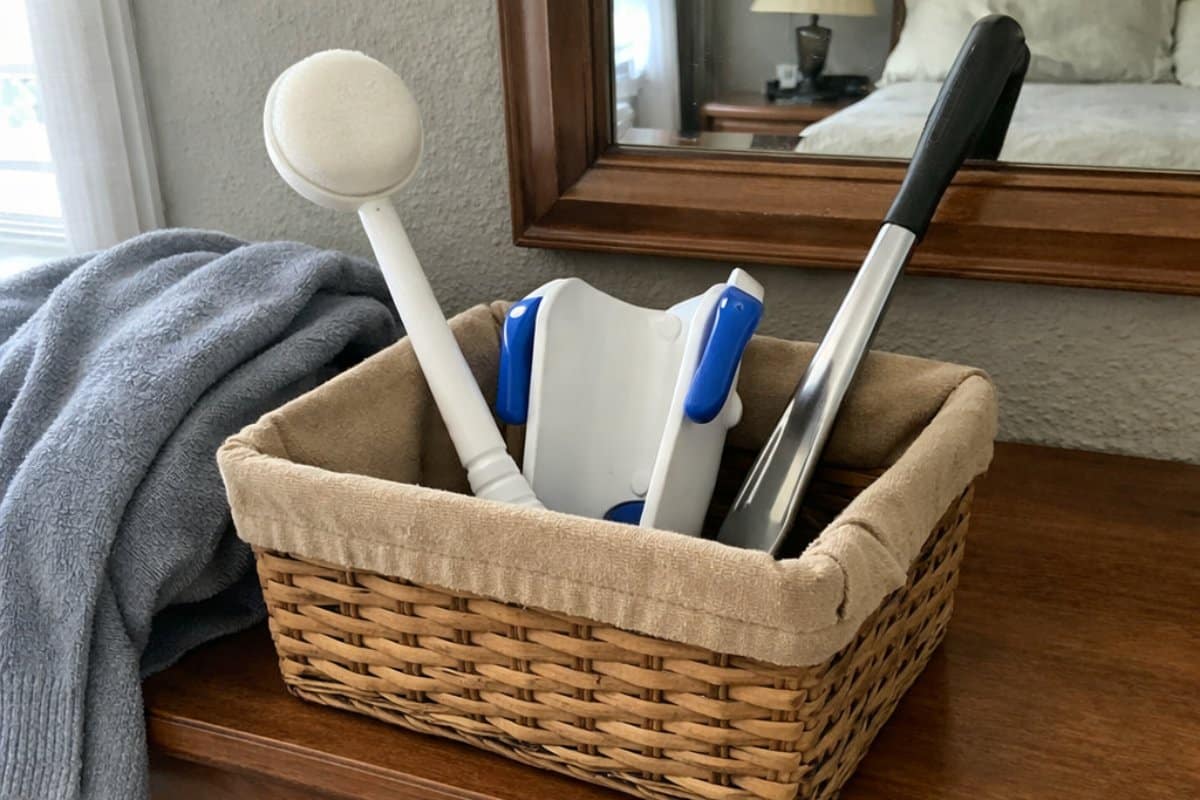
The practical move is to gather all of these tools — sock aid, shoe horn, reacher — into a single bedside basket or drawer. Morning routines go more smoothly when every tool is exactly where you expect it, ready before you need it.
You might also find it useful to look at sock helper options in more depth to find the specific style that works best for your footwear and daily habits.

Picking Things Up — The Reach Problem That Follows You All Day

It Doesn’t End in the Bathroom
Everything covered so far has focused on the bathroom and the bedroom — but the reaching challenge doesn’t stay in those rooms. It follows you into the kitchen when something rolls under the counter. It follows you to the laundry room when a sock falls behind the dryer. It follows you into the living room when the TV remote slides off the cushion onto the floor.
Most older adults do one of two things with dropped or out-of-reach items: they bend to get them (accumulating real fall risk over the course of a day) or they leave them (which creates its own hazards). Neither is a good default.
The Reacher Grabber — The One Tool Occupational Therapists Recommend First
In my experience, the reacher grabber tool is the single most consistently recommended adaptive tool for independent living — by occupational therapists, by home health professionals, and by older adults who’ve been using one for years. It handles the laundry, the kitchen, the bathroom, and the bedroom. It reaches high shelves and low floors with equal ease.


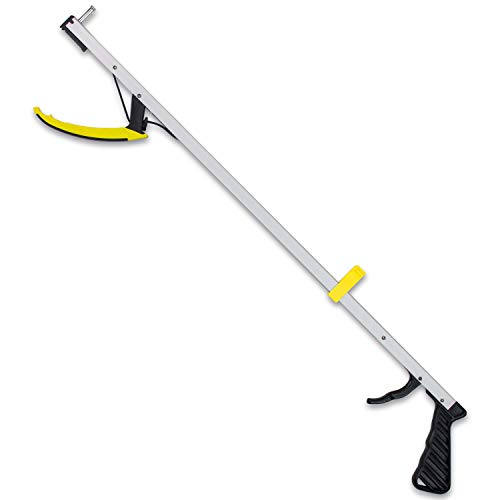
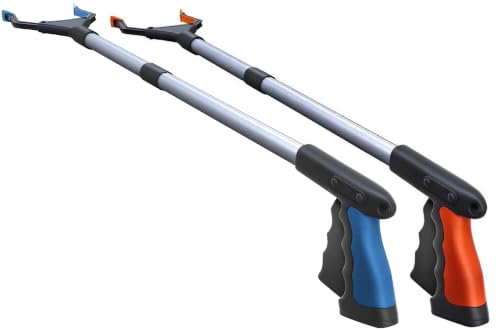
Keeping a reacher nearby isn’t about inability. It’s about eliminating unnecessary risk from tasks that genuinely don’t require bending. The same way thoughtful bathroom safety products reduce risk without changing your routine, a reacher keeps your full day safer without requiring you to think about it each time.
Start With Two
The simplest starting point: keep one reacher in the bathroom and one in the kitchen. Those are the two rooms where reaching tasks happen most often and where bending on a hard or wet floor carries the most risk. From there, you’ll discover where a third one would come in handy.
The Hard-to-Reach Body Care Checklist: 5 Body Zones, the Right Tool for Each, and a Daily Routine That Keeps You Fully Independent
Download this practical checklist to identify exactly which body care zones challenge you most—and get the specific, affordable tool that solves each one, so you can maintain your independence and dignity without asking for help.
The Right Tool for Each Zone — And You’re Back in Charge
Here’s the summary worth holding onto: limited reach isn’t one problem, and there isn’t one solution. But once you match the right tool to each specific zone, each problem largely disappears on its own terms.
- The mid-back gets moisturized — every day, independently, in under two minutes.
- The lower legs get cared for — from a stable seated position, with no bending required.
- Foot care stays consistent — from a chair, with tools designed for exactly this task.
- Getting dressed stays fully independent — with less effort and less frustration than before.
- Dropped items get retrieved safely — without a second thought, all day long.
Staying independent isn’t about pretending your body hasn’t changed. It’s about being resourceful enough to adapt your approach so the outcomes stay exactly the same. That’s not compromise. That’s smart living.
I’d start with the zone that causes you the most daily frustration — just one — and try the tool that matches it. Most people are surprised by how quickly a small, specific tool makes a chronic small frustration just disappear.
If you have a workaround that’s been working for you — something you figured out on your own or heard from a friend — share it in the comments. This is exactly the kind of practical, peer-to-peer knowledge that helps everyone. And if you’re navigating these challenges for a parent or loved one, the full roundup of independent living products is a useful next stop.