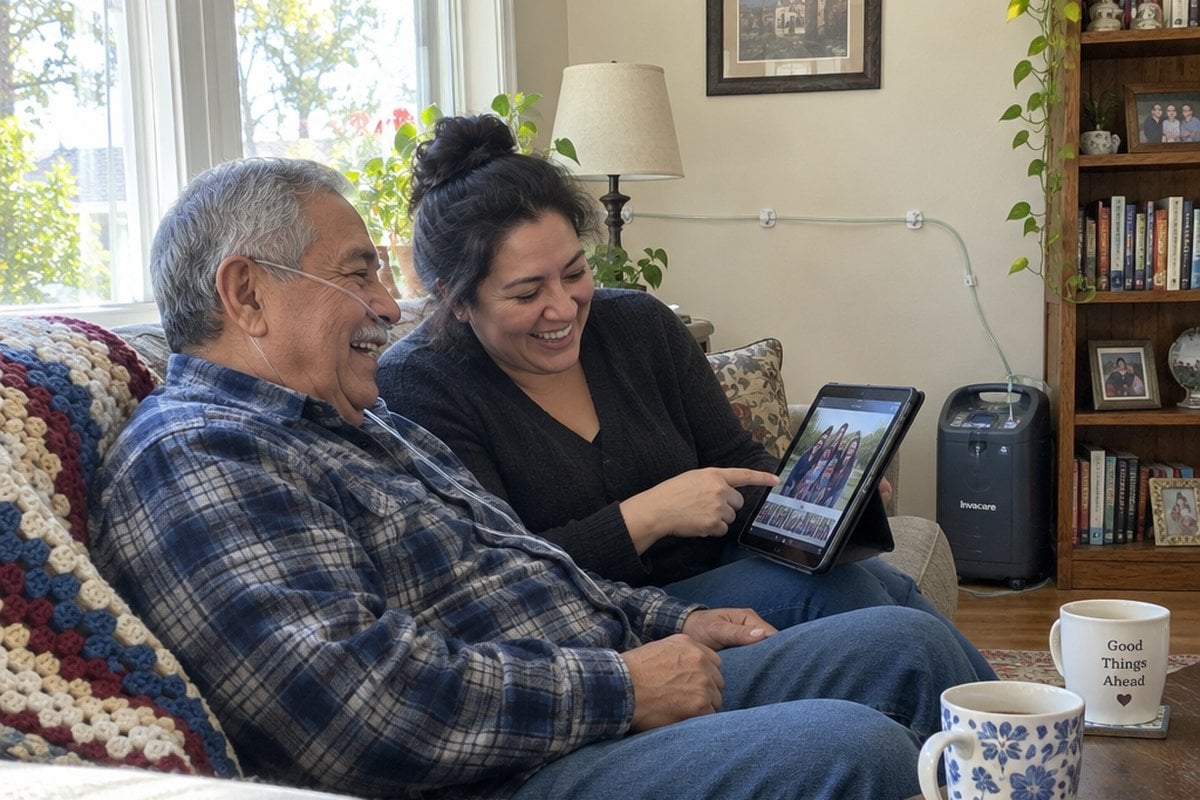
If you want the short list, these are my top oxygen tubing and cpap hose picks for home use, and you’ll find the details on each one further down.



Oxygen tubing and CPAP hoses end up on the floor, right where feet land. The usual fixes, a rug over the top or tape along the floor, tend to make things worse.
Good oxygen tubing management starts with a different idea: the tubing isn't the problem, the route is. This guide helps you choose the right fix.
One question decides almost everything. Does your tubing travel through the room with you, or does it stay beside the bed?
Oxygen Tubing and CPAP Hose Buying Checklist
Download this practical checklist and stop guessing about which oxygen tubing clips and CPAP hose holders actually work for your home—measure once, shop with confidence, and eliminate tripping hazards in under an hour.
What to Look For
Before you buy anything, run through these checks. They rule products in or out faster than any feature list.
- Know your tubing length first: Measure the tubing you actually use, from the concentrator or CPAP machine to your face. Standard oxygen tubing commonly runs up to 50 feet, and suppliers often set length based on the home layout and prescription. Don't change length or flow without your supplier's say-so.
- Check the path: Walk the route and count every spot where tubing crosses open floor, a doorway or furniture. That list tells you which product type you need.
- Measure the clip opening: Oxygen tubing is roughly 1/4 inch in outer diameter. Standard CPAP hose is commonly about 19 mm and slim hose about 15 mm, so confirm against your own hose and the packaging.
- Check the wall and the adhesive: Painted drywall, wallpaper and tile hold adhesive differently. Look at the stated weight rating, plus temperature and humidity limits, because bathroom-adjacent and cold exterior walls can loosen it. Rentals often rule out screws.
- Look for contrast: Brightly colored or reflective covers and markers stand out against your flooring. Light tubing on light flooring disappears, and a trip edge you can see is easier to step around.
- Check bedside holder fit: Note the mounting type (headboard clamp, frame clamp, nightstand clip, under-mattress base or freestanding stand) and the thickness it fits. The hose should swing freely when you turn.
- Think about oxygen safety: Keep tubing and add-ons away from open flame, heat sources and cooking areas. Nothing should crimp, pinch or kink the tubing, because that can reduce flow.
- Test it with tired hands: A clip you can open one-handed matters at 3 a.m.
Your floor matters too, since it affects both footing and what adhesive will hold. My guide to anti-slip floor treatments for tile, vinyl and wood covers that.
Oxygen tubing management
Oxygen tubing that follows you from room to room needs a predictable route and a way to be seen. These clips, holders and covers keep it off the floor without tucking or taping it down.
This type of fix is for tubing that follows you through the home. Think wall clips and guides that lead tubing along a wall or baseboard, plus covers or markers that make it stand out from the floor.
It suits homes where you move between the bedroom, kitchen and living room. Hallways, doorways and open floor are the target zones.
Here's the key point: don't tuck tubing under a rug, and don't tape it flat to the floor. Either one swaps slack for a hard edge that a shuffling foot catches. Covered tubing can also get pinched or damaged where nobody sees it. If a rug is already the problem, my rug safety fixes are a better place to start.
Tubing needs to travel with you. It just needs to travel predictably.
It's the wrong choice if you only use oxygen while seated or in bed. Wall routing is more setup than you need. It's also wrong in a rental if the only option needs screws.
Tubing that is marked or routed to be seen is safer, even if it looks more clinical than you'd like. I understand wanting a tidy home, but safety comes first.
Tubing near the bed is its own hazard. I cover that in the bedroom fall trap most people don't see.
Sexyppl 16 Pack Oxygen Tube Clips
Sixteen clips go a long way for holding tubing at the bed, the chair and bedside hooks. They’re built to keep tubing in place so it stays off the floor.
The catch is that a clip guides tubing but doesn’t make it more visible. Check the strap against your tubing diameter, and know that these clamp onto fabric and hooks, not walls.
EDWERD 5 Pack Oxygen Tubing Clips
Clips like these are made for clothing and bedding, so they suit the tubing nearest your body. That's a different job from guiding it along a wall.
With only five in the pack, it fits a bedside or chair setup better than a whole-house route. I'd also confirm the grip won't pinch the tubing.
O2 FRESH Cannula Cover and Tubing Holder
This one covers the cannula prongs so they stay clean and off the floor when you set them down. It’s the option to consider if your main worry is keeping the nose piece clean on the go, not where the tubing is routed.
The downside is fit, since a cover may not suit every tubing diameter. It also isn't a routing fix, so you'd likely still need clips for the path.
CPAP hose holders
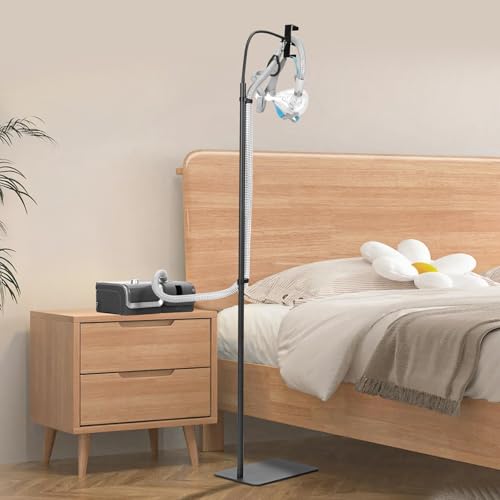
A CPAP hose that drops to the floor beside the bed is a trip hazard for the first steps you take at night. These bedside holders lift the hose up and let it move when you turn.
A CPAP hose holder lifts the hose off the floor beside the bed. Options include headboard or frame arms, nightstand clips, under-mattress bases and freestanding stands.
It suits bedside use only. It protects the one strip of floor where bare feet land first at night.
It's the wrong choice if you expect it to fix tubing elsewhere. It does nothing for the rest of the house, and it won't help oxygen tubing that travels.
If you use both CPAP and travelling oxygen, you'll probably need both fixes. A holder takes minutes to set up, while oxygen routing covers a whole path.
Which side of the bed do your feet land on? Put the holder there. For the rest of a nighttime setup, my night-light placement guide pairs well.
EonRivet All-Metal CPAP Hose Holder
It's an all-metal stand with an aluminum hook and an under-mattress base. That suits you if you have no headboard or one that's too thick to clamp.
The trade-off is that a freestanding stand is one more thing near your feet. Also check how well an under-mattress base sits with your mattress thickness or adjustable base.
GVOO CPAP Hose Holder with Wooden Tray
It adds a wooden tray plus a hanger with adjustable height and angle. That's useful if you want somewhere to set a mask or glasses while the hose stays lifted.
The tray takes up bedside space, so measure your nightstand first. Test that the hanger lets the hose move when you turn.
PurePAP Adjustable Swivel Arm Hose Holder
A swivel arm is built so the hose can follow you when you roll over. That helps if a tight hold tends to tug your mask.
Mounting fit depends on your bed, so check the thickness range in the listing. Also look at whether the arm holds a heavier hose without drooping.
Frequently Asked Questions
Is it safe to tape oxygen tubing to the floor? I wouldn't. Tape creates a raised edge to trip on and can hide damage to the tubing.
Can you put oxygen tubing under a rug? No. It makes a trip edge and the tubing can be pinched or worn where you can't see it.
Do I need a CPAP hose holder? It helps if your hose drops to the floor beside the bed at night. If it stays up already, you may not need one.
How long can oxygen tubing be? Standard tubing commonly runs up to 50 feet, but the right length is your supplier's and prescriber's call. Ask them before changing it.
Hacks and Advice
- Walk the path first: Trace the route from machine to bed to kitchen and mark every open-floor crossing.
- Pick a side: Route tubing along one wall, not across the middle of a room, and keep it out of doorways where you can.
- Fix the common mistakes first: Look for tubing under rugs, taped flat or looped around chair legs.
- Add contrast with what you have: If tubing blends into the floor, a visible marker or colored sleeve can help, where your supplier says it's fine.
- Check it often: Look over your tubing for kinks, cracks or wear on a regular basis. Re-walk the route and test adhesive hold whenever furniture moves, and ask your supplier how often to replace tubing and what to do about damage.
Keep tubing away from stoves, candles and space heaters. For a wider sweep of the house, my fall prevention checklist is a good next read.
Oxygen Tubing and CPAP Hose Buying Checklist
Download this practical checklist and stop guessing about which oxygen tubing clips and CPAP hose holders actually work for your home—measure once, shop with confidence, and eliminate tripping hazards in under an hour.
Your First Step Today
Tubing that travels needs routing and visibility. A CPAP hose only needs to be lifted off one strip of floor.
The goal is safe independence. A clinical-looking fix that prevents a fall is worth it.
Here's a free first step. Walk the path your oxygen tubing actually travels today and note every spot where it crosses open floor. That list is where I start in a Home Safety and Independent Living Assessment, and you can make it right now.
Which spot in your home gives your tubing the most trouble? Tell me in the comments.