
A delivery driver pressed the button twice and left a note. A neighbor rang twice, assumed no one was home, and walked away. A daughter stood at the front door for three full minutes before giving up and calling on her cell phone.
The doorbell worked. That’s the frustrating part. It was pressed. It chimed. Nobody heard it.
This is one of the most common — and most fixable — home problems I see in the work I do with older adults and their families.
Most doorbell problems are actually one of two separate failures: something wrong with the button or mechanism outside, or a chime inside that simply cannot be heard from wherever the resident actually is when visitors arrive. A third layer appears when hearing loss has reached the point where volume alone is no longer enough.
Before you spend anything, this article will help you identify which failure you’re dealing with. Because fixing only one problem rarely solves the other — and buying more technology than you need doesn’t make the right sound reach the right room.
Doorbell Shopping Guide: Chimes, Video & Strobe Alerts
Download this quick-reference shopping guide to find the right doorbell solution for your hearing, vision, and home layout—so you’ll never miss a visitor, delivery, or alert again.
What to Look For
The criteria below apply across all three product types. Read this section before comparing any specific products.
Hearing Range and Chime Volume
Volume is measured in decibels. A normal conversation runs around 60 dB. A doorbell chime needs to cut through ambient noise — a television, a fan, water running — and travel through walls to reach you.
For mild hearing loss in a quiet room, a chime rated at 85–90 dB is generally sufficient. For moderate hearing loss, look for units rated at 90–100 dB. For severe or profound hearing loss, no volume setting is reliably enough — that’s where a strobe or visual alert becomes the right tool.
One important rule: check the product’s listed dB rating in the specifications. Don’t trust adjectives like “extra loud” or “powerful.” Those words mean different things to different manufacturers.
Wireless Range
Wireless doorbell kits advertise range in open-air conditions — commonly 300 to 1,000 feet. Real-world range through walls, floors, and around corners is typically 50–70% of that figure.
If the room where you spend most of your time is two walls and a hallway away from the front door, look for a kit rated at 500 feet open-air minimum. Better still, look for a kit that supports multiple receiver units placed in different rooms.
Number of Receiver Units
This is the specification most buyers overlook. A single chime unit in the living room does nothing for someone working in the kitchen or resting in a back bedroom.
Look for kits that allow two, three, or four receivers — or that explicitly state additional receivers are sold separately and compatible. One receiver is rarely enough for a full-sized home.
Subscription Costs and Smartphone Dependency
Video doorbells vary significantly in what you get without a paid subscription. Live view is usually free. Recorded footage and motion history typically require a subscription, ranging from $3 to $10 per month depending on the brand.
The honest question is: will someone in this household check the app every day? If the answer is no, the subscription’s daily value is limited. A simpler chime kit may serve the household better.
Wi-Fi Requirements
Most video doorbells require 2.4 GHz Wi-Fi. Some support 5 GHz as well. The doorbell must be within reliable Wi-Fi range of the router — typically 100–150 feet through interior walls.
A weak signal causes delayed or missed alerts, which defeats the purpose entirely when timely notification is the goal.
Installation Requirements
Some video doorbells require existing doorbell wiring (typically 16–24 VAC). Others run on rechargeable batteries and need no wiring at all.
Battery-powered models need periodic recharging — anywhere from once a month to once every six months depending on usage. Wired models avoid that cycle but require existing wiring or professional installation.
Flash Rate for Strobe Units
For visual alert devices, flash rate matters if anyone in the household has photosensitivity. The Epilepsy Foundation recommends avoiding flash rates between 3 and 50 Hz.
If photosensitivity is a concern, look for a strobe unit that states its flash rate, or one that offers an adjustable or steady-on mode rather than a strobe.
Video Doorbells
Video doorbells let residents see and speak with visitors through a smartphone app without opening the door, and can record deliveries and arrivals even when no one answers. They suit households where visitor screening and package monitoring are genuine priorities and at least one person will check the app regularly.
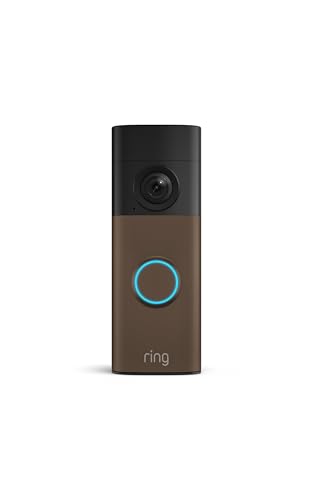


A video doorbell is a button mounted outside that captures video and connects to a smartphone app. It lets a resident see and often speak with a visitor without opening the door — and it can record footage of arrivals and deliveries even when no one is home to answer.
Video doorbells suit households where screening visitors before opening the door is a real safety concern. They work well for residents who want to see who’s at the door, communicate with delivery drivers, or have a family member check in remotely. For this to work reliably, at least one person in the household needs to check a smartphone regularly and be comfortable managing app notifications.
This is the wrong choice when the primary complaint is simply not hearing the chime. A video doorbell does not make the alert louder in a back bedroom. It doesn’t extend audibility across a large home. If “I can’t hear it from where I am” is the real problem, a wireless chime kit is cheaper, simpler, and more targeted.
Pay attention to whether the doorbell requires existing wiring or runs on battery. Battery models are easier to install but need periodic recharging. Wired models are more reliable but may require a licensed electrician if wiring is old or absent. And always ask what’s lost without the subscription — for some brands, that means losing all recorded footage; for others, live view alone is genuinely useful.
If you’re thinking about visitor screening as part of a broader home safety plan, this guide to fall prevention and home safety is worth reading alongside this one.
Ring Battery Doorbell 2K (Newest Model)
The Ring Battery Doorbell 2K is a battery-powered video doorbell that delivers 2K resolution and a wide-angle lens designed to capture visitors from head to toe. Setup is guided through the Ring app, and the button is large and clearly visible — a practical detail for visitors who may not immediately know where to look.
This model runs on a rechargeable battery, which means someone needs to recharge it periodically — Ring estimates every few months depending on traffic. That’s a manageable task for a household with a capable family member nearby, but worth planning for if the resident lives alone.
Live view is free. Motion history, recorded clips, and package alerts require a Ring Protect subscription, currently starting at $4.99/month. If no one in the household will check the app consistently, the subscription adds cost without proportional value. This model does not solve the problem of a chime that can’t be heard from the bedroom — that requires a separate chime accessory.
BOIFUN Video Doorbell Camera Wireless – No Subscription Required, 2K HD
The BOIFUN wireless video doorbell is built around a no-subscription model, which makes it worth a close look for households that want video capability without recurring monthly fees. Motion detection and recorded clips are stored locally, typically via a microSD card, so footage is accessible without a paid cloud plan.
Resolution is 2K HD, and the camera includes a motion-activated alert that sends a notification to a paired smartphone. Setup is wireless — no existing doorbell wiring required. That simplifies installation considerably for older homes that lack low-voltage wiring near the front door.
The trade-off is that local storage requires someone to manage the card and check footage on the app. If the household is comfortable with that workflow, the no-subscription model is genuinely appealing. If the app will rarely be opened, the camera’s daily value is limited. As with any video doorbell, it does not replace a louder or more widely distributed chime.
Blink Video Doorbell
The Blink Video Doorbell is a budget-friendly option from Amazon’s Blink line, marketed with a claimed two-year battery life — one of the longer estimates in this category. It captures HD video and connects to the Blink app, which is closely integrated with Amazon Alexa for households that already use Echo devices.
The setup process is designed to be walkthrough-guided, which reduces the friction that often discourages less tech-comfortable users from completing installation. The doorbell button itself is compact and clearly marked, though the physical size is smaller than some competitors.
Blink offers a subscription plan (Blink Subscription Plus, currently $3/month per device) that enables video history and extended storage. Without it, live view is available but saved clips are not. A Sync Module is required for some features — check the product listing carefully, as some bundles include it and some do not. This model does not address audibility issues in distant rooms.
TKMARS Doorbell Camera Wireless No Subscription 1080P
The TKMARS wireless doorbell camera offers 1080P video and a no-subscription design, storing motion-triggered recordings locally via microSD card. No monthly fee is required to access recorded footage, which distinguishes it from several better-known brands.
The doorbell is battery-powered and weatherproofed for outdoor use. Motion detection sensitivity is adjustable, which helps reduce false alerts from passing cars or tree movement — a practical feature for households where frequent unnecessary notifications become an annoyance.
Installation requires no existing doorbell wiring, making it accessible for a wide range of homes. The app for reviewing footage and live view is available on both iOS and Android. As with any video doorbell in this category, the daily value depends on how often the app is checked. The 1080P resolution is adequate for identifying visitors; it is not the highest resolution option in this roundup.
eufy Security Video Doorbell E340, Dual Cameras, 2K FHD
The eufy Security E340 stands out in this group for its dual-camera design — one camera captures the visitor’s face at eye level, and a second captures the full body and any packages left at the door. For households where package security is a genuine concern, that’s a meaningful distinction.
eufy operates on a no-subscription model by default, with footage stored locally through eufy’s HomeBase hub. Cloud storage subscriptions are available for an additional fee but are not required for basic functionality. That’s a genuine advantage for users who are wary of ongoing costs.
The doorbell is available in wired and battery-powered configurations. The wired version requires existing doorbell wiring and delivers continuous power. The battery version avoids wiring but needs periodic recharging. The dual-camera layout is useful, but it also means the unit is physically larger — worth checking against the available mounting space beside the door.
Arlo Video Doorbell 2K (2nd Gen) Wireless or Wired
The Arlo Video Doorbell 2K is one of the more capable options in this roundup. It offers 2K video resolution, a wide field of view, and a design that works both wired (with existing doorbell wiring) and wireless (battery-powered). That flexibility makes it adaptable across a range of home setups.
Arlo’s app is feature-rich, which is an advantage for technically comfortable users and a potential source of confusion for those who want a simple setup. The doorbell integrates with Amazon Alexa, Google Assistant, and Apple HomeKit — useful if the household already uses a smart speaker ecosystem.
Arlo offers a free tier with limited cloud storage and a paid Arlo Secure plan (pricing varies) that unlocks extended video history and additional features. Without a subscription, the doorbell still functions for live view and basic alerts. For a resident who is less comfortable managing apps or subscriptions, a simpler product type may be a better fit.
Ring Wired Doorbell 4K Pro (Newest Model)
The Ring Wired Doorbell 4K Pro is the highest-resolution option in this section and requires existing doorbell wiring. The 4K resolution with 10x Enhanced Zoom is genuinely useful for identifying faces, license plates, or package labels — detail that matters for households with security concerns.
Because it’s wired, there is no battery to recharge. Power is continuous as long as the existing wiring is functional. For older homes with outdated wiring, a licensed electrician may be needed to confirm compatibility before installation.
This model benefits most from the Ring Protect subscription ($4.99–$10/month depending on the plan tier), which enables motion history, package alerts, and extended video storage. Without it, live view is available, but many of the 4K Pro’s features are underutilized. This is the most capable video doorbell in the roundup — and the one that most requires a committed, app-comfortable user to realize its value.
Wireless Doorbell Chime Kits
Wireless doorbell chime kits add plug-in receiver units throughout the home so the doorbell alert reaches wherever the resident actually is, not just the room with the original chime. They require no wiring, no smartphone, and no subscription, making them the simplest fix for the most commonly overlooked problem: a chime that cannot be heard from the kitchen, bedroom, or back of the house.


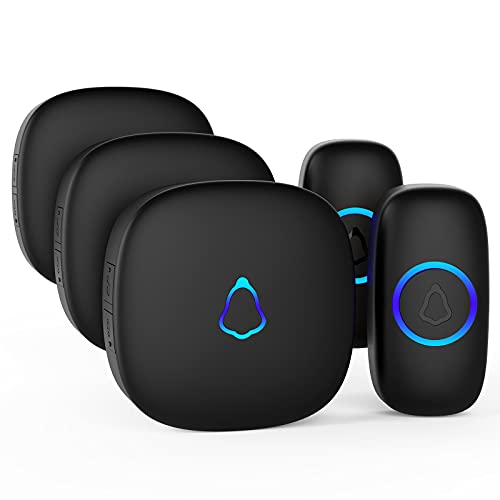


A wireless doorbell chime kit consists of a transmitter button mounted outside and one or more plug-in receiver units that chime when the button is pressed. No wiring is required. The receiver simply plugs into any standard outlet anywhere in the home.
This is the most commonly overlooked solution to the most commonly misdiagnosed problem. When a resident cannot hear the doorbell from the kitchen, bedroom, or garage — the button outside isn’t the issue. The single chime in the living room is. A wireless chime kit places a receiver wherever the resident actually is.
These kits suit households that want a straightforward fix without a smartphone, subscription, or ongoing maintenance. They work well for caregivers who want a low-maintenance solution that doesn’t depend on the resident managing an app. They’re also useful for large or multi-story homes where a single chime can’t serve the whole living space.
This is the wrong choice when hearing loss has advanced past what any chime volume can address. A louder chime still relies on the resident hearing it. And it doesn’t screen visitors or record footage — for that, a video doorbell is needed.
When thinking about the button placement outside, consider height and lighting carefully. A button that a visitor can’t easily find or reach solves nothing. The same principle applies to outdoor safety more broadly — this fall prevention checklist covers entry areas and exterior hazards worth reviewing if you’re making changes to the front of your home.
SECRUI Wireless Doorbell with 2 Receivers 2 Push Buttons
The SECRUI kit in this configuration includes two transmitter buttons and two receiver units, which addresses the most practical need in a larger home: covering two entry points (front door and side door, for example) with two chime locations. That combination costs less than buying two separate kits.
Volume is adjustable and the chime tones are selectable — a useful feature when two buttons are in use, because a different tone for each door tells the resident where the visitor is before they move. The receivers plug into standard outlets and require no pairing steps beyond what’s described in the instructions.
The open-air range specification should be checked against the real-world distance between your front door and the farthest room where a receiver will be placed. Through walls and floors, plan for roughly 50–70% of the listed figure. This kit suits households that want multi-point coverage without complexity.
PHYSEN Wireless Doorbells for Home, Waterproof Door Chime Kit
The PHYSEN chime kit is a single-button, single-receiver setup with an emphasis on waterproof outdoor rating — a practical consideration for buttons mounted in exposed entryways without a protective overhang. The transmitter button is rated for outdoor use in rain, which extends its durability in wet climates.
Volume levels are adjustable across multiple settings, and the chime tone selection gives residents some ability to customize the alert sound. The setup process is straightforward: mount the button, plug in the receiver, and pair them according to the included instructions.
For a household where one entry point and one chime location is sufficient — a smaller home or apartment where the living room is close to the front door — this kit is appropriately sized. For larger homes or residents who are frequently in back rooms, additional receiver units or a kit that supports expansion is a better starting point.
SECRUI Wireless Doorbell with 3 Receivers 2 Push Buttons
This SECRUI configuration expands coverage further: three plug-in receivers and two transmitter buttons. For a two-story home, or a single-story home with a bedroom wing set apart from the main living area, three receivers placed strategically can cover nearly any location in the house.
The ability to assign different chime tones to each button is genuinely useful here. Front door gets one melody, back door gets another. Residents learn which tone means which entry without having to look — an advantage when mobility makes moving quickly to the door a consideration.
Volume is adjustable on each receiver independently, which allows a louder setting in a noisier room (kitchen, laundry area) and a quieter setting in a bedroom. That level of per-unit control is practical in households where residents move between very different acoustic environments throughout the day.
FOVKSUC Wireless Doorbell 1000ft Range, Loud Waterproof Door Bell with 60 Melodies
The FOVKSUC kit advertises 1000-foot open-air range, which is among the higher specifications in this category. For a large home, a detached garage, or a property where the front button needs to reach a workshop or outbuilding, higher rated range provides a margin of reliability through structural obstacles.
60 selectable melodies is more variety than most households will use, but it does mean there’s always a distinct tone available for each entry point if multiple buttons are in use. Volume is adjustable across settings — check the listed dB rating in the specifications rather than relying on the product description’s language.
The waterproofing on the transmitter button extends its outdoor durability. One practical note: the actual receiver unit needs to be positioned with audibility in mind, not just convenience. A receiver plugged in near a doorframe isn’t useful if the resident is in a room three walls away.
FullHouse Wireless Doorbell Kit Waterproof, Distinguish Front and Back Door
The FullHouse kit is built specifically around the front-door/back-door distinction, with different assigned tones for each transmitter. That’s the right design choice for households with two active entry points — residents learn the difference between tones quickly, and the system requires no labels or remembering which button is which.
The waterproof rating on both transmitter buttons makes this kit suitable for exposed installations. Volume is adjustable, and the receiver pairs straightforwardly with both buttons. For households where a caregiver or delivery driver sometimes uses a side or back entrance, this kit handles the coverage without requiring two separate systems.
The limitation common to all wireless chime kits applies here: this system tells you someone pressed a button, not who pressed it. If visitor screening is a concern alongside audibility, a video doorbell paired with a separate chime receiver is the more complete solution — though also more complex.
SECRUI Doorbell, Wireless Doorbell with 2 Receivers
This SECRUI model is the most straightforward configuration in the lineup: one transmitter button and two receivers. It’s a practical starting point for a household that has one entry point but needs chime coverage in two rooms — living room and bedroom, for example, or kitchen and home office.
Volume levels are selectable, and the chime tones are adjustable. Setup follows the same plug-and-pair approach as the other SECRUI kits in this section. The transmitter button is rated for outdoor use.
For households uncertain whether one or two receivers will be sufficient, this two-receiver configuration costs modestly more than a single-receiver kit and removes the question entirely. The honest limitation: if hearing loss is moderate to significant, even a well-placed, high-volume chime may not be reliably audible without a visual component added to the setup.
Visual and Strobe Doorbell Alerts
Visual and strobe doorbell alerts notify residents with a flashing light when the doorbell button is pressed, bypassing the need to hear a chime at all. They are the most targeted solution for moderate-to-severe hearing loss, and for the hours when hearing aids are out during sleep, bathing, or relaxation.


A visual or strobe doorbell alert is a receiver unit that responds to a button press with a flashing or strobing light rather than — or in addition to — an audible chime. Most units plug into a standard outlet and pair wirelessly with a compatible transmitter button.
This is the right solution when hearing loss has advanced past what any volume setting can reliably address. It’s also the right solution for the hours when hearing aids are out — while sleeping, bathing, or relaxing at home. Many people with moderate hearing loss can hear conversation with hearing aids in but still miss a doorbell chime through walls from another room. If your parent wears hearing aids and still misses the door, a strobe alert paired with a chime often covers both situations.
This is the wrong choice for residents with photosensitivity who cannot tolerate flashing lights — though some units offer a steady-on option rather than a strobe. It’s also a more-than-necessary solution if the primary problem is simple distance rather than hearing loss. In that case, a wireless chime kit with a higher dB rating is proportionate.
One placement note applies to every unit in this section: a strobe alert requires the resident to be in a position to see the light. A unit plugged into a hallway outlet doesn’t help someone seated in a recliner facing away from the hall. Before placing any visual alert receiver, stand in the spot where you spend most of your afternoon — and confirm the flash will be visible from there.
For households where bathroom noise or water running masks chime sounds, this type of alert is especially practical. Missed doorbells during a shower are common, and bathroom safety decisions are worth reviewing alongside doorbell accessibility as part of a broader home safety assessment.
Safeguard Supply Security2020 WC180 Wireless Door Chime with Flashing Strobe Light
The Security2020 WC180 is a combination unit: it delivers both an audible chime and a flashing strobe light simultaneously when the doorbell button is pressed. That combination suits mixed households where one resident has significant hearing loss and another does not — the chime serves one person, the flash serves the other.
The strobe is visible across a room and the unit pairs wirelessly with the included transmitter button. For residents who are unsure whether a chime alone will be sufficient, a combination unit removes the need to commit fully to one approach.
The transmitter button should be checked for compatibility if the household already has a different button installed — some strobe receiver units are proprietary and pair only with their own transmitter. This unit’s flash type and rate should be confirmed in the product specifications if photosensitivity is a concern for anyone in the household.
CallToU Hearing Impaired Doorbell 1000FT Wireless Battery Operated Door Bell With Vibrating
The CallToU model in this configuration adds a vibrating component alongside the flash — a meaningful distinction for residents who might be in bed, on a couch, or in close contact with the receiver when the doorbell rings. Vibration transmits the alert physically, which bypasses the auditory pathway entirely.
The 1000-foot open-air range rating provides margin for larger homes and properties. The battery-operated transmitter eliminates the need for existing wiring. The receiver unit produces both a flash and a vibration alert, giving the resident multiple simultaneous notification channels.
For residents with severe or profound hearing loss, a combined vibration-and-flash unit covers more situations than a flash-only unit. The practical question is placement: a vibrating receiver on a nightstand works during sleep, but that same unit across the room during the day may not be noticed. Some households use two receivers — one stationary, one portable — to maintain coverage throughout the day.
CallToU Wireless Hearing Impaired Doorbell with Light, 1 Button 2 Receivers
This CallToU configuration includes one transmitter button and two receivers, which allows visual alert coverage in two separate rooms simultaneously. For a resident who moves between a bedroom and a living area throughout the day, two receivers placed in both locations means the alert follows them rather than requiring them to stay near one unit.
Both receivers produce a flashing light alert when the button is pressed. The 1000-foot open-air range rating provides margin for signal reliability through walls and floors. Setup is wireless — the receivers pair with the transmitter button without requiring professional installation.
As with all visual alert systems, receiver placement is the most important installation decision. A receiver positioned behind a television, behind a door, or in a corner with limited sightlines reduces its effectiveness significantly. Place each receiver so the flash is visible from the seat or position the resident occupies most often.
Silent Call Signature Series Wireless Flashing + Vibrating Doorbell & Alarm Clock Kit
The Silent Call Signature Series is a dedicated hearing-impaired alert system that combines a doorbell receiver with an alarm clock function — a practical combination for residents who want multiple accessibility accommodations in one system. The unit produces both a visible flash and a vibration alert, and the alarm clock component allows for similarly accessible wake-up alerts.
Silent Call is a brand with a long history in hearing-impaired assistive technology, and the Signature Series reflects that focus. The system is designed to be reliable and straightforward rather than feature-packed, which suits residents and caregivers who want a tool that works without configuration complexity.
Compatibility with the included transmitter button is established. If the household already uses a different doorbell button, confirm compatibility before purchasing — Silent Call products typically pair within their own ecosystem. The combined doorbell-and-alarm-clock design makes this a reasonable investment for a resident who needs hearing-impaired accessibility across multiple daily situations, not just visitor notification.
Pongnas Doorbell for Hearing Impaired with 7 Color LED Flashing Light 32 Melodies 5 Volume Levels
The Pongnas unit offers 7 selectable LED flash colors, 32 chime melodies, and 5 volume levels — a degree of customization that is more than most households will use, but that makes it adaptable to a wider range of preferences and living situations.
The multiple flash color options have a practical application: in a household with more than one alert device, different colors can distinguish different alert types — doorbell versus a separate sensor, for example. For a single-purpose doorbell alert, the color selection is a preference choice rather than a functional requirement.
Volume levels up to the unit’s maximum are useful for households where a chime supplement to the flash is helpful. The combination of adjustable flash and adjustable chime in a single unit gives this receiver flexibility across different rooms and hearing situations. Check the listed dB rating for the maximum volume level before purchasing if audibility is the primary criterion.
QDVOPHZA 7 Colors Light Flash Music Doorbell Wireless Door Bell Suitable for The Deaf/Hard of Hearing
The QDVOPHZA doorbell alert is marketed specifically for deaf and hard-of-hearing users and combines a 7-color LED flash with musical chime tones. The visual and auditory alerts operate simultaneously, which suits mixed households and situations where the resident’s hearing ability varies depending on what they’re wearing or doing.
The wireless transmitter button pairs with the receiver without requiring existing doorbell wiring. The flash is bright enough to be visible in a normally lit room, though placement in a sunlit room near a window should be tested to confirm adequate visibility.
For residents who are transitioning from a standard chime setup and are uncertain how much visual alert capability they need, a combined flash-and-chime unit like this one allows a gradual shift — starting with the familiar chime and adding the flash as a supplement. The honest limitation for all visual alert systems applies here: the unit must be placed where its flash can actually be seen from the resident’s typical location.
Frequently Asked Questions
My doorbell works fine — I just can’t hear it from my bedroom. Do I need to replace everything?
No. The button outside is functioning. The only thing to address is chime coverage inside the home. A wireless plug-in receiver placed in the bedroom — available as part of a wireless chime kit — solves this without replacing or modifying the existing doorbell system. Start with the wireless chime kit section above.
Is a video doorbell worth the monthly subscription for someone living alone?
That depends entirely on whether someone will check the app regularly. Live view is usually free. The subscription adds motion history, saved clips, and package alerts. If no one in the household will consistently open the app to review footage, the subscription provides less value than its cost suggests. A simpler wireless chime kit may serve the household better and at no ongoing cost.
Can a wireless chime kit or strobe alert work with the video doorbell button I already have?
Sometimes, but not reliably. Compatibility depends on the brand. Many video doorbell systems use proprietary wireless signals that don’t communicate with third-party chime receivers or strobe units. Standalone chime kits and strobe alerts typically pair only with their own transmitter buttons. Confirm compatibility before purchasing — and if compatibility isn’t confirmed by the manufacturer, plan to use the kit’s included button rather than an existing one.
What volume level is actually loud enough for someone with hearing loss?
A chime at 85–90 dB is audible for mild hearing loss in a quiet room. For moderate hearing loss, look for units rated at 90–100 dB. For severe or profound hearing loss, a strobe or visual alert is more reliable than any volume level. The specific dB rating should appear in the product specifications — not only in the marketing description, where words like “powerful” or “extra loud” don’t carry standard meaning.
What if the person pressing my doorbell button can’t reach it or find it easily?
Button height and visibility matter as much for visitors as for residents. Standard mounting height is 48 inches from the ground, which is accessible for wheelchair users and most visitors. In low-light conditions, a lighted button or an adjacent porch light improves visibility significantly. If visitors frequently miss or overlook the button, a larger button face or a clearly labeled sign beside it can help. This is especially worth considering when installing a new transmitter button as part of a chime kit upgrade.
My parent has hearing aids. Do they still need a louder chime or a strobe alert?
Hearing aids improve conversation clarity but often don’t fully compensate for a doorbell chime heard through walls from another room. Many people also remove hearing aids while sleeping, bathing, or relaxing at home — the exact moments when visitors most often go unheard. A strobe alert paired with a wireless chime provides coverage across both situations: the chime for moments when hearing aids are in, the flash for moments when they’re not.
Hacks and Practical Advice
Do this first, spend nothing: Walk to the room you’re most often in during the afternoon — back bedroom, kitchen, or wherever you typically are when a delivery arrives. Have someone press your doorbell button. If you can’t hear it clearly, you’ve already diagnosed the problem. That single test tells you more than any product comparison. It also tells you which section of this article applies to you.
The hearing aid timing problem: Most people remove hearing aids while sleeping, bathing, or relaxing at home. Plan your doorbell solution around what you’re actually wearing when visitors most often arrive — not around your clearest hearing moment of the day. If morning deliveries arrive while you’re still getting ready, that’s when coverage matters most.
Buy the second receiver when you buy the kit: An extra plug-in chime receiver for the bedroom or kitchen typically costs $15–$30 added to the kit price. That is less than the cost of a missed medication delivery, a redelivery fee, or the frustration of a family member who drove over and stood at the door. Most kits that support multiple receivers make it easy to add one — and easier to add it now than to troubleshoot coverage gaps later.
Volume is not infinite: Every chime has a maximum output. Turning a 75 dB unit to its highest setting does not make it a 95 dB unit. If the loudest setting still isn’t reaching you, the right answer is a different product type — specifically, a higher-rated unit or a visual alert — not a louder setting on the same device.
Test the button height from a seated position: If you or a frequent visitor uses a wheelchair or rollator, press your own doorbell button from a seated position before finalizing any installation. Standard mounting is 48 inches from the ground; comfortable reach for someone seated is closer to 44 inches. If the existing or new button will be out of comfortable reach, note the height before mounting and adjust accordingly. Choosing the right mobility aid also covers how reach and clearance affect independence in daily tasks — the same principle applies here.
Annual battery check: Once a year, replace the transmitter button’s battery even if it appears to be working. A weakening battery causes intermittent failures — a button that takes three presses before the chime responds, or a chime that sometimes sounds and sometimes doesn’t. These symptoms are easy to mistake for a broken system. A fresh battery often resolves them entirely.
Receiver placement is the most important decision you’ll make: For both chime receivers and strobe units, the question isn’t where the outlet is — it’s whether the alert will reach you from where you actually sit. Stand in your usual chair, recliner, or spot at the kitchen table. Look toward where the receiver would be placed. For a chime, ask: will sound carry from there to here through the ambient noise in this room? For a strobe, ask: is the flash visible from this position, or is it behind a piece of furniture or around a corner? Move the receiver before accepting that a product “doesn’t work.”
Doorbell Shopping Guide: Chimes, Video & Strobe Alerts
Download this quick-reference shopping guide to find the right doorbell solution for your hearing, vision, and home layout—so you’ll never miss a visitor, delivery, or alert again.
Conclusion
The right doorbell solution is the one that matches the actual failure in your home — not the one with the most features, the highest price, or the most visibility in a store display.
A household that simply needs a chime audible from the back bedroom doesn’t need a subscription camera system. A household where hearing loss has advanced past what any volume can reliably address doesn’t need a louder chime — it needs a flash. Getting that match right is what keeps the solution simple, affordable, and actually used.
Knowing which product type fits your situation isn’t settling for less. It’s the kind of clear-eyed, practical decision that keeps a home working without adding technology you don’t need or monthly costs that don’t serve you.
Before you click elsewhere: Walk to your farthest room right now and have someone press your doorbell. If you can’t hear it clearly from there, you already know which section of this article to return to first.
If you’d like a fuller picture of how your home’s layout and current setup support independent living, I offer a Home Safety and Independent Living Assessment designed specifically for older adults and the families supporting them. It’s a practical, honest look at what’s working — and what deserves attention before it becomes a problem.
Have you dealt with a missed doorbell situation in your home or a parent’s home? Share what you tried in the comments — your experience may point someone else toward the right solution faster than any product comparison.



![Older woman cane glasses chain kitchen safety[1]](https://www.grayingwithgrace.com/wp-content/uploads/2026/05/older_woman_cane_glasses_chain_kitchen_safety1-e1778601056307-450x300.jpg)