
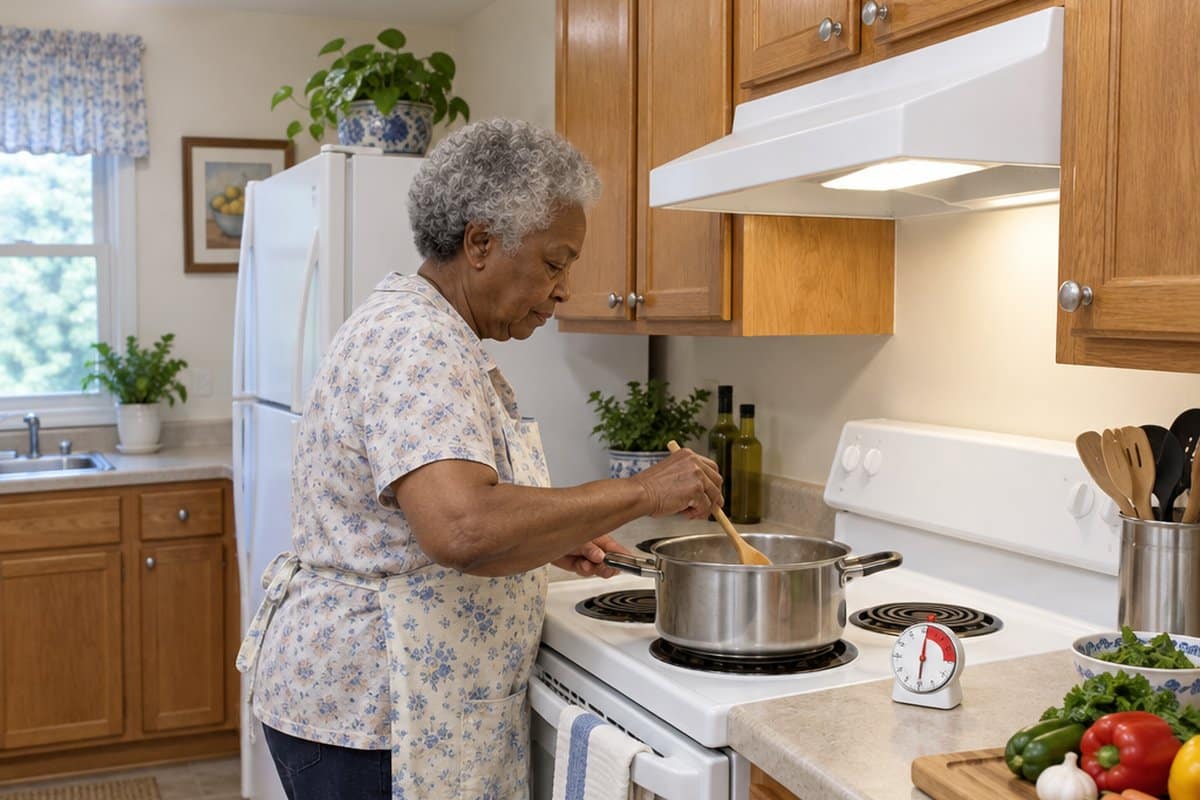
Cooking causes 172,900 household fires per year in the United States alone. Older adults are at greater risk of dying in house fires. Indeed, fires are the sixth most common cause of death for seniors in the U.S.
If you care for a senior citizen and are worried about their safety in the kitchen, you’ll be glad to hear that there are several simple things you can do to make cooking a safer activity for those with dementia.
These stove locks help reduce the risk of a kitchen fire for seniors. Some are ‘smart’ locks that will shut off the stove if a fire is detected, while others prevent seniors from accidentally activating the stove while leaning against the front of the stove or reaching for items at the rear of the stove.
If your loved one has a gas stove, I cover extra steps for gas stoves, including alarms. And if you want to check the rest of the kitchen, there is a section on the electrical side, so you can look beyond the stove itself for dementia kitchen safety.
If you’re in a hurry, my top picks are right here, and further down I go through each one, including where it falls short.


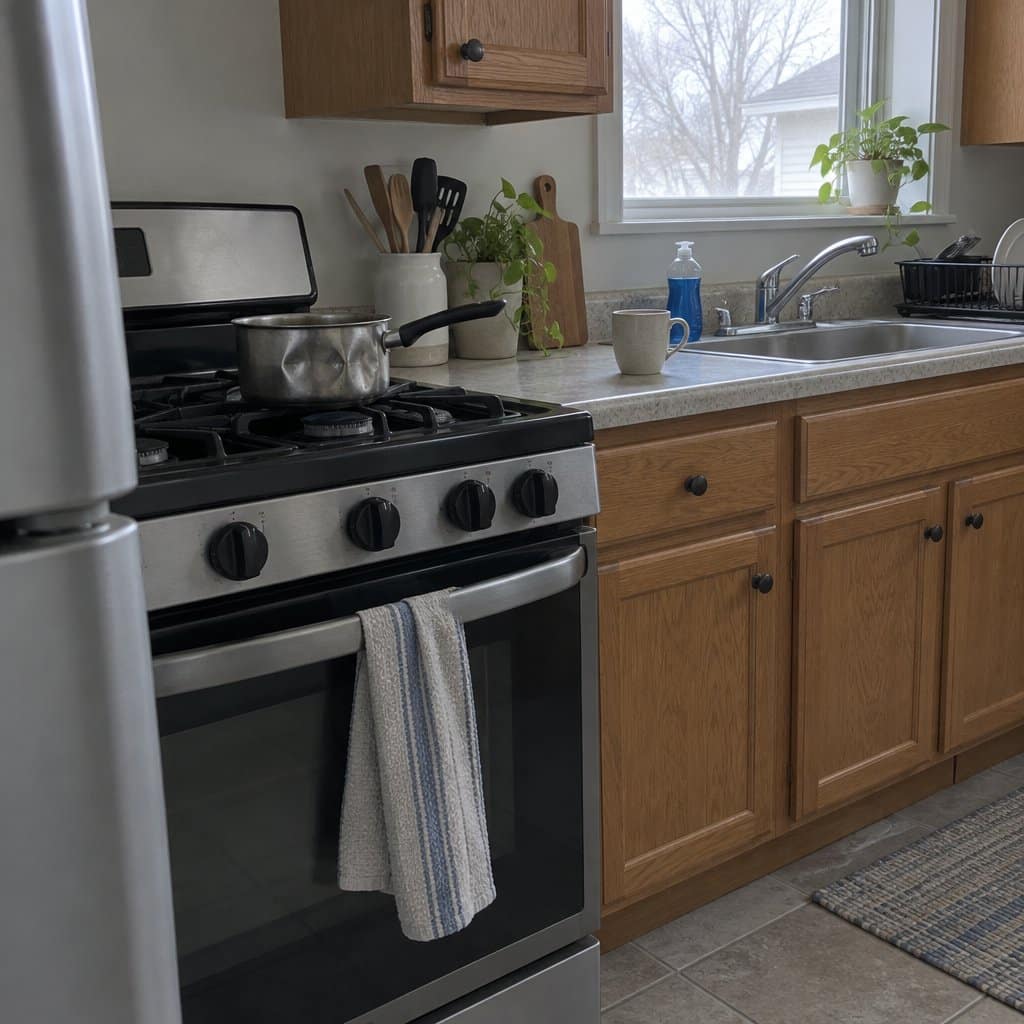
The Best Stove Locks and Stove Shut-Off Devices
Consider installing a set of stove locks for seniors with dementia to give yourself peace of mind that your older loved ones are safe in their kitchens.
FireAvert Electric Auto Stove Shut-Off
This is my top pick for stove safety. It isn’t a lock on the knobs. It’s a device that cuts power to an electric stove when a smoke alarm goes off.
It works by listening. The FireAvert syncs to the smoke detector you already have and responds to the sound of its alarm. When the alarm sounds, the stove loses power.
That matters because unattended cooking is the #1 cause of home fires in the U.S. If your loved one starts something cooking and wanders off, the stove can shut down without them having to do anything.
Setup is simple. You plug the FireAvert into the 220 outlet, then plug the stove into it. No tools are needed, and it takes less than 10 minutes. This one is the 4-prong version. It measures 7½ inches tall, 3½ wide and 2¼ deep, so it fits behind the stove. A pig tail extension cord is also available if you want the stove to sit flush against the wall.
Know what it won’t do. It’s made for electric stoves, so it won’t help with a gas range. It also waits for the smoke alarm, so a burner can stay on all afternoon without smoke and nothing will happen. If your loved one still turns the stove on and forgets about it, you’ll want a knob cover or another lock as well.
Lwuzkdo Gas Stove Knob Locks

The Lwuzkdo 5-Pack Gas Stove Knob Locks are a simple, mechanical answer to a common worry: someone turning on a burner without meaning to, or without remembering why.
Each one is a cover that fits over a gas stove knob. It’s made to fit into the gap of the knob and grip it firmly, so it stays put and doesn’t fall off easily. It also leaves small gaps in the inner corners, which keeps the knobs from getting damaged after repeated use.
Putting them on takes one step. You don’t need any tools and there’s no adhesive. That matters if you’re the one setting it up and don’t want to fuss with a screwdriver or sticky tape.
The covers are made from a high-temperature-resistant composite material that holds up to heat and cleaning chemicals. The maker also says the materials are food-grade, so no toxic gas is released.
The pack comes with five, which covers a standard stove with a few left over for a second stove or a spare.
Now the downside. These are made for gas stove knobs, so if your loved one has an electric stove with different controls, check that they fit before you count on them. They are also sold as toddler-proofing. A cover that blocks a small child can sometimes be worked out by an adult, and a person in the early stages of dementia may figure it out.
The other thing to know is that a knob cover only prevents the stove from being turned on. It does nothing if the stove is already running, so it won’t shut off a burner someone left on. It suits a person who tends to turn on the stove and wander off, and it works best when the cover stays on and only the caregiver takes it off.
Safety 1st Child Proof Stove Knob Covers
These are clear plastic covers that fit over your stove knobs. Each one has a hinged lid, so the knob can’t be turned until the lid is lifted.
They’re made for parents who want to keep children from turning on a burner. They can also help when someone with dementia leans on the stove or fiddles with the knobs while moving around the kitchen.
The covers are transparent, so you can see at a glance whether a knob is set to on or off. That’s handy for a family member checking in. They fit gas or electric stoves, the set comes with 5, and the material is heat-resistant plastic.
The downside is that the lid is easy for an adult to lift, which is the whole idea. Someone in the earlier stages of dementia may figure it out just as easily. It also takes some hand strength and dexterity to open, so it may be hard for a person with arthritis who is still cooking.
These only guard against the knobs being turned by accident. They won’t shut off a burner that’s already on, so they don’t help in the event of a fire.
Universal Gas Stove Knob Covers
These Stove Knob Safety Covers come in a pack of six and are made for gas stoves. Each one snaps over a knob you already have, with no tools and no taking the knob off.
To use the stove, you lift the cover to turn the knob, then let go and it locks back in place. It works with one hand, so it asks less of your fingers than a lock you have to squeeze, twist or pry open. Someone with dementia who wanders in and turns a knob out of habit will find it blocked.
Size matters here. They fit most gas stove knobs under 2.6 inches across and under 1.8 inches tall, and the knobs need to be more than 2.5 inches apart. Measure yours before you order.
They are also sold as child-proofing, so the lift-to-turn step is meant to stop a small child. A person with dementia may work it out, especially in the early stages. It suits someone who is more likely to turn a knob by accident than to work out a latch.
This only guards against accidental turning. It does nothing about someone falling asleep while cooking or forgetting to turn the stove off. If that is the worry, you will need something that shuts the stove off on its own. And these are for gas stoves, so they are no help with electric ranges.
FireAvert Gas Stove Auto Shut-Off
The FireAvert-Gas Stove is an automatic shut-off for a gas stove. It listens for the sound of your smoke detector, and when the alarm goes off, it stops the flow of gas to the stove.
It suits someone who still cooks but might walk away from a burner or forget it’s on. Nobody has to remember to do anything. The device uses the smoke detector already in the house, so the shut-off happens even if the person doesn’t react to the alarm.
Installation is fairly simple. You plug the unit into the 110v outlet behind the stove, put the solenoid (the part that opens and closes the gas) in the gas line, and then plug the stove into the FireAvert. It’s listed at under 20 minutes. It measures 3 3/4 inches tall, 2 inches wide and 3 3/4 inches deep, so it fits behind the stove.
The trade-off is that it only works for a 1/2″ gas pipe line, so it won’t fit every kitchen. It also only reacts once smoke is already in the air, so it limits a fire rather than preventing one. If the person is likely to turn burners on and forget about them, a lock on the knobs stops the problem earlier. You may want someone comfortable working on a gas line to do the install.
Stove Safety Device Shopping Guide
Not sure which type fits? This free shopping guide helps you match the device to your stove and your situation before you buy.
Whole-Kitchen Safety Checklist for Dementia
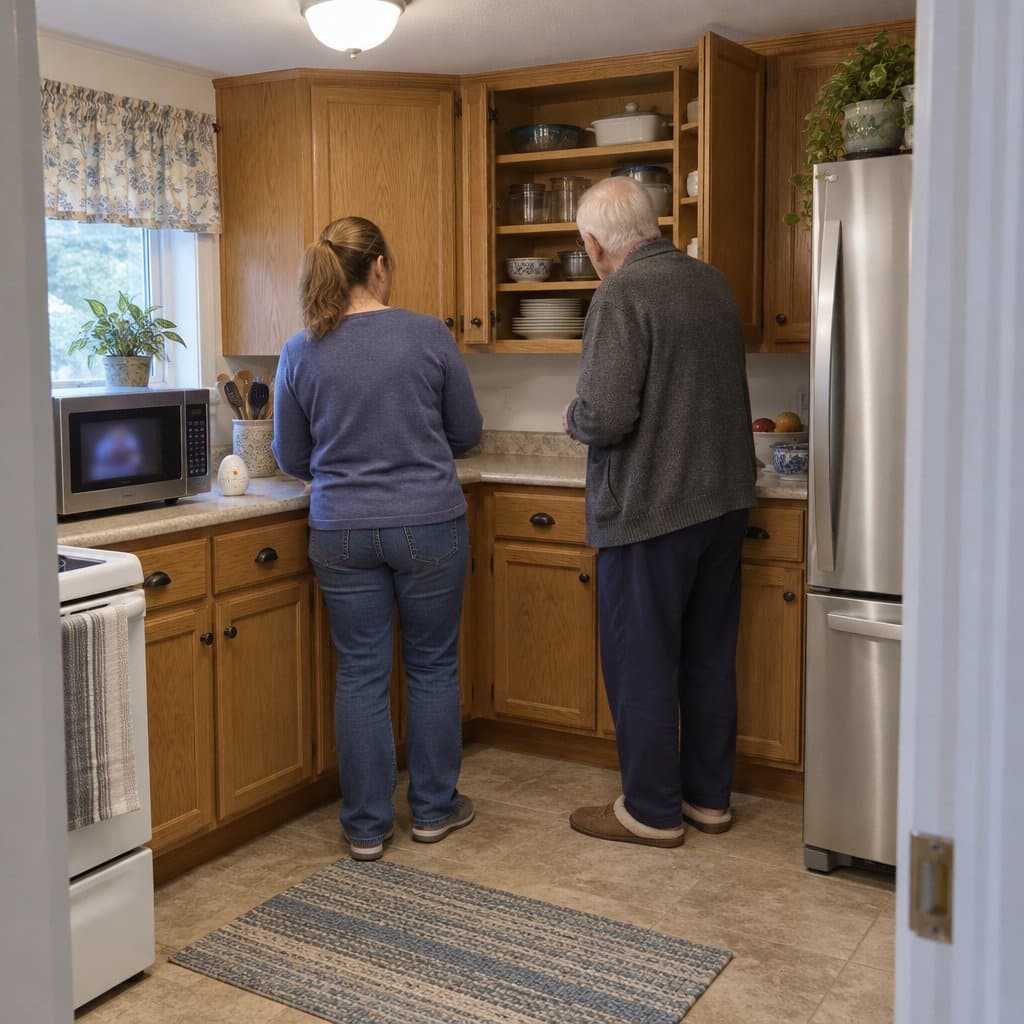
The kitchen is one of the most dangerous rooms for someone with dementia. Even basic cooking can get risky, so it helps to walk the whole room with a checklist, not just the stove.
Appliances come first. Stoves, garbage disposals and microwaves all carry real hazards, and there are dementia-friendly kitchen appliances worth a look.
Consider deactivating the garbage disposal. Or have its switch moved away from the sink light switch, so the two are not confused.
Unplug the microwave when nobody is using it. Otherwise your loved one might put something risky in it, like a canned food.
A kitchen timer helps anyone who forgets about food while it cooks.
For fire safety, make sure the system you have is working. Check smoke detectors and replace the batteries twice a year.
Keep a fire extinguisher in the kitchen and make sure your loved one knows how to use it, in case you are not there.
The rest of the list is the things covered above. Sharp and breakable utensils go in latched cabinets. Unbreakable plates cut down on broken dishes.
A single-lever faucet makes hot water easier to control, and the water heater temperature should sit at the safe setting. On the floor, rugs are a common trouble spot, and the kitchen is full of fall hazards.
For more on setting the room up, see kitchen organization for seniors and easy kitchen safety upgrades. For ideas on gear, there are kitchen gifts for seniors. And if your loved one still wants to help in the kitchen, there are safe kitchen activities for people with dementia.
Dementia is a progressive disease and gets worse with time. Go back over this checklist as things change, and make more changes as needed.
Stoves are not the only danger in the house, and if there are firearms at home, read about securing guns and ammunition when someone has dementia too.
One trade-off: a checklist done once goes out of date. Each change protects your loved one, but you will be redoing the walk-through again and again.
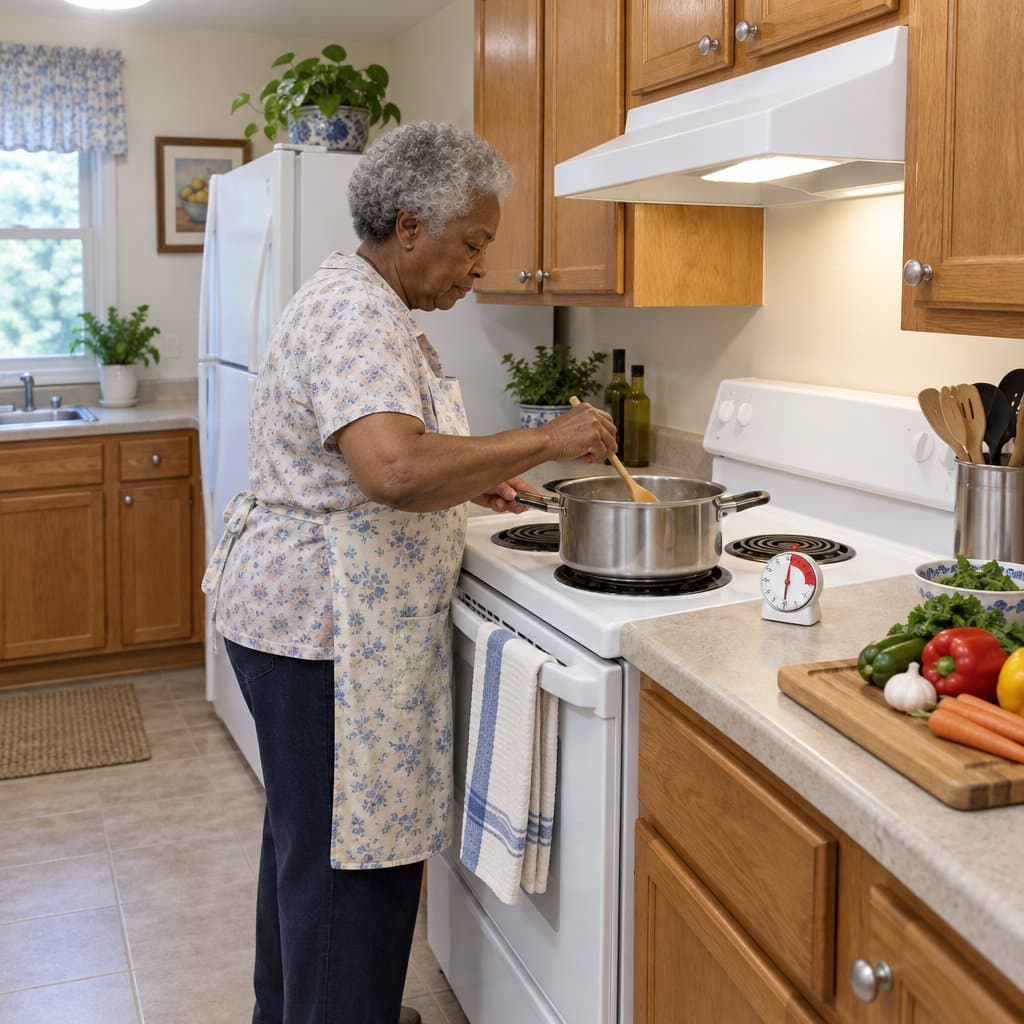
Stove Safety for Any Older Adult Who Wants to Keep Cooking
Not everyone who needs a safer stove has dementia. The same fire risks apply to any older adult, and the numbers are worth knowing.
People aged 65 to 74 are almost twice as likely to die in a fire. For those over 85, the risk is almost five times higher. Cooking is the third leading cause of fire deaths and the leading cause of fire injury for seniors.
Several of the tips above fit anyone. A fire extinguisher belongs in every kitchen with a gas or an electric stove, ideally with a fire blanket too. Replace either one right after it is used. If you want to know why a blanket can be easier than an extinguisher, here is a look at a fire blanket that needs no grip strength.
A loud smoke alarm matters as well, since a stove shut-off device depends on it sounding. Around 430 people in the U.S. die of accidental carbon monoxide poisoning every year, which is why the audible detector is worth having.
If you tend to be forgetful or easily distracted, set a timer whenever you cook. Dedicated kitchen timers that ring loudly are more likely to be noticed than a phone.
A few more habits help around the stove:
- Use bright lighting so you can see the food and read the stove numbers.
- Keep the kitchen floor clean, tidy and clear of obstructions.
- Keep the sink and draining area tidy, so there are fewer broken dishes.
- Skip deep frying and cook food other ways. They are safer and healthier.
- Choose lightweight cookware with sturdy, ergonomic grips.
- Keep pets out of the kitchen.
- Where corded kitchen appliances are used, arrange the cords so they don’t hang over the counter.
- Keep cleaning fluids away from food.
- Clean the oven and grill regularly, because fat and food spills are a fire hazard.
For many older adults, cooking is an escape or a way to relax. Losing the ability to bake for family or feed themselves can feel like a crippling blow to their independence.
Safeguards that let them stay in charge of the kitchen help protect their mental well-being. They may also make the difference between aging in place and moving to assisted living. For more on keeping cooking manageable, see simplifying the cooking process for dementia.
One trade-off: no single device covers everything, so the safest kitchen uses a few of these steps together.
Hot Water, Spoiled Food and Slippery Floors
Stove safety is only part of the picture. Hot water, old food and the kitchen floor can hurt someone with dementia too.
Start with the water. Dementia can dull the sense of pain, so your loved one may not realize how bad a burn is unless someone tells them.
A single senior-friendly faucet for both hot and cold makes the water temperature much easier to control. Then check that the water heater is set to the safe temperature marked on its dial.
Next, the food. Expired and spoiled food is a real concern, and a weakened immune system has a hard time fighting off food poisoning.
Go through the pantry and fridge regularly. Throw out anything that is expired or has gone bad, including perishable cooking supplies.
Then the floor. The kitchen is full of fall hazards, and poor vision and balance make them worse.
Take up the throw rugs in the kitchen. If one has to stay, double-stick tape can hold it to the floor.
Wipe up spilled liquids and food right away. Watch for fluid leaking from the refrigerator too. It is a slipping risk, and standing liquid can damage the floor.
One trade-off: none of this is a one-time fix. Food has to be checked again and again, and spills and leaks have to be caught as they happen, so someone needs to look in on the kitchen often.
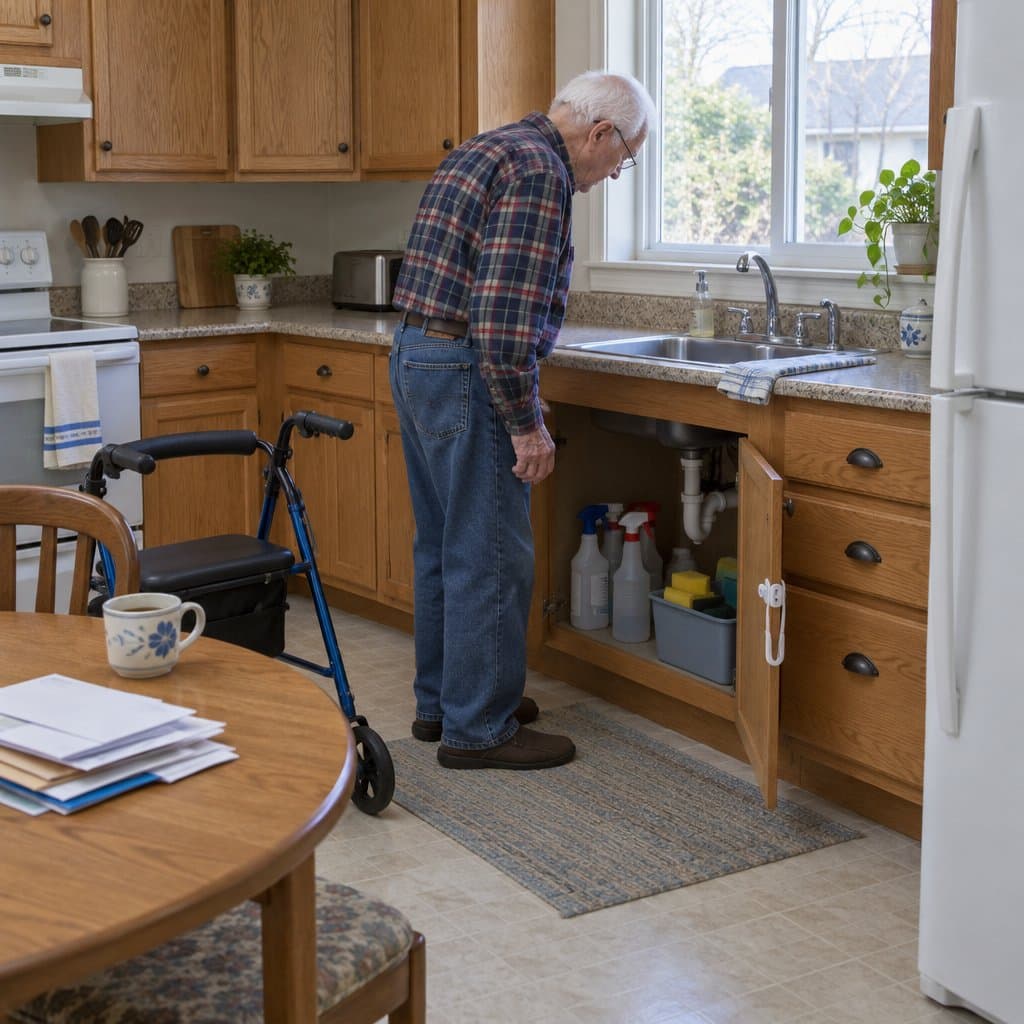
Locking Up Knives, Cleaning Supplies and Breakables
A stove lock handles the stove. The rest of the kitchen has plenty of ways to hurt someone with dementia, and the sharp and breakable things in a kitchen are a good place to start.
Knives, forks and anything that breaks easily should go in cabinets with latches or child-proof locks. Keep the drawers closed at all times too, so nobody bumps into one.
Where you can, switch to unbreakable plates and dishes. A dropped plate then stays in one piece, with no broken shards on the floor to cut a hand or foot.
Cleaning supplies and flammable liquids belong away from the kitchen altogether. Someone with dementia can have trouble reading labels, so a cleaning product can look like something safe to use or eat.
The same confusion can happen with sponges, matches and plastics. Some people with dementia mistake them for food.
While you are in the cabinets, move the things your loved one uses often to spots that are easy to reach. Take them out of the highest and lowest cabinets.
One trade-off: locks keep the dangerous things out of reach, but they also make it harder for your loved one to get at what they need. You will need to be around to open a cabinet when they ask, or decide which items are safe to leave out.
Checking the Electrical Side of the Kitchen
A stove lock deals with the stove. The rest of the kitchen runs on electricity too, and faulty circuits, overloaded extension cords, dangling wires and exposed sockets are all risks for an older adult with dementia.
Start by having a qualified electrician check the circuits and wiring in and around the kitchen. That is the one job here I would not do myself.
Ask about circuit breakers and GFCIs (Ground Fault Circuit Interrupters, the outlets with the little test and reset buttons). They should be installed where needed and tested to make sure they work properly.
Then walk around with a few simple checks:
- Look at every extension cord and make sure it is not overloaded.
- Feel the sockets. Any that are warm to the touch should be checked.
- Look for wires dangling where someone could catch them.
- Cover any outlet that is not in use with a socket cover.
Socket covers are a small thing, but they keep curious fingers and objects out of outlets nobody is using.
One trade-off: the wiring and GFCI work means finding and scheduling an electrician, so it may not happen as quickly as sliding a knob cover on. Socket covers also only protect the outlets that are empty, so the extension cord and warm socket checks still matter for the ones in use.
Electric Stove Safety: Shut-Offs, Induction, and Timers
Electric stoves are generally considered safer than gas, but a few steps still help when your loved one has dementia.
Start with an auto shut-off device that turns off the electric stove when the smoke alarm sounds. Burnt food can happen to anyone, and this keeps a lapse in attention from ending in disaster.
Good oven mitts matter too. Burns and scalds are common when someone handles a hot pan or pulls a hot tray out of the oven. Look for easy-to-use mitts with a thumb, so the grip is secure.
If you are buying a new stove, consider induction burners. They heat the pan with magnetic energy, and the burner itself does not get hot. You can forget it is on without worrying about overheating, and you can touch it without being burned.
Audible timers help with forgetfulness. A dedicated kitchen timer that rings loudly is more likely to be noticed, and to get used, than one set on a phone.
Good light helps as well. Bright lighting makes it easier to see the food clearly and read the numbers on the stove.
One trade-off with induction: it only works with compatible pans, and a pan of liquid left on it will still boil dry eventually. The damage is limited compared with leaving a gas burner or a standard electric burner on for a long time, but it is not zero.
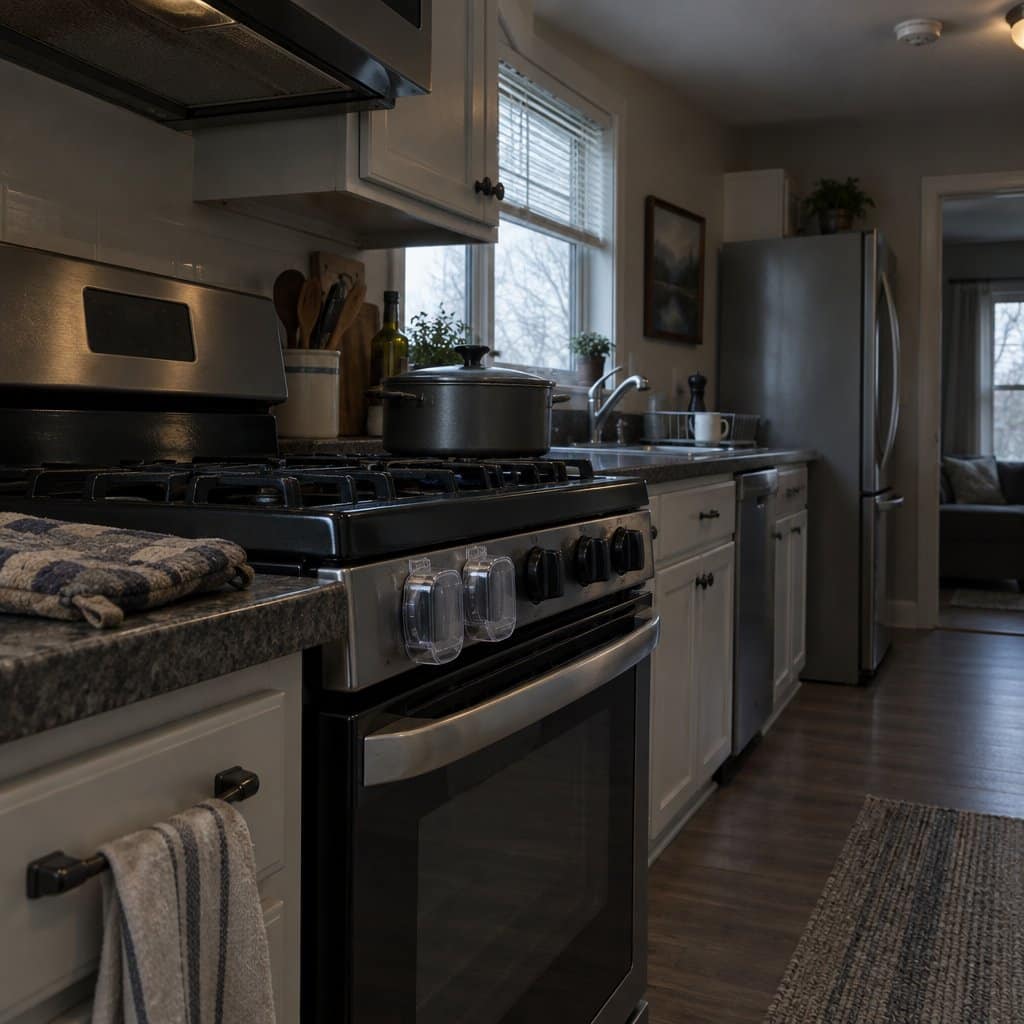
Extra Steps for Gas Stoves
A gas stove adds a few risks that an electric one doesn’t. If your loved one has dementia and cooks on gas, a few small additions go a long way.
Start with a carbon monoxide detector that sounds an audible alarm, not one that only changes color. A loud alarm gives your loved one an early warning so they can get out of the house and seek medical advice.
Next, consider an automatic gas shutoff. A device like FireAvert shuts off the gas when it senses that a smoke detector in the home has gone off. I’d also look at a good smoke alarm to pair with it, since the shutoff depends on one sounding.
Knob covers matter more on gas than you might think. An unlit burner doesn’t look like it’s on, so someone who leans on the stove or reaches over it for a rear burner may never notice they turned it. Some older adults also have a poor sense of smell, so they may not notice the gas either.
Covers over the front of the knobs stop them from being turned by accident. Your loved one can still use the stove when they want to.
Clothing counts too. Long, flowing sleeves on gowns or robes can touch the flames and catch fire. Close-fitting clothing with tight sleeves is better, and short sleeves are better still.
For more ideas on keeping cooking manageable, see simplifying the cooking process for dementia.
One trade-off: a knob cover only prevents accidental turning. It won’t help if the stove is left on after someone turns it on deliberately, which is where the shutoff device comes in.
Stove Safety Device Shopping Guide
Not sure which type fits? This free shopping guide helps you match the device to your stove and your situation before you buy.
Keeping the Kitchen Safe for Seniors
Making sure that the stove doesn’t get accidentally turned on, or left on, is an important part of kitchen safety, but it’s not the only thing that seniors and their loved ones should be thinking about.
Ensure the kitchen is properly equipped with a smoke and carbon monoxide detector. If the stove is gas-powered or the property has a gas supply for any other reason, consider getting a detector that can also pick up gas leaks.
Every kitchen should also have a fire extinguisher and, ideally, a fire blanket and a well-stocked first aid kit as well.
Talk to the seniors in your life and impress upon them the importance of having these things and keeping them in a good state of repair, replacing anything that gets used immediately.
It is common for fire extinguishers to be supplied in rented accommodations, but they are something that homeowners frequently forget about.
With proper care, thought, and implementation of stove safety tips, you can keep the kitchen a safe place for the senior citizen in your care, allowing them to retain their independence and stay in the community, avoiding the need to move to assisted living accommodations. For a wider look at your choices, see this piece on shut-off devices and knob covers for aging in place.




We have a propane kitchen stove with electric spark to work. How do I prevent him from unplugging the stove which will cause the gas to leak. This has happened before.
Hi Lonnie! If the stove uses a standard 110 3 prong plug, look for a “locking outlet” that will keep the plug from being removed. This will have to be installed in place to the current outlet so you might need to consult an electrician. Hope this helps!