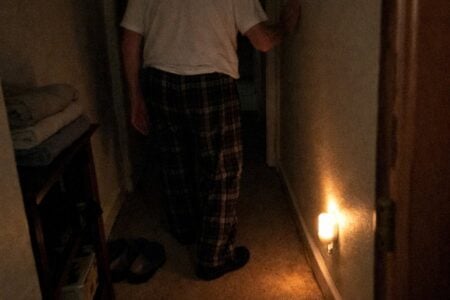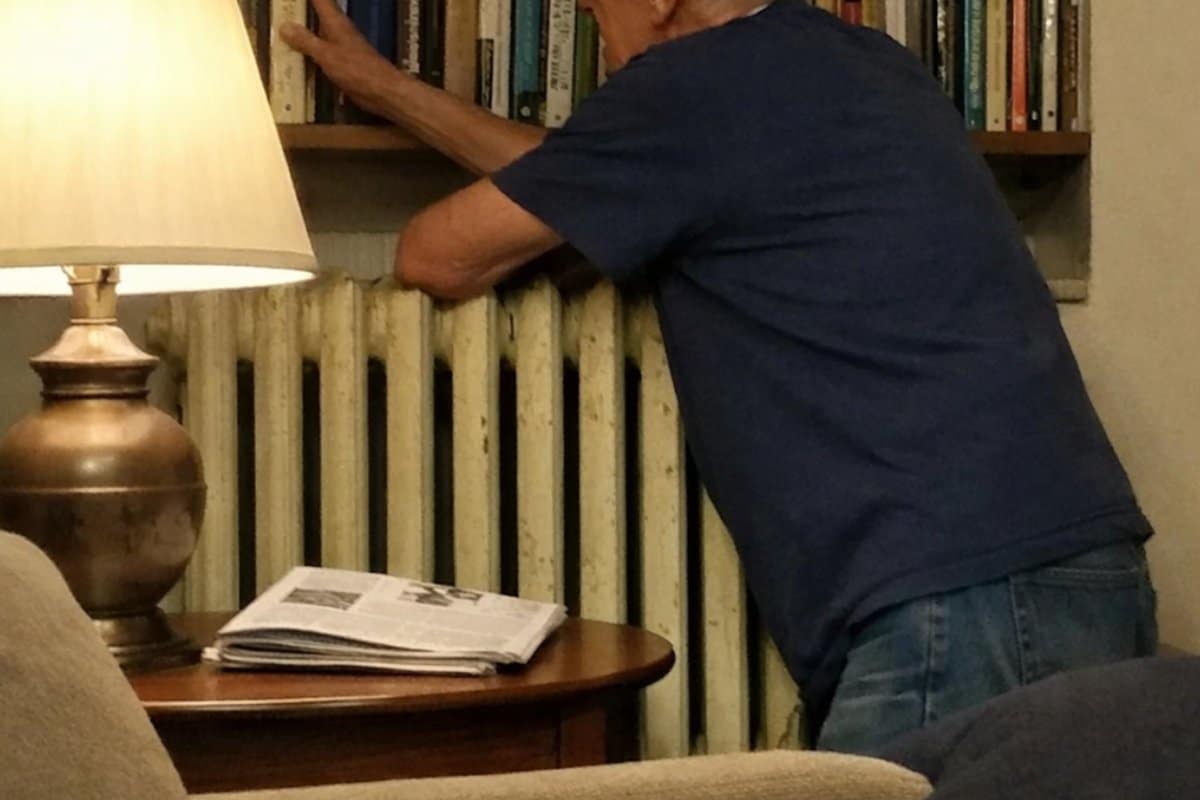
A forearm rests against the radiator while reaching for a book on the shelf above it. A wheelchair user’s legs press against the hot water supply line under the bathroom sink for the three minutes it takes to wash hands.
An older adult with dementia leans into the baseboard heater along the hallway wall while steadying herself between rooms. None of these people feel the burn as it happens.
Diabetic neuropathy, poor circulation, and cognitive changes all interfere with the body’s normal warning system—the one that would ordinarily pull a limb away from a hot surface in under a second.
The fix is not a reminder sign. It is not rearranging the furniture. It is a physical barrier that sits between the skin and the hot surface, blocking contact while still allowing the heater to do its job. That is the only solution that works reliably when sensation cannot be trusted.
Radiator & Pipe Burn Prevention Shopping Guide
Download this practical shopping guide to confidently select and install the right radiator covers, pipe insulation, and baseboard heater covers—complete with measurement checklists and product-vetting criteria that protect your loved ones from burn injuries.
What to Look For
Buying the wrong product here doesn’t just waste money—it can create a false sense of security while leaving the hazard intact. Here is what actually matters, with real numbers.
Airflow and heat retention
A radiator cover that traps heat entirely defeats the purpose of the heater and can make the cover’s own exterior surface dangerously warm. Look for vented panels—slats, mesh, or perforated faces—where the combined open area is at least 50–60% of the front panel. Covers with decorative solid fronts and token top venting are both a heating efficiency problem and a potential burn risk in their own right.
Surface temperature of the cover itself
The cover must remain cool enough to touch safely. Three factors determine this: the material (steel conducts heat; MDF and solid wood insulate better), the clearance between the cover face and the radiator surface (a minimum of 2–3 inches is the standard recommendation), and the airflow design. A cover that channels rising hot air directly against its own front panel will get warm. Ask specifically whether the design directs airflow up and out, or out through the front.
Pipe insulation temperature ratings
Standard closed-cell polyethylene foam pipe insulation handles continuous service up to approximately 200°F (93°C)—adequate for domestic hot water lines. Steam radiator supply pipes can reach 250°F (121°C) or higher. Standard foam fails at those temperatures. Fiberglass or mineral wool pipe insulation handles up to 850°F (454°C) and is required for steam systems. The heating system in the home determines which rating is needed.
Baseboard heater cover dimensions
Replacement baseboard covers must match the existing heater unit length precisely. Gaps at the ends expose the heating element—at exactly the points where someone bracing against the wall is most likely to make contact. Measure the full length of the existing housing (end cap to end cap), the height from floor to the top of the housing (standard residential units run 6–8 inches tall), and the depth (typically 3.5–4 inches).
Material durability and mounting
In homes where an older adult may lean, press, or grasp at surfaces, covers must stay in place under lateral pressure. Confirm that mounting hardware is included and that the cover fastens to the wall or heater housing rather than simply resting in position.
Under-sink fit and ADA alignment
For wheelchair users and seated sink users, look for under-sink pipe cover kits designed for accessible installations. These wrap the hot supply line, cold supply line, and often the P-trap drain. ADA guidelines for accessible lavatories require insulation or covering of all under-sink pipes—this standard is a useful benchmark even in residential settings.
Radiator Covers
Direct contact with a radiator surface can cause a partial-thickness burn in 30 seconds for anyone with reduced temperature sensitivity. A vented radiator cover creates a physical barrier between skin and the hot surface while still allowing the radiator to heat the room.


Radiator covers are the right solution for freestanding cast-iron radiators—common in older homes with steam or hot water heating—and for wall-mounted panel radiators. The hazard they address is direct contact with a surface that can reach 130–160°F (54–71°C) on steam systems and 120–140°F (49–60°C) on hot water systems. That is hot enough to cause a partial-thickness burn in 30 seconds of sustained contact.
This solution suits living rooms and bedrooms with freestanding radiators, hallways with wall-mounted radiators, and any room where a person might rest a limb on the radiator while seated, reading, or dressing. It is especially important in rooms used by someone with diabetic neuropathy or dementia who may not register heat sensation as a warning. If you are also evaluating bathroom safety as part of a broader home review, radiator covers belong on that same checklist.
Radiator covers are not the answer for baseboard heaters or for under-sink pipe burns—those require different products designed for different hazard profiles. And a decorative cover with a solid front and minimal venting, placed over a room’s primary heat source, can meaningfully reduce heating efficiency while making the cover’s exterior surface warm to the touch—the opposite of the goal.
These are the most visible and design-integrated products in this roundup. They can look like furniture. They are also the most significant purchase, the most installation-dependent, and the most likely to create a new problem if chosen incorrectly. Venting design is the specification that matters most.
Ready Covers EZ Connect Vented Safety Steam Radiator Cover
This cover is designed specifically for steam radiators—the cast-iron freestanding units common in pre-1980 homes in the Northeast and Midwest. The EZ Connect name refers to its panel-and-connector assembly system, which allows the cover to be sized to fit different radiator widths without cutting. The vented safety design keeps the exterior surface accessible to airflow rather than trapping heat against a solid front panel.
This is a good match for households where the radiator is in a primary living space and the cover needs to function as a furniture piece while still allowing the radiator to heat the room. The venting design is the right approach for steam systems, which run hotter than hot-water systems and make surface temperature of the cover a genuine concern.
The limitation is sizing: verify the radiator’s width and height before ordering, and confirm that the panel configuration you select clears the valve connections at the base of the radiator.
BRYSJ White Steam Radiator Cover
This cover is marketed specifically for older steam radiators and carries waterproof and flame-retardant material claims—relevant properties for a product that will sit next to a surface routinely reaching 150°F or above. The white finish integrates cleanly into most residential interiors.
It suits older homes with freestanding steam radiators where the primary concern is preventing skin contact with the radiator surface. The waterproof designation also makes it more durable in rooms with variable humidity, such as a first-floor room near a kitchen.
Verify that the cover’s venting design directs airflow upward and outward rather than through the front face. A cover that channels heat through its own front panel will become warm—and warm is not the same as cool enough to safely touch.
DHDHSHB Waterproof Radiator Cover Cabinet
This louvered-front cabinet-style cover is designed for wall-mounted or freestanding radiators and uses a louvered panel design that provides the front-face airflow critical for keeping the exterior surface touchable. The white finish and cabinet proportions allow it to read as furniture rather than safety equipment—a meaningful consideration for older adults who want their home to look like a home, not a medical environment.
The cabinet format suits living rooms and bedrooms where aesthetics matter alongside safety. The louvered design is preferable to solid-front covers for rooms that depend on the radiator as a primary heat source.
Confirm the interior clearance between the louvered face and the radiator surface before purchase. The 2–3 inch minimum clearance standard applies here: a cover that sits too close to the radiator surface will conduct heat to its exterior regardless of venting.
vidaXL MDF Radiator Cover White 80.7
MDF is an insulating material rather than a conducting one, which means this cover’s exterior surface is less likely to become warm than a comparably designed steel cover. The 80.7-inch width makes it one of the longer options in this roundup—suited to larger panel radiators or to rooms where a standard-width cover would not span the full heater surface.
This cover suits living rooms or dining rooms with larger wall-mounted panel radiators, where the goal is both burn prevention and a finished, furniture-grade appearance. MDF also takes paint well if the white finish needs to be matched to existing trim or walls.
The limitation of MDF is weight and moisture sensitivity. In rooms with high humidity, MDF can swell or delaminate over time. For bathrooms or kitchens, a more moisture-resistant material is the better choice.
vidaXL Radiator Cover Cabinet Decorative Heater Protector
This cabinet-style cover is described as childproof, which in practice means the front panel design limits finger and hand access to the radiator surface—the same property that makes it useful for older adults with dementia who might otherwise lean against or grasp at the heater. The decorative format integrates into a room without signaling its safety function.
It suits households where the radiator is in a shared living space and where the cover needs to provide protection against both accidental contact and deliberate touching. For dementia caregiving specifically, a cover that does not look like a safety device is often easier to leave in place. You can read more about how physical barriers outperform behavioral reminders in dementia care in a related article on door security.
Confirm the venting design before purchase. A childproof front panel that also blocks airflow will cause heat to build behind the cover and warm the exterior surface—evaluate the top-vent design carefully.
Ready Covers Radiator Cover Heating Cabinet for Large Radiators
This cover is sized for larger radiators and designed for home and office use, with a cabinet format that fits over most large freestanding radiators. The Ready Covers product line has a track record in residential retrofit installations, which matters when the alternative is a custom-built enclosure.
It suits larger freestanding cast-iron radiators in living rooms or bedrooms where standard-width covers would leave the radiator partially exposed. A cover that does not span the full radiator width leaves the exposed ends accessible—exactly the surfaces a standing or seated person is likely to brush against.
Measure the radiator at its widest point, including any valve handles or pipe connections at the base. A cover that fits the panel itself but not the valve assembly creates a gap at floor level where a foot or lower leg would make contact.
Pipe Insulation and Covers
Hot water supply lines under a bathroom or kitchen sink can reach 120°F or above — enough to cause a contact burn on a leg or forearm pressed against them for the length of a hand-washing routine. Foam pipe insulation and under-sink cover kits wrap those lines so the surface a person touches is safe.


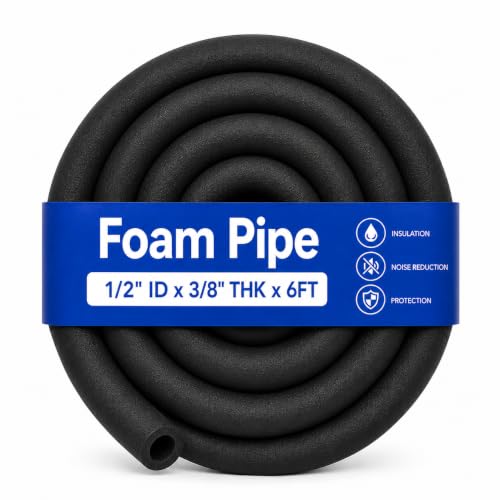
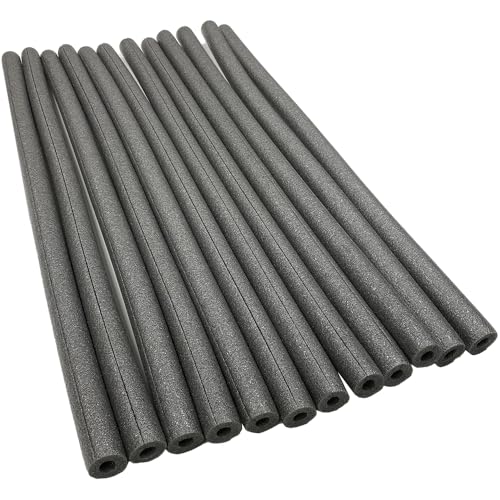
Pipe insulation addresses a burn hazard that most home safety checklists miss entirely: the supply and drain lines under a bathroom or kitchen sink. For a wheelchair user, the under-sink space is exactly where their legs go. For anyone sitting at a sink on a shower chair or stool, the legs are positioned in proximity to lines that carry hot water at 120°F (49°C) or above. A leg pressed against an uninsulated hot supply line for the duration of hand-washing can sustain a burn without any sensation of pain. This risk is also present on exposed hot water supply lines in basements or utility rooms where an older adult might brush against the pipe while reaching for storage.
Pipe insulation does not replace a radiator cover or a baseboard heater cover. It addresses surface temperature only. And standard foam insulation is the wrong choice for steam heating supply pipes, which exceed its temperature rating. For domestic hot water systems—the most common residential application—foam is adequate and the installation takes under ten minutes.
This is the lowest-cost, easiest-to-install solution in this roundup. Slip-on closed-cell foam can be cut to length and slipped over the pipe without tools. The tradeoff is appearance and longevity: foam degrades over time, particularly in damp environments, and needs periodic inspection. Molded under-sink pipe cover kits provide a cleaner appearance and a more complete fit but cost more and require measuring the existing pipe configuration before ordering. For accessible bathrooms used regularly by a wheelchair user, the fitted kit is worth the higher cost.
If you are completing a broader bathroom safety review, handheld shower heads and shower chairs are the companion products most often installed alongside under-sink pipe insulation in accessible bathrooms.
Duck Brand Foam Pipe Covers
Duck Brand is one of the most widely distributed foam pipe insulation products in the residential market. These pre-slit foam tubes slip directly over existing pipes without tools and are cut to length with scissors or a utility knife. The pre-slit design means installation on a pipe that cannot be threaded through the tube from the end—the typical under-sink situation—takes seconds per section.
This product suits domestic hot water supply lines under bathroom and kitchen sinks, and exposed hot water lines in basements or utility rooms. It is the right starting point for any household completing an initial pipe insulation installation on a standard residential hot-water heating system.
Confirm the inner diameter of the foam tube matches the outer diameter of the pipe before purchasing. A tube that is too large will not maintain contact with the pipe surface and its insulating value is reduced. Check the installation annually in damp environments—foam that has absorbed moisture or begun to crumble should be replaced.
FUYITE 4 Pack 6 Feet Pipe Insulation Foam Tube with Double Sided Tape
This product adds a double-sided tape closure to the pre-slit foam tube design. In a standard installation, the slit in the foam tube is held closed by the pipe’s own diameter once the tube is in place. The adhesive closure in this product makes the seal more secure and reduces the chance of the tube opening along the seam over time—a meaningful improvement in damp environments or on pipes that experience vibration during water flow.
It suits under-sink installations where the foam insulation needs to stay cleanly in place without periodic re-seating. The 6-foot length per tube covers most under-sink pipe configurations in a single piece without joining.
Confirm the inner diameter matches the pipe’s outer diameter. The 3/4-inch specification is the most common for residential hot water supply lines, but verify against the actual pipe before ordering.
csjzzt Pipe Insulation Foam Tape 2 inch x 33 Ft Self Adhesive
This is a foam tape wrap rather than a slip-on tube—it is applied by wrapping around the pipe rather than sliding over it. This format suits pipes with fittings, angles, or valve bodies that a slip-on tube cannot accommodate, and it can be applied to irregular configurations that a standard foam tube would not cover cleanly.
It suits P-trap drain sections, angled supply connections, and any under-sink pipe configuration with bends or fittings that interrupt a straight run. It is also useful for supplementing a foam tube installation at joints and connection points where coverage gaps occur.
The tape format requires more time to install than a pre-slit tube and the coverage per roll is lower per linear foot of pipe. Use it as a complement to tube insulation for fittings and transitions rather than as the primary insulation method for long straight runs.
ZXTDBMBB Insulation Foam Pipe for Air Conditioning, Outdoor Water Pipes
This closed-cell foam tube is described for air conditioning pipe insulation and outdoor water pipe applications, which means it is formulated to handle both temperature extremes and UV exposure—properties that make it more durable than standard indoor-grade foam in exposed or semi-exposed locations. Basements, utility rooms, and crawl space pipe runs that an older adult might brush against during laundry or storage access are appropriate applications.
It suits exposed pipe runs in utility areas where standard residential foam insulation would degrade quickly from temperature cycling or light exposure. The outdoor-rated formulation also performs better on pipes with wider temperature swings.
Verify the inner diameter against the pipe’s outer diameter before purchasing. For under-sink hot water supply lines in a standard bathroom, standard indoor foam is adequate and less expensive—this product’s durability advantage is most relevant in exposed utility locations.
CARGEN 1/2″ ID Foam Pipe Insulation for Copper and PEX Water Pipes
This product specifies compatibility with both copper and PEX pipe—the two most common residential hot water supply pipe materials. The 1/2-inch inner diameter specification is the standard for residential hot water supply lines in most homes built after 1980. The explicit material compatibility note matters: foam insulation that fits loosely on the pipe because of an ID/OD mismatch provides less thermal protection.
It suits standard residential bathroom and kitchen hot water supply lines where the pipe material is copper or PEX and the pipe runs are relatively straight. For homeowners uncertain about their pipe material, copper is identifiable by its orange-brown color; PEX is a flexible plastic pipe that comes in red (hot), blue (cold), or white.
This product is a domestic hot water application. It is not rated for steam heating supply pipes. If the home has a steam boiler rather than a hot water circulating system, fiberglass pipe insulation is required.
Oodles of Noodles Foam King Pipe Insulation Foam Tube 12 Pack
The 12-pack format makes this the most practical choice for a whole-home pipe insulation project—multiple under-sink locations, basement pipe runs, and utility room exposures in a single order. Pool noodle-style foam tubes at this diameter and density have been used in accessible bathroom installations as a low-cost under-sink pipe cover for many years. The material is the same closed-cell polyethylene foam used in purpose-made pipe insulation.
It suits multi-room installations or caregivers who are completing a room-by-room pipe insulation review across an entire home. The 12-pack also provides spare material for replacement as foam degrades over time.
These are not precision-fit plumbing insulation tubes with specific inner diameter ratings—verify fit on the target pipes before committing to a full installation. For a single accessible bathroom, a precision-fit product with a stated inner diameter is the more reliable choice.
Baseboard Heater Covers
The open-grille front of a standard residential baseboard heater leaves the heating fins — which operate between 150 and 180°F — directly accessible to a knee, calf, or hand bracing against the wall. Replacement baseboard covers close that front panel while preserving the convective airflow the heater needs to function.


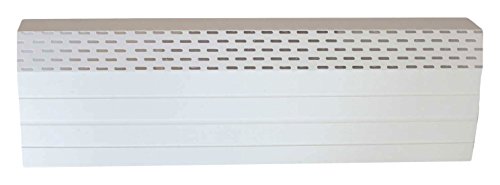

Baseboard heaters run along the floor perimeter of a room, which makes them a burn hazard at exactly the height where a knee, calf, or lower leg makes contact during a stumble or a wall-bracing step. The front face of a standard residential baseboard heater is an open grille with no barrier between a pressing limb and the heating fins inside. Those fins operate between 150–180°F (66–82°C). A partial-thickness burn can result from contact sustained for as little as 30 seconds at those temperatures—and a person who has lost sensation in their lower legs will not feel that contact occurring.
Replacement baseboard heater covers solve this with a front panel that is closed or minimally perforated, blocking direct contact while allowing convective airflow to rise through the top vent. They are a retrofit solution: the new cover replaces the original manufacturer cover on the existing heater unit. This is the most targeted and least expensive solution in this roundup, and installation typically requires no additional tools.
The sizing dependency is strict. A cover that is one inch short of the heater’s total length leaves gaps at the ends where the heating element is exposed. That is worse than no change at all, because it creates a false sense of security while leaving the most accessible surfaces unprotected. Measure before ordering: total length of the existing housing end-cap to end-cap, height from floor to the top of the housing, and front-to-wall depth.
For a broader look at fall prevention in the rooms where baseboard heaters are most common, the fall prevention checklist covers the room-by-room assessment that puts baseboard heater covers in their proper context.
Redants 4 FT Baseboard Heater Covers with Left and Right Endcaps
This 4-foot cover comes with both left and right endcaps included, which matters for a clean installation: endcaps seal the ends of the cover at the wall and prevent access to the heating element from the sides. A cover without endcaps—or with endcaps sold separately—leaves the ends of the heater exposed at exactly the points where lateral contact is most likely.
It suits bedrooms and shorter hallway sections where a 4-foot heater run is the standard installation. The included endcaps make this a complete installation kit rather than a cover-only product that requires additional hardware.
Measure the existing heater housing before ordering. The 4-foot length must match the heater’s actual housing length, not its panel length. If the housing runs 4 feet 2 inches including endcaps, a 4-foot cover will leave a gap.
Ceelpeopar 6 FT Baseboard Heater Cover for Baseboard Heating
The 6-foot format suits the longer heater runs common in living rooms, dining rooms, and larger bedrooms. Longer runs are higher-risk surfaces because they span more of the wall where someone might trail a hand or press a leg while walking—the extended length means more exposure, not just more heater.
This cover suits rooms with 6-foot baseboard heater installations where the primary goal is reducing the accessible heated surface area. The standard residential heater height of 6–8 inches and depth of 3.5–4 inches are the dimensions to verify against the existing unit before ordering.
Confirm that the front panel design blocks direct finger and hand access to the heating fins. A perforated front panel reduces burn risk significantly compared to an open grille; a closed front panel with top venting is the safer configuration.
Bvlikorr 6FT Baseboard Heater Cover Adjustable Size with Endcap
The adjustable-size feature in this cover addresses the most common installation failure in this category: a fixed-length cover that does not match the existing heater housing precisely. An adjustable cover can be trimmed or extended within its range to achieve a flush fit without gaps at the ends. For older heater units where the housing dimensions may not match current standard sizes, this flexibility reduces the risk of an ill-fitting installation.
It suits homes with older or non-standard baseboard heater installations where fixed-length covers consistently leave gaps, and for caregivers who are not certain of the exact heater dimensions before ordering.
Verify the adjustment range covers the existing heater’s length. Adjustable covers have a minimum and maximum span—a heater that falls outside that range will not be served by this product’s flexibility.
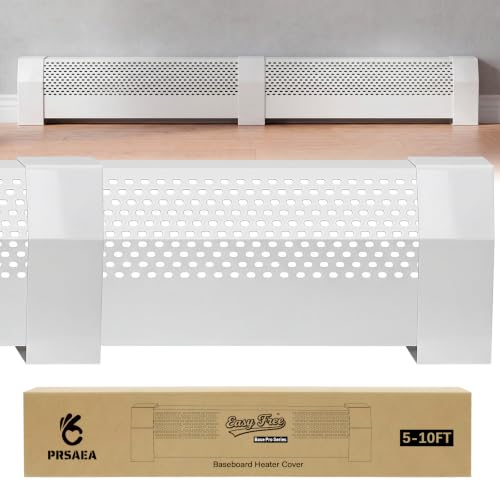
PRSAEA Retractable Baseboard Heater Cover 5FT–10FT Galvanized Steel
The 5-to-10-foot retractable range makes this cover the choice for longer heater runs or for installations where measuring the exact length is not straightforward. Galvanized steel is a durable material that holds up to lateral pressure better than standard painted steel—relevant in hallways and high-traffic rooms where the cover may be bumped or leaned against regularly.
It suits long hallway heater runs, living room installations with 8-to-10-foot heaters, and any location where durability under contact pressure is a priority. The extended range also accommodates installations where two separate heater sections are close enough to be covered by a single continuous panel.
Steel conducts heat more readily than wood or MDF. Verify that the cover’s design maintains adequate clearance between the heater element and the front panel surface—a steel cover in close contact with a high-output heater will have a warmer exterior surface than a wood-faced cover at the same clearance distance.
NeatHeat 6ft Baseboard Heat Front Cover
NeatHeat is one of the longest-established brands in residential baseboard heater cover replacement, and the 6-foot format is their most common residential size. The front panel design uses a polymer material rather than metal, which does not conduct heat the way steel does—the exterior surface of a polymer cover stays cooler than a comparable steel cover at the same clearance distance from the heating element.
It suits bedrooms and living rooms with 6-foot heater runs where the polymer material’s lower surface conductivity is an advantage. The snap-on installation requires no tools and does not modify the existing heater housing.
Snap-on installation means the cover is not fastened to the heater housing. For an older adult who might press against the cover or lean into the wall at that point, a cover that can disengage under lateral pressure is a limitation. Evaluate whether the installation location is one where the cover might be pushed out of position.
NeatHeat 4ft Baseboard Heat Front Cover
This is the 4-foot version of the NeatHeat polymer cover, carrying the same material advantage—lower surface conductivity than steel—in the shorter format suited to bedroom and smaller room heater runs. The same polymer construction and snap-on installation method apply.
It suits shorter heater runs in bedrooms and smaller rooms where the 6-foot format would overhang the heater housing. For a home with a mix of 4-foot and 6-foot heater runs, both formats can be ordered and installed consistently.
The same snap-on limitation applies: this cover is not fastened to the heater housing and can disengage under lateral pressure. For someone who uses walls for balance support and is likely to lean or press against the cover, a screw-fastened cover or a wall-anchored solution is the more secure installation.
Frequently Asked Questions
Will a radiator cover reduce the heat output in my room?
It depends on the venting design. A cover with a solid front and token top venting will trap heat behind the panel, reduce heating efficiency, and make the cover’s own exterior surface warmer. A cover with at least 50–60% open venting area on the face and top will allow adequate convective circulation, and the effect on room heating is typically negligible. The cover should direct airflow upward and out—not through the front panel into the room, and not trapped against the cover’s interior face.
What temperature rating do I need for pipe insulation? Does the heating system type matter?
Yes, it matters. Standard closed-cell polyethylene foam insulation handles continuous service up to approximately 200°F (93°C), which is adequate for domestic hot water supply lines. If the home has a steam heating system—identifiable by a boiler, condensate return lines, and pipes that hiss or tick when the heat runs—the supply pipes can reach 250°F (121°C) or higher. Standard foam fails at those temperatures. Fiberglass or mineral wool pipe insulation, rated to 850°F (454°C), is required for steam system pipes.
My baseboard heater is 15 years old and I cannot find the model number. How do I measure for a replacement cover?
Three measurements: total length of the existing housing from end cap to end cap, height from floor to the top of the housing, and front-to-wall depth. Most replacement covers are sold in 2-foot to 8-foot sections that join together with connecting pieces. Measure the full run including the end caps—a cover sized to the heater panel but not accounting for the end caps will leave exposed gaps at each end. If the heater has two sections separated by a small gap, measure each section separately.
Can I use foam pipe insulation on the drain line under my sink as well as the hot supply line?
Yes. The drain line is lower priority—it carries warm wastewater rather than pressurized hot water, and the burn risk is lower. The primary reason to insulate it is aesthetics: a complete under-sink installation that covers supply lines but leaves the drain bare looks unfinished and draws attention to the safety modification. Cold supply lines can also sweat condensation in humid environments, which causes skin irritation rather than burns—wrapping them is worthwhile for that reason as well.
My mother has dementia and leans on the baseboard heater in her hallway. Would a replacement cover stay in place if she leaned on it?
Standard snap-on replacement covers are not designed for weight-bearing and can disengage under lateral pressure. For a person who presses against or leans into surfaces, a screw-fastened cover or a wall-anchored radiator cover with structural framing is the safer option. The snap-on format is adequate for rooms where the heater is along a wall that is not used for balance support—it is not adequate in a hallway used by someone who trails a hand along the wall while walking. Evaluating the whole home for fall risks will surface other locations where the same distinction between resting-in-place and fastened-in-place matters.
Is there a cheaper alternative to a full under-sink pipe cover kit?
Yes. Foam pipe insulation tubes cost under $1 per foot and can be cut and slipped over the pipes in minutes without tools. The tradeoffs are appearance and longevity. Foam is visually informal—it reads as a safety modification rather than a finished installation. Foam also degrades in damp environments and needs annual inspection. For a frequently used accessible bathroom where the sink is used daily by a wheelchair user, a fitted under-sink kit provides a more durable and visually integrated result. For a secondary bathroom or a basement utility sink, foam tube insulation is a practical and immediate solution.
Hacks and Practical Advice
Start with a contact audit, not a product search. Walk through every room and identify every surface a hand, leg, or forearm could realistically rest against for 30 seconds or more. The radiator in the bedroom that someone dresses next to. The under-sink pipes in the bathroom where a shower chair user sits. The baseboard heater at the turn in the hallway where a hand goes to the wall. That list is your purchase order.
Check your heating system type before you open a product listing. Steam versus hot water versus electric determines which pipe insulation temperature rating you need. Buying foam insulation for a steam system pipe is buying a product that will fail under real operating conditions—not immediately, but over time as the foam degrades from the heat.
Foam pipe insulation has a shelf life in damp environments. Plan to check it annually. Degraded foam crumbles, loses insulating value, and absorbs moisture. Replacement is inexpensive. A missed inspection is not.
Radiator cover sizing mistake to avoid: Measure the radiator at its widest point, including any valve handles or pipe connections at the base. A cover that fits the panel itself but not the valve assembly leaves an exposed gap at floor level—exactly where a foot or lower leg makes contact.
For dementia care specifically: Covers and insulation work because they do not require cooperation or memory from the person being protected. A sign that says “Hot—do not touch” requires both. A physical barrier requires neither. That is the correct frame for evaluating whether the cost and installation effort are worth it—and they are.
For wheelchair users and caregivers completing an accessible bathroom modification, home modifications that make wheelchair living actually functional and products that support bathing independence cover the companion changes that belong in the same project.
Radiator & Pipe Burn Prevention Shopping Guide
Download this practical shopping guide to confidently select and install the right radiator covers, pipe insulation, and baseboard heater covers—complete with measurement checklists and product-vetting criteria that protect your loved ones from burn injuries.
The Fix Is a Physical Barrier
A radiator that has been in the living room for thirty years does not look dangerous. Pipes under the sink do not look dangerous. A baseboard heater running along the bedroom floor does not look dangerous. But reduced temperature sensitivity—from diabetes, from poor circulation, from dementia, from any of the dozens of changes that come with age and chronic illness—changes the equation entirely. The behavioral solution stops working the moment the person stops feeling the warning.
The only solution that works reliably when sensation is unreliable is a physical barrier between the skin and the hot surface.
Here is the specific action to take today: Walk through your home—bathroom, bedroom, hallway, kitchen—and identify every radiator, exposed pipe, and baseboard heater that a hand, forearm, or leg could rest against. That list is where to start.
If you want a more structured approach to identifying your home’s hidden hazards, the Home Safety and Independent Living Assessment walks through exactly this kind of room-by-room evaluation. It is a practical starting point for older adults and caregivers who want to get ahead of the risks before an injury happens.
For those continuing the home safety review, non-slip bath mats and bathroom grab bars and accessories are the next logical stops—the same bathroom where under-sink pipe insulation belongs is usually the same bathroom where fall prevention products make the biggest difference.