You call your parent in the afternoon and ask, “Did you eat anything today? Did you drink anything?” They say they’re fine. But you have that nagging feeling — the one that doesn’t go away just because they said the right words.
You’re not there. You can’t see the kitchen. You can’t check the coffeepot.
Most caregivers I talk with spend their mental energy on the big things — fall risks, medications, doctor appointments. And those absolutely matter. But it’s often the small daily rhythms that quietly slip first. For so many older adults, the morning cup of coffee isn’t just a drink. It’s a ritual. It gets them up, gets them moving, and anchors the day to something familiar and pleasant.
When that ritual disappears — and it does disappear, more often than people realize — something quietly goes with it.
Here’s the good news: there’s a low-effort, low-risk solution you can set up on your next visit in under 30 minutes. One that lasts for days, requires almost nothing from your parent to maintain, and gives you a gentle daily touchpoint from a distance.
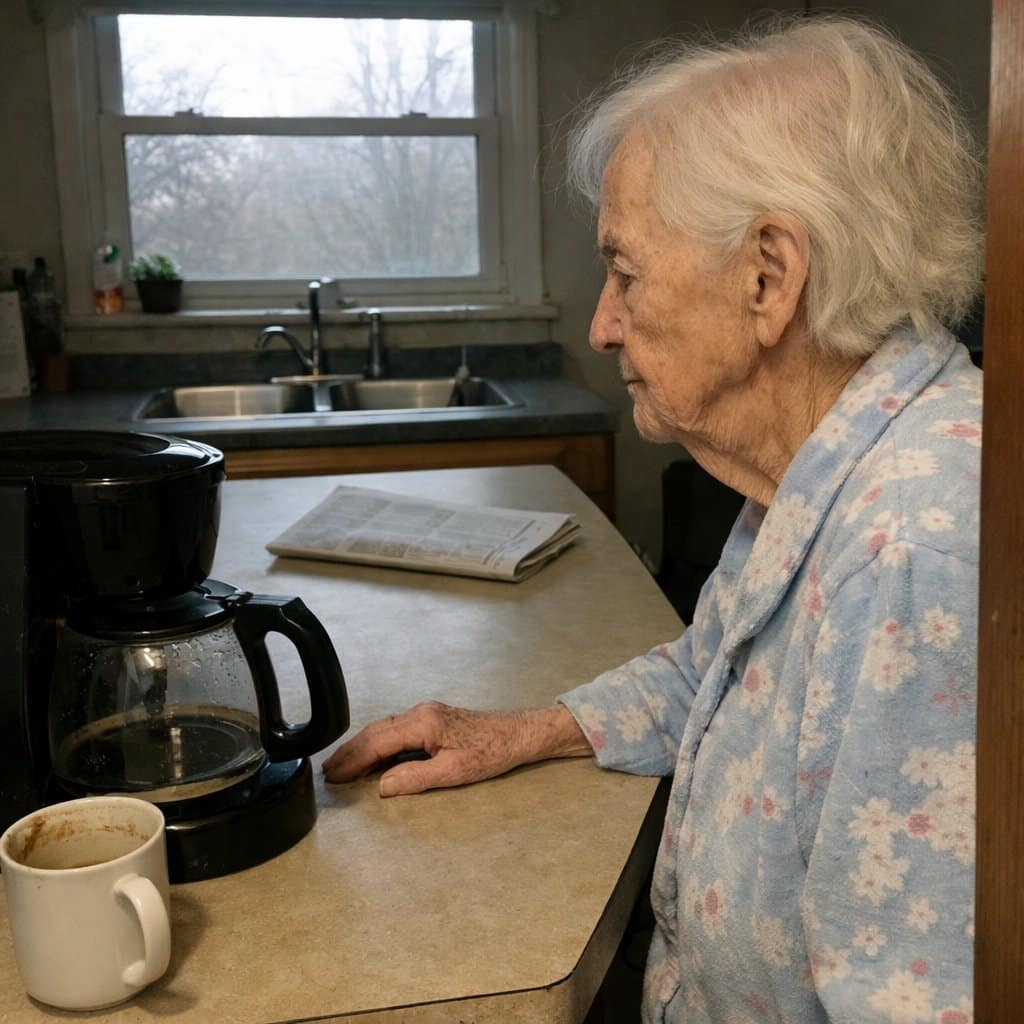
The Low-Effort Coffee Station Setup Checklist: A Caregiver’s 30-Minute Guide to Restoring Your Parent’s Morning Ritual
Set up a simple, low-maintenance cold brew coffee station in 30 minutes that restores your parent’s morning ritual, requires almost no daily effort, and gives you a natural daily check-in point from a distance.
Why Coffee Matters More Than You Might Think
Familiar Rituals Anchor the Day
For older adults, daily routines aren’t just habit — they’re structure. They signal to the brain that the day has begun, that things are in order, that life has a familiar shape.
Coffee is one of those anchors. It’s associated with getting dressed, sitting by a window, maybe reading the news. It’s a small pleasure that belongs entirely to them.
When the Ritual Disappears, It’s a Signal
When your parent stops making their morning coffee, it’s rarely because they stopped wanting it. It’s usually because something in the process got harder — the machine, the effort, the sense that making a full pot for one person feels wasteful.
If they’re skipping coffee, I always gently ask: what else are they skipping? This is the caregiver’s real fear, and it’s a reasonable one. Small disappearances tend to cluster. That’s why restoring this particular ritual matters beyond the beverage itself.
A Note on Cold Brew and Stomach Sensitivity
One practical reason cold brew comes up so often in conversations about older adults: it’s significantly lower in acidity than hot drip coffee. For seniors with sensitive stomachs or GERD, that difference is real and noticeable. The same great coffee, with less of the digestive friction.
Restoring the coffee ritual isn’t about caffeine. It’s about restoring a touchstone in your parent’s day.
Why the Old Setup Might Not Be Working Anymore
The Machine Is the Problem, Not the Motivation
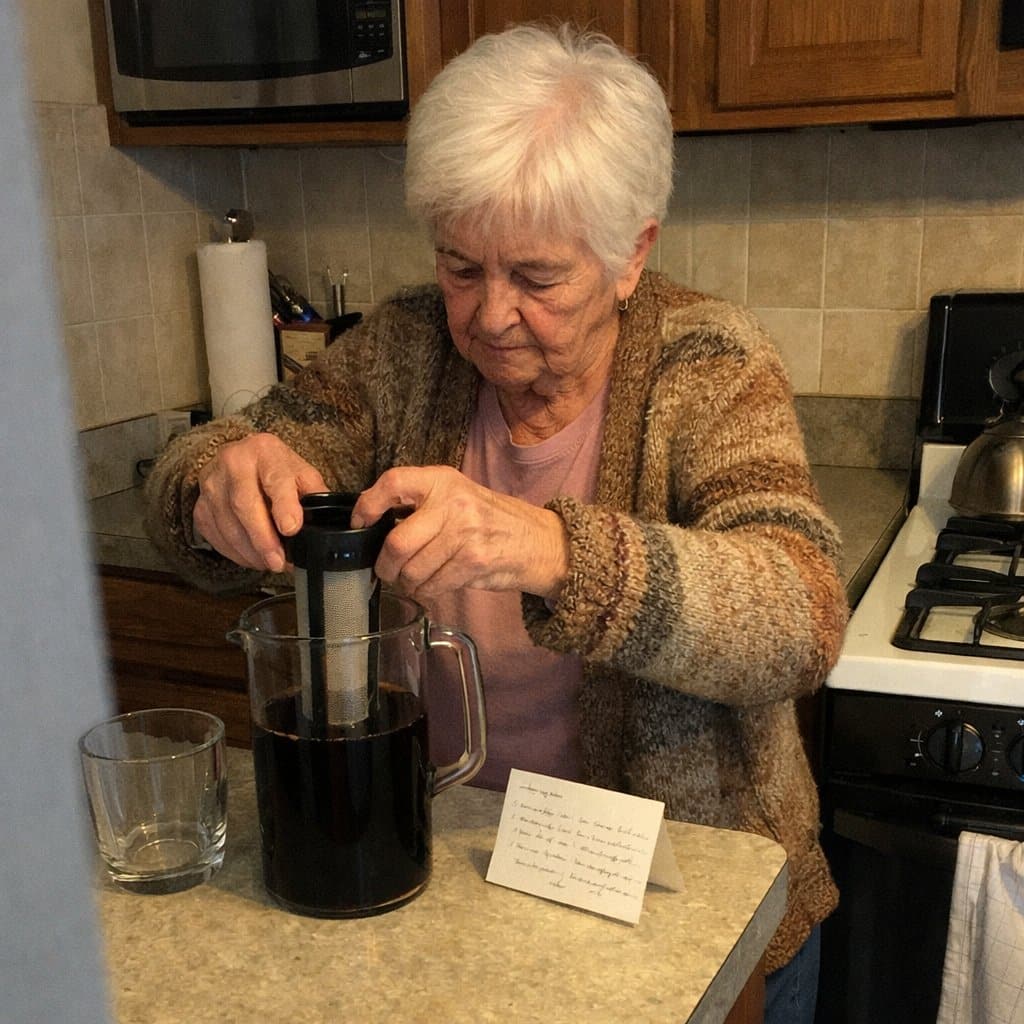
Traditional drip coffee makers require more decision-making than most people realize: measuring grounds, adding water, choosing the right setting, waiting, and — this is the big one — remembering to turn off the hot plate.
That last part is where a lot of older adults quietly give up. Not because they’re forgetful in a worrying way, but because the low-level anxiety of “Did I leave it on?” outweighs the pleasure of the coffee itself.
Making a Full Pot for One Person Feels Wasteful
Imagine your parent, who used to have a pot going by 7am. Now they’re alone. Making twelve cups when they’ll drink one — or maybe two — feels wrong. So they skip it. Not every day at first, then more often, then it’s just not something they do anymore.
This is what I mean when I say caregivers notice things slipping: it’s never one dramatic change. It’s the small daily rituals disappearing one by one, quietly, without anyone deciding they should stop.
Daily Tasks Now Require More Energy
When daily life takes more physical and cognitive effort than it used to, low-stakes tasks like brewing coffee get quietly deprioritized. It’s not stubbornness. It’s a natural response to a world that takes more out of you than it once did.
The solution isn’t to push your parent harder. It’s to remove the friction entirely.
What Cold Brew Changes — and How to Set It Up



What Cold Brew Actually Is
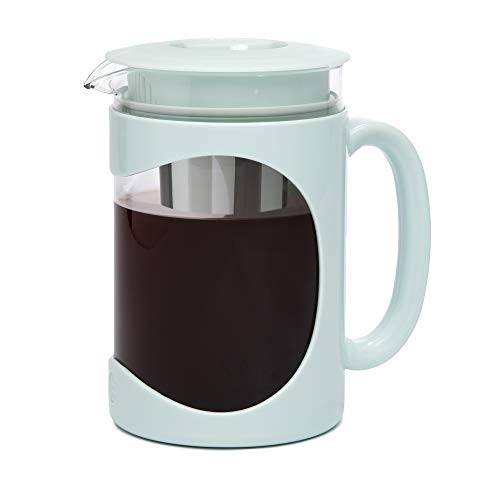
Cold brew is simple: coarse coffee grounds steeped in cold water for 12 to 24 hours, then stored in the fridge. No heat. No machine to turn off. No buttons to remember. No hot plate left on while your parent runs an errand.
When it’s done, you strain out the grounds — or skip that step entirely if you’re using a pitcher with a built-in filter — and you have several days’ worth of coffee ready to pour.
Why It Works for Older Adults Living Alone
Here’s what makes cold brew genuinely different from other low-maintenance coffee options:
- No heat element — nothing to worry about leaving on
- No buttons or settings — the process is add, wait, pour
- One batch lasts 4 to 7 days in the fridge — your parent only needs to make it once or twice a week
- Lower acidity — easier on sensitive stomachs than drip coffee
- Ready when they are — no waiting, no timing, no effort in the moment
Setting Up the First Batch Together
On your next visit, do this together. It takes about five minutes of active time:
- Add coarse coffee grounds to the filter or pitcher
- Fill with cold water
- Put it in the fridge
- Come back 12 to 24 hours later — it’s ready
That’s it. Done. One batch, ready to pour all week.
The Right Tool Makes It Even Simpler
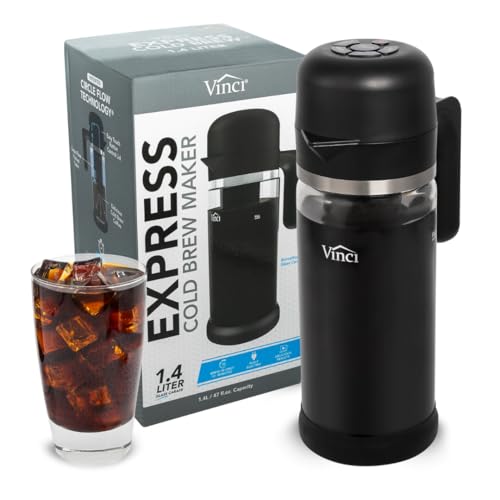
A cold brew coffee pitcher with a built-in mesh filter removes the straining step entirely — your parent just lifts out the filter, and the coffee is ready. Look for one that’s large-capacity (at least a quart), has an easy-grip handle, and is dishwasher safe for simple cleaning.


Looking for more practical ideas to support a parent’s independence at home? Subscribe to the Graying With Grace newsletter for trusted, caregiver-tested tips delivered weekly.
Setting up the pitcher is the easy part. The real magic is in building a small station around it.
How to Set Up a Coffee Station That Runs Itself
The Physical Setup Matters as Much as the Brewing Method
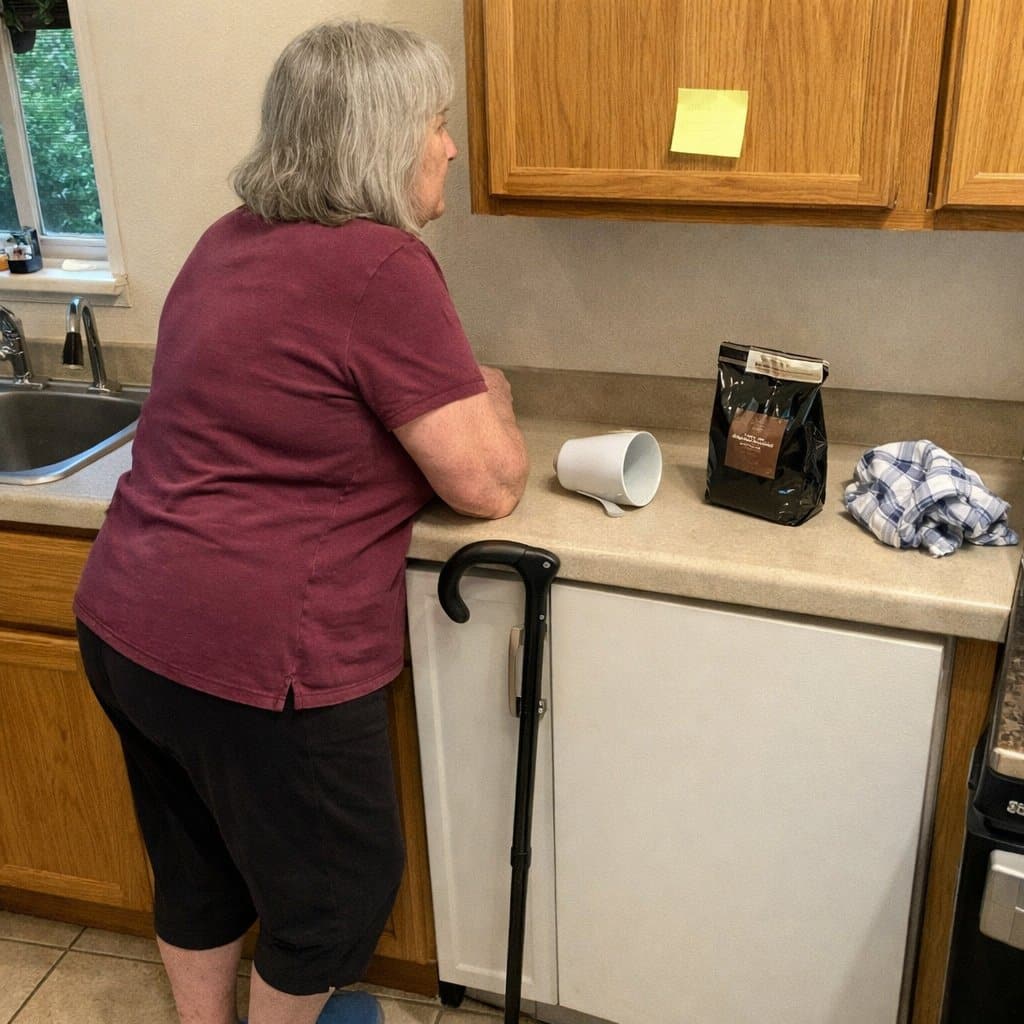
Here’s something I’ve seen trip up even the best-laid caregiving plans: the solution is right there, but it’s in the wrong cabinet. Or it’s on a high shelf. Or the mug is in a different drawer from the pitcher, and that’s just enough friction to break the habit.
Visual simplicity is especially important for older adults managing any level of mild memory challenge. When the cue is obvious and the path is clear, the routine happens. When it’s cluttered or complicated, it quietly stops.
Step-by-Step Station Setup
On your next visit, spend about 20 minutes doing this:
- Clear one counter space at a comfortable height — not too high, not awkward to reach
- Place the cold brew pitcher front and center in the fridge at eye level — visible the moment the door opens
- Set a glass or mug directly beside the fridge — the walk from fridge to cup should be zero steps
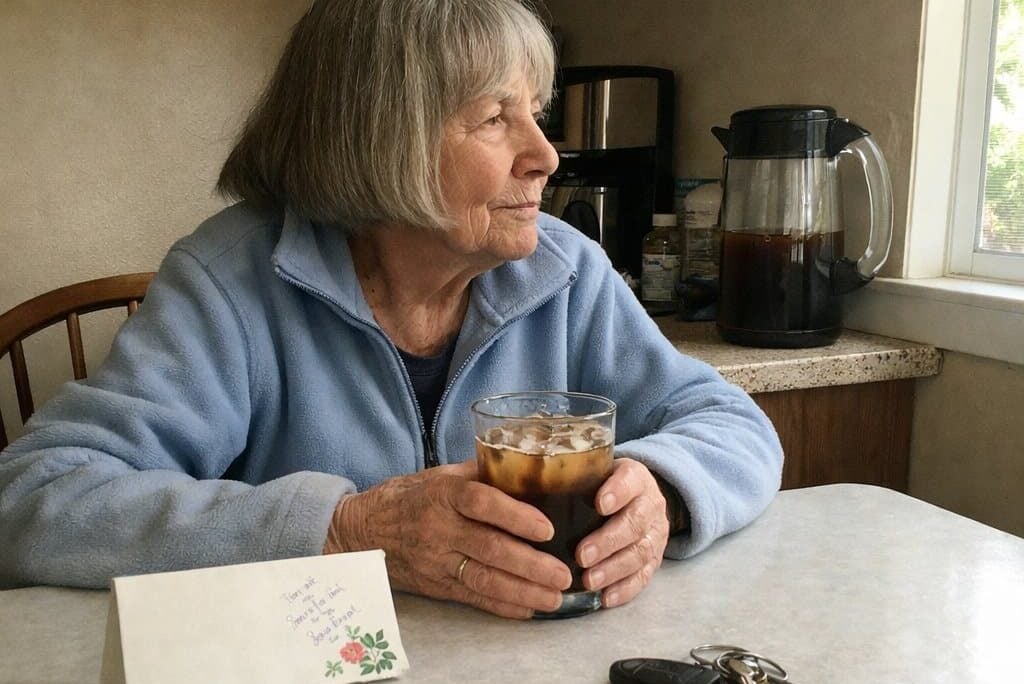
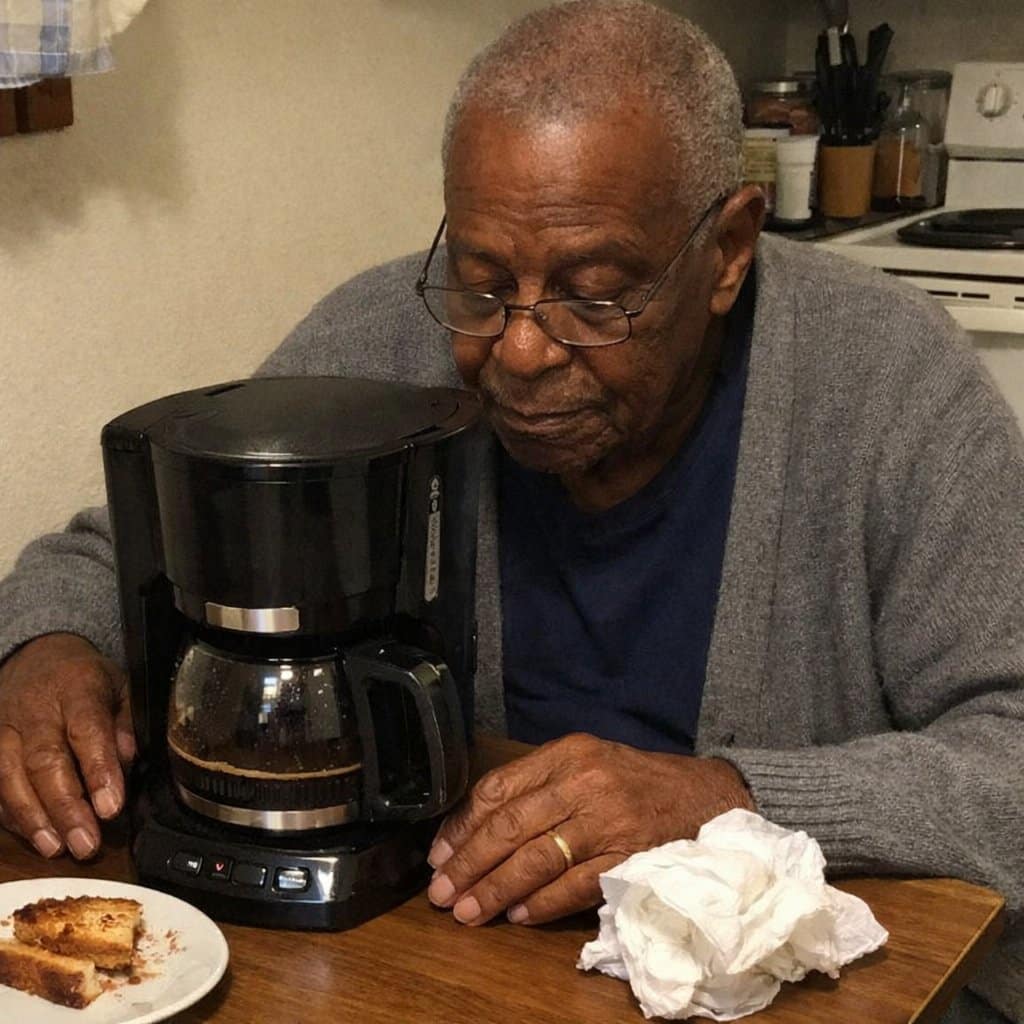
- Leave a simple handwritten card with one instruction: “Pour coffee over ice, add milk if you like, enjoy”
- Store a small container of pre-measured coffee grounds next to the pitcher so refilling requires no measuring, no guessing
That’s the whole system. Everything needed, in one place, requiring one decision: pour.
Checking In From a Distance
“Did you have your coffee this morning?” becomes something different now. It’s not small talk — it’s a gentle daily touchpoint that tells you whether the routine is holding.
If your parent mentions they’re running low on grounds, that tells you they’ve been using it. That’s meaningful information, and it opens the door to a real conversation about how their days are going.
This kind of simple home setup connects naturally to the broader project of helping a parent live safely and independently at home — where small systems, done well, do a lot of quiet work.
The Right Pitcher Size Matters
A large-capacity cold brew pitcher — ideally one to two quarts — means fewer refills and less effort for a parent living alone. Choose one with a wide-mouth opening so filling and rinsing is easy even for hands that aren’t as strong as they once were.


You’re not just setting up a coffee station. You’re setting up a daily anchor that runs without you.
Is Cold Brew Actually a Good Fit for Older Adults?
The Short Answer: Yes, for Most
For older adults who already enjoy coffee and don’t have specific medical restrictions, moderate cold brew consumption is comparable to drip coffee — and often easier on the stomach, as mentioned earlier.
It works best for parents who already have a coffee habit but have stopped making it regularly because the effort or the appliance anxiety got in the way.
A Few Things Worth Knowing
- Caffeine concentration: Cold brew concentrate can be stronger than drip coffee. Dilute it with water or milk to a comfortable ratio, and if your parent has heart or blood pressure concerns, check with their doctor about caffeine intake.
- Grip and handling: For parents with mild hand weakness, a pitcher with a comfortable, wide handle works well. For those with more significant tremors or grip challenges, a smaller pour-size container may be easier to manage.
- This isn’t a medical intervention: It’s a practical quality-of-life improvement. It restores a small pleasure. That’s enough.
Who Might Need a Different Approach
If your parent has been advised to limit caffeine entirely, or if they’ve never been a coffee drinker, this particular solution isn’t the right fit — and that’s okay. The broader principle still applies: find a small daily ritual that anchors their morning and make it as effortless as possible to maintain.
For parents managing more complex daily needs, it might also be worth exploring automatic tools that simplify other parts of their routine, like medication management — the same low-friction philosophy, applied elsewhere.
You’re not overhauling their routine. You’re restoring a small pleasure that already belonged to them.
The Low-Effort Coffee Station Setup Checklist: A Caregiver’s 30-Minute Guide to Restoring Your Parent’s Morning Ritual
Set up a simple, low-maintenance cold brew coffee station in 30 minutes that restores your parent’s morning ritual, requires almost no daily effort, and gives you a natural daily check-in point from a distance.
Putting It All Together
What You’re Really Doing Here
Caregiving from a distance is a constant exercise in finding small ways to help that don’t require you to be there every hour. That’s exhausting in its own way — always looking for the lever that moves things without you having to pull it yourself every day.
Setting up a cold brew coffee station is one of those rare solutions. It’s genuinely simple. It’s genuinely lasting. And for your parent, it restores something that belonged to them long before caregiving was part of either of your lives.
What It Looks Like in Practice
You show up for a visit. You spend 25 minutes clearing a counter space, picking up a cold brew pitcher, and making the first batch together. You write a simple card. You put the grounds container within easy reach.
And then, for the next week — maybe longer — your parent has one less daily friction point and one more small pleasure anchoring their morning.
That daily check-in question — “Did you have your coffee?” — becomes a quiet signal that things are okay. Or, if the answer changes, an early indicator worth paying attention to. Either way, you’re more connected to their daily reality than you were before.
For families thinking about the bigger picture of home safety and daily independence, I’d also recommend taking a look at resources like this fall prevention checklist and ideas for bathroom safety accessories — small changes in other parts of the home that add up to real support.
If you’re worried about how your parent is eating alongside how they’re drinking, the soft foods guide for elderly adults is another practical resource worth bookmarking.
One Last Thing
The smallest things, done with intention, are often the ones that matter most.
Have you helped a parent restore a small daily ritual that made a real difference? Or is there another daily friction point you’re trying to solve right now? Share your experience in the comments — your insight might be exactly what another caregiver needs to hear today.