
It’s 2:47 a.m. You reach into the drawer next to the bed and feel around in the dark.
No gloves. You think you left the wipes in the bathroom. The clean bed pad is somewhere in the hall closet — third shelf, maybe the second.
Your loved one is waiting.
That scramble is something I’ve heard from family caregivers more times than I can count. And it’s almost always preventable.
Managing incontinence care at home — especially overnight — is one of the most physically and emotionally demanding things a person can do for someone they love. Being unprepared in that moment doesn’t mean you’re failing. It means no one handed you the right system before you needed it.
A well-organized bedside care station changes that. It protects your loved one’s dignity, protects the mattress, and protects your sleep. This checklist breaks it into five categories of bedside care essentials — each one solving a specific problem that comes up during overnight and daily incontinence care.
Caregiver Bedside Care Station Checklist
Get this free checklist to organize a complete bedside care station so every supply you need for overnight incontinence care is within arm’s reach—no more searching in the dark while your loved one waits.
Start With the Foundation: Protecting the Bed


Why This Layer Comes First
Everything else in your bedside setup depends on having the right barrier between your loved one and the mattress. Get this wrong and you’re looking at more laundry, more disruption, and more stress — for both of you.
There are two distinct layers that work together, and most caregivers need both.
The Two-Layer System for Keeping the Bed Dry Overnight
The first layer is a waterproof mattress protector that goes under the fitted sheet. This is your permanent barrier — it stays on the bed and protects the mattress itself from any moisture that gets past the top layer. Look for one that fits snugly, breathes well, and can be washed without losing its waterproofing.


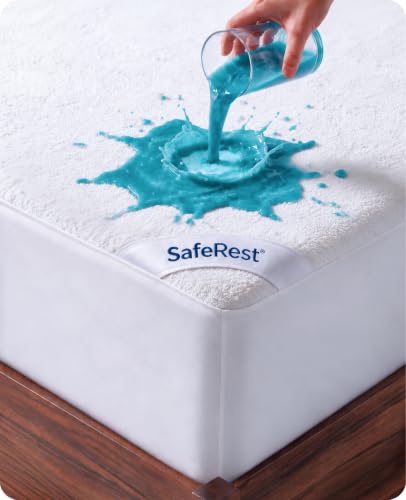

The second layer is a disposable bed pad placed directly on top of the sheet, under your loved one. This is your working layer — the one that gets changed during nighttime care without requiring a full sheet change.
Disposable vs. Reusable Bed Pads
Disposable bed pads reduce laundry burden significantly and are ideal for nighttime or high-frequency changes. Reusable pads offer long-term cost savings but require a reliable washing routine — which can be hard to maintain when you’re already stretched thin.
When evaluating bed pads, check for absorbency level, size (larger is better for restless sleepers), and whether the pad has a waterproof backing versus absorbent-only construction. Stock enough for overnight changes plus a buffer for laundry delays — I recommend keeping at least 10 to 15 disposable pads on hand at any given time.

![Chucks Pads Disposable [100-Pack] Adult Incontinence Underpads 23"x36"](https://m.media-amazon.com/images/I/5185MQ9aq5L._SL500_.jpg)


![Chucks® Premium Disposable Underpads - 30x36 [25-Pack] Bed Pads](https://m.media-amazon.com/images/I/51ctMjTBPcL._SL500_.jpg)


This isn’t about preparing for failure. It’s about protecting comfort and dignity before a problem starts, not scrambling after one.
Keep Hygiene Supplies at Arm’s Reach





Why Centralized Supplies Matter
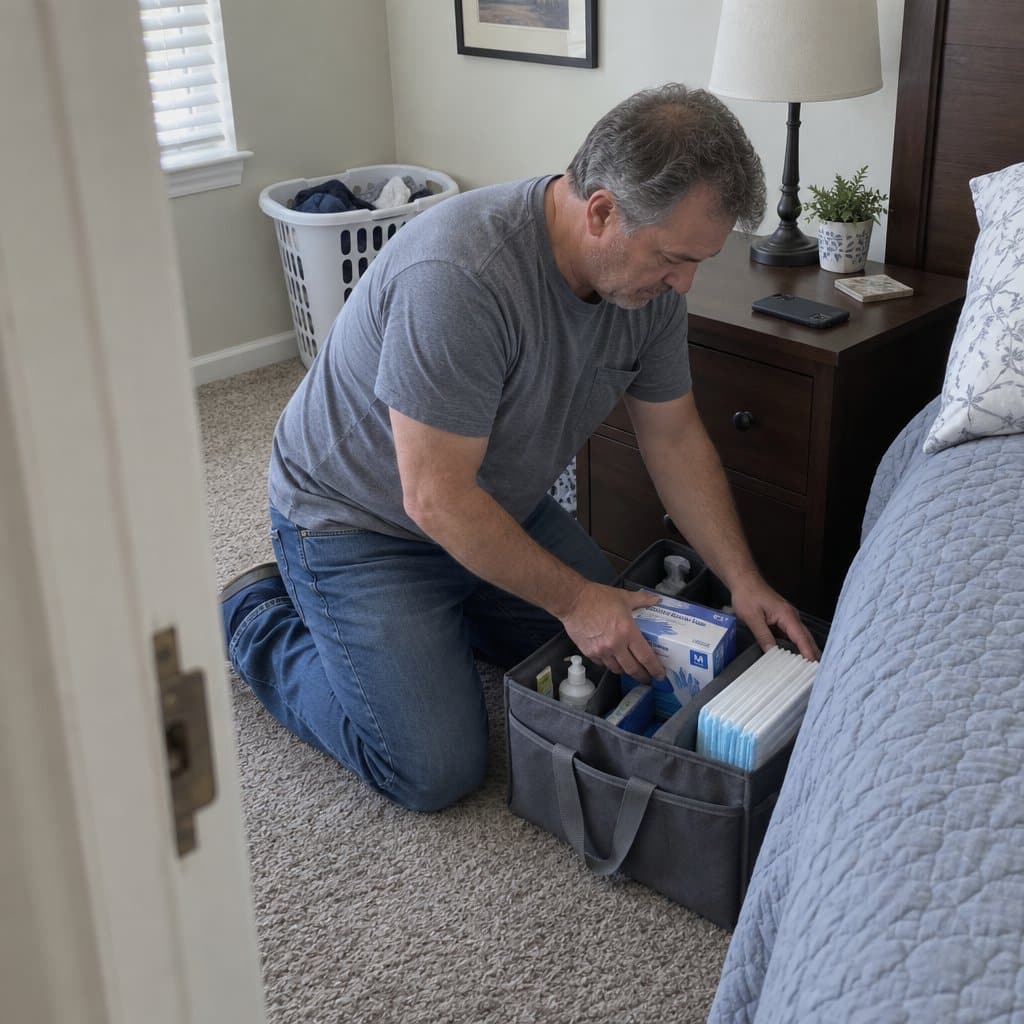
When a change is needed at 3 a.m., the last thing you should be doing is walking to another room for supplies. Every item required for a calm, dignified cleanup needs to be within one arm’s reach of the bed.
This matters even more when your loved one has dementia or sleep difficulties. Leaving the bedside — even briefly — can increase their disorientation and make the entire process harder for both of you. I’ve seen caregivers transform their overnight routine simply by moving their supplies from the bathroom cabinet to a caddy next to the bed.
No-Rinse Body Wash
No-rinse body wash eliminates the need to move your loved one to a bathroom for cleanup. There’s no rinsing, no wet linens, and significantly faster care. It’s one of the most practical items in any bedside hygiene kit — and one of the most frequently forgotten.


Disposable Gloves
Disposable gloves belong in every bedside kit. They protect both caregiver and person receiving care, they’re fast to put on and take off, and they make disposal straightforward. Keep a full box within easy reach — not stored under the bed or in a closet.


Skin Barrier Cream
Moisture-related skin breakdown is one of the most common and preventable complications of incontinence care. Applying skin barrier cream as part of every change routine creates a protective layer that keeps moisture away from skin — this is a small step that makes a significant difference over time.
Store these items so a caregiver can access them in the dark. That means consistent placement, not a drawer. A stocked bedside is the difference between a 10-minute calm change and a 40-minute ordeal.



Make the Person Comfortable and Secure




Safety During Nighttime Repositioning
A bedside care station isn’t only about managing incontinence — it’s about supporting the physical safety and sense of security of the person in the bed. Nighttime care often involves repositioning someone with limited mobility, which means physical support equipment isn’t optional.
This is also where fall prevention becomes part of the bedside conversation. A person who feels unstable during repositioning is more likely to grab for something — anything — to steady themselves.
Bed Rails
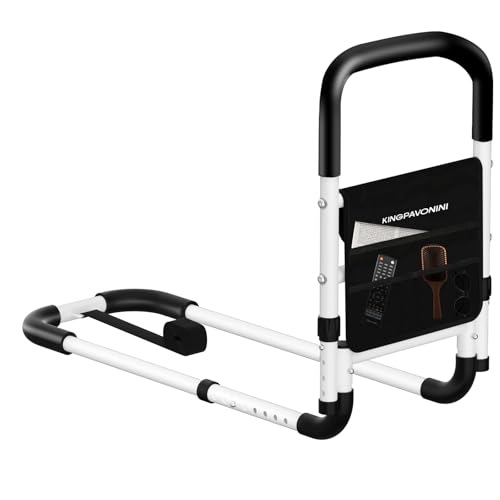
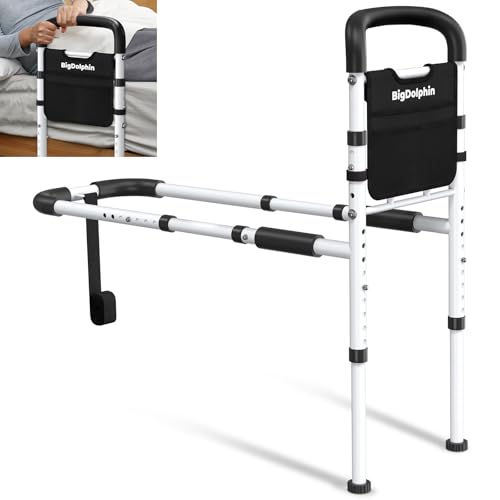
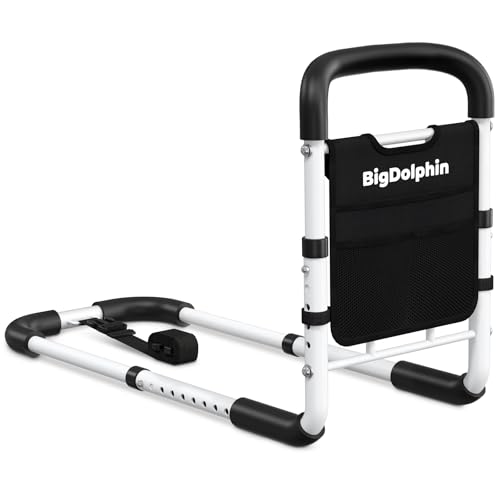
A bed rail provides a stable handhold during repositioning, getting in and out of bed, or turning to one side. It reduces fall risk and — importantly — gives the person receiving care a sense of control over their own movement. That sense of agency matters more than most caregivers realize.
If you’re evaluating options, bed rails designed specifically for older adults offer features like padded grips, adjustable height, and secure attachment that standard rails don’t always provide.





Pull-Up Incontinence Underwear
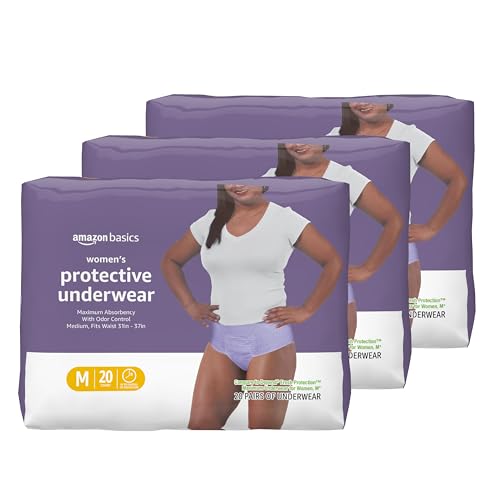
For mobile individuals, pull-up incontinence underwear is easier to change than traditional briefs and more dignified for the person wearing them. They fit and feel closer to regular underwear, which preserves a sense of normalcy during an inherently vulnerable moment.
Keep the correct size stocked at the bedside. Sizing matters — too large and they won’t provide reliable protection, too small and they’re uncomfortable and difficult to remove.




The right equipment at the bedside gives your loved one back a measure of independence and dignity during one of the most vulnerable parts of their day.
Want more caregiver checklists, product recommendations, and practical senior care guides delivered to your inbox? Subscribe to our newsletter for trusted advice built around real caregiving situations.

Organize It So You Can Find It in the Dark




The Most Overlooked Step in Bedside Setup
In my experience, most caregivers already own many of the right supplies. The problem isn’t what they have — it’s that nothing has a consistent home near the bed. Supplies end up in drawers, closets, bathrooms, and kitchen cabinets. When they’re needed quickly, they’re nowhere.
The Bedside Caddy Solution
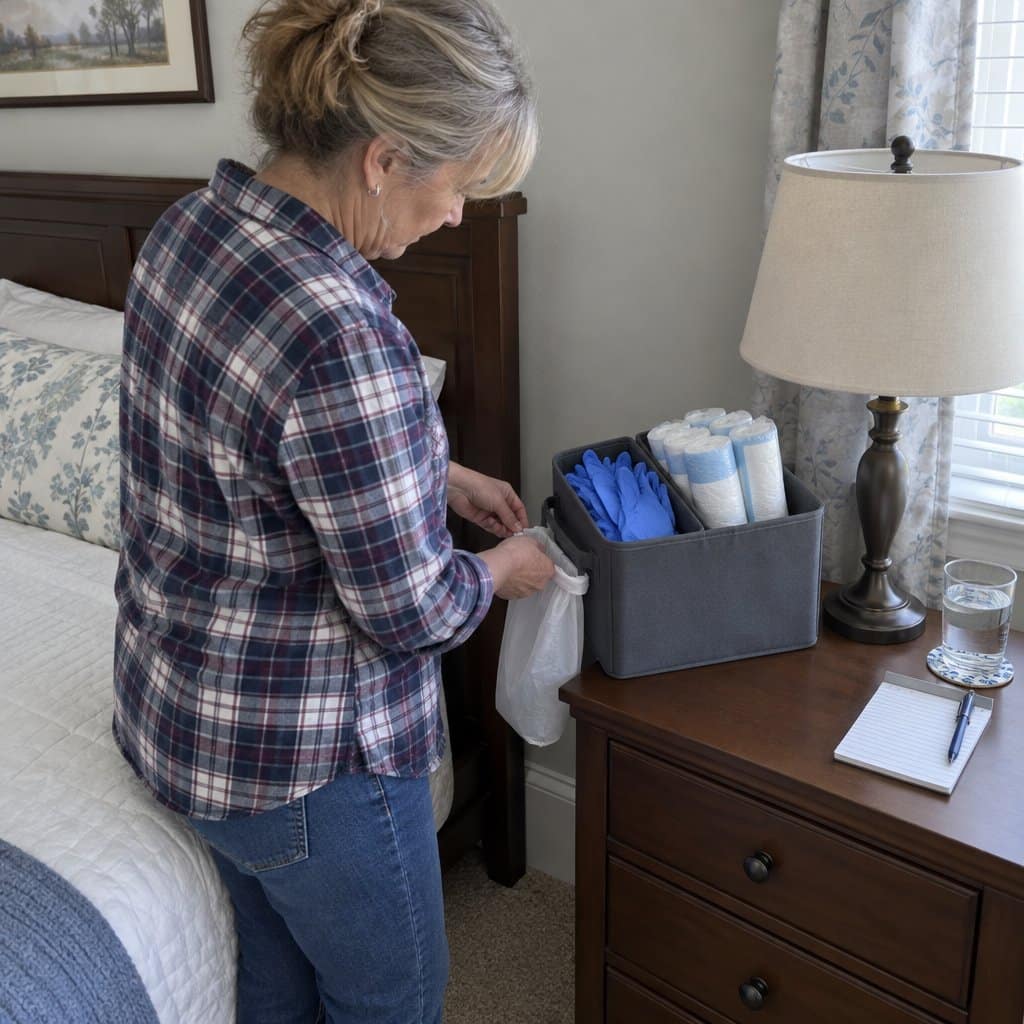
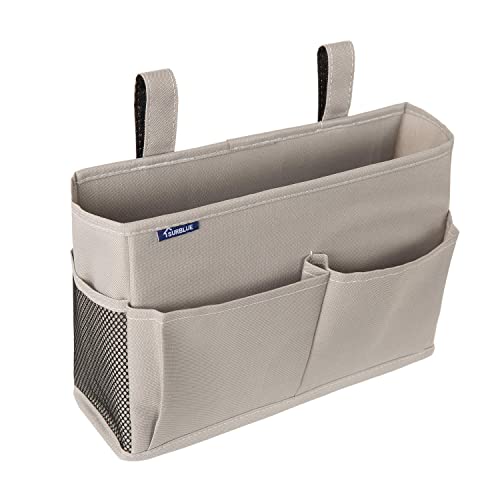
A bedside caddy or organizer creates a dedicated, visible, reachable zone for every item in the checklist. No drawers. No searching. No trips down the hall at 3 a.m.
Organize it intentionally: gloves and wipes at the top for fastest access, bed pads folded and ready in a larger compartment, hygiene supplies grouped together so nothing gets buried. If multiple caregivers rotate shifts, label or color-code sections so the setup stays consistent regardless of who’s on duty — consistency protects the person receiving care, not just the caregiver’s workflow.
Keep a small trash liner clipped to the caddy or placed directly beside it so used supplies can be disposed of immediately without leaving the bedside.
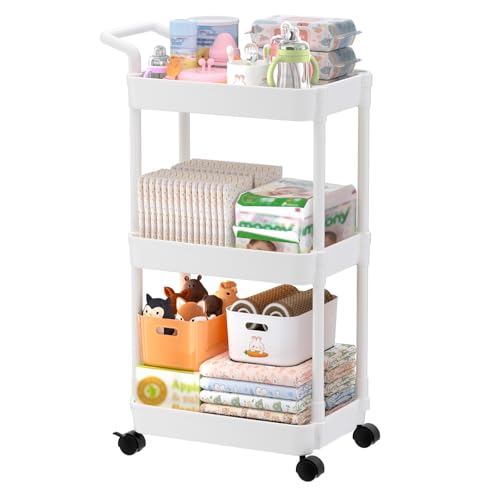

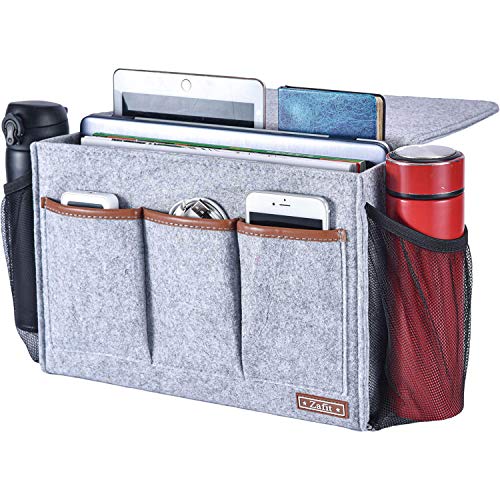


An organized bedside setup is one of the most underrated tools in caregiving. It’s not about being tidy — it’s about being ready. And being ready is how you protect both the person in your care and yourself.
For caregivers who are also thinking about broader home safety, pairing a well-stocked bedside with bathroom safety products creates a more complete overnight safety system.

The Full Caregiver Bedside Essentials Checklist
Save This, Print It, Share It
Here is everything that belongs in a well-stocked bedside incontinence care setup. This is your reference — organized by category, formatted so you can scan it in under a minute.
Bed Protection
- Waterproof mattress protector — goes under the fitted sheet; stays on the bed permanently
- Disposable bed pads — placed on top of the sheet; stock a minimum of 10–15 at a time
Hygiene and Skin Care
- No-rinse body wash — for cleanup without moving your loved one to the bathroom
- Disposable gloves — keep one full box at the bedside; restock before you run low
- Skin barrier cream — apply with every change to prevent moisture-related skin breakdown
Comfort and Safety
- Bed rail — provides a stable handhold for repositioning and getting in and out of bed
- Pull-up incontinence underwear — sized correctly; stock at least a 2-week supply
Organization
- Bedside caddy organizer — keeps all supplies visible and reachable without searching
- Small disposable trash liner — clip to the caddy or keep directly beside it for immediate disposal
A Note on Quantities and Reassessment
Stock at least a 2-week supply of all disposable items — pads, gloves, and underwear — so you’re never caught short mid-week. Running out mid-week and making an emergency pharmacy run is exactly the kind of friction this setup is designed to eliminate.
Reassess the setup every few months. Mobility changes. Incontinence severity shifts. What’s working now may need adjustment — and a setup that’s slightly behind your loved one’s current needs creates more work, not less. The checklist works whether care is provided overnight only or around the clock.
If your loved one uses a bed step for getting in and out of bed, make sure that’s accounted for in the physical layout of the bedside station — it should never block access to the caddy or the bed rail.
For caregivers managing care for someone with dementia, pairing this setup with a bed alarm adds another layer of overnight safety — so you’re alerted before a fall rather than after one.
This isn’t a list of products. It’s a system that works quietly in the background so you can focus on the person in front of you, not the supplies behind you.
Caregiver Bedside Care Station Checklist
Get this free checklist to organize a complete bedside care station so every supply you need for overnight incontinence care is within arm’s reach—no more searching in the dark while your loved one waits.
You’ve Already Done the Hard Part
Setting up a bedside care station won’t make caregiving easy. Nothing does. But it removes friction from the moments when you’re most tired and most stretched — and that matters more than it might sound at 2 p.m. on a Tuesday.
Caregiving is demanding in ways that are hard to explain to someone who hasn’t done it. The small act of organizing what’s next to the bed is one of the highest-return investments you can make — not just for your loved one’s comfort, but for your own peace of mind when the house is quiet and the night is long.
Start with just one category this week. Bed protection is usually the easiest place to begin. Get the mattress protector in place and stock the bed pads. Then add hygiene supplies. Then the caddy. Build it one layer at a time.
If you already have a bedside setup that’s working well, share what you’ve learned in the comments. And if there’s something you’re still trying to figure out — a specific product, a nighttime routine question, a situation that isn’t covered here — ask it. That’s exactly what this space is for.