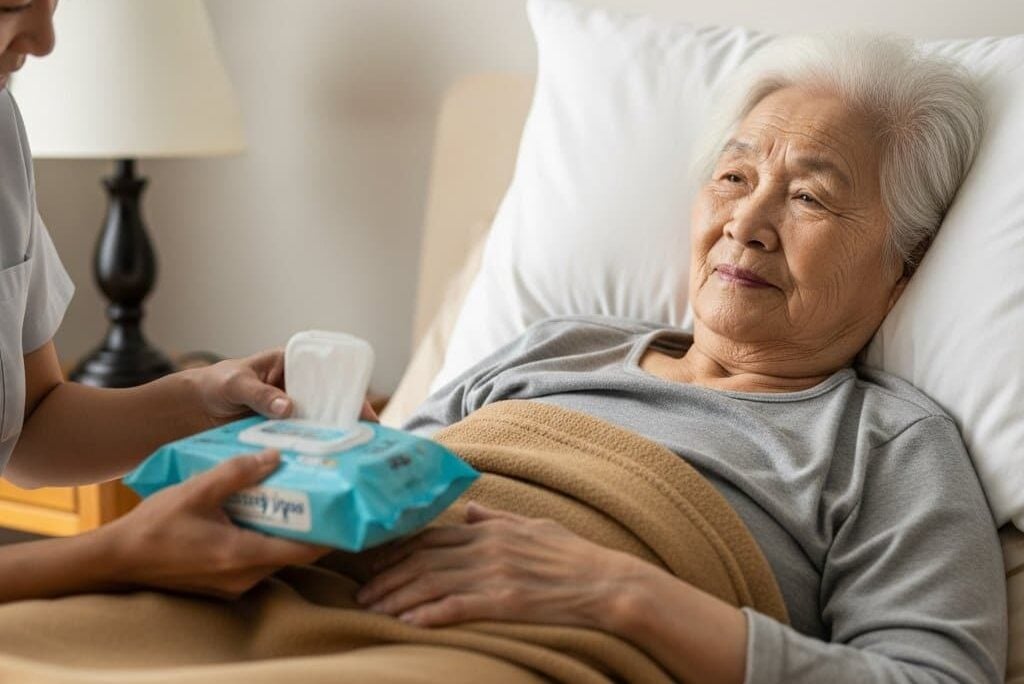
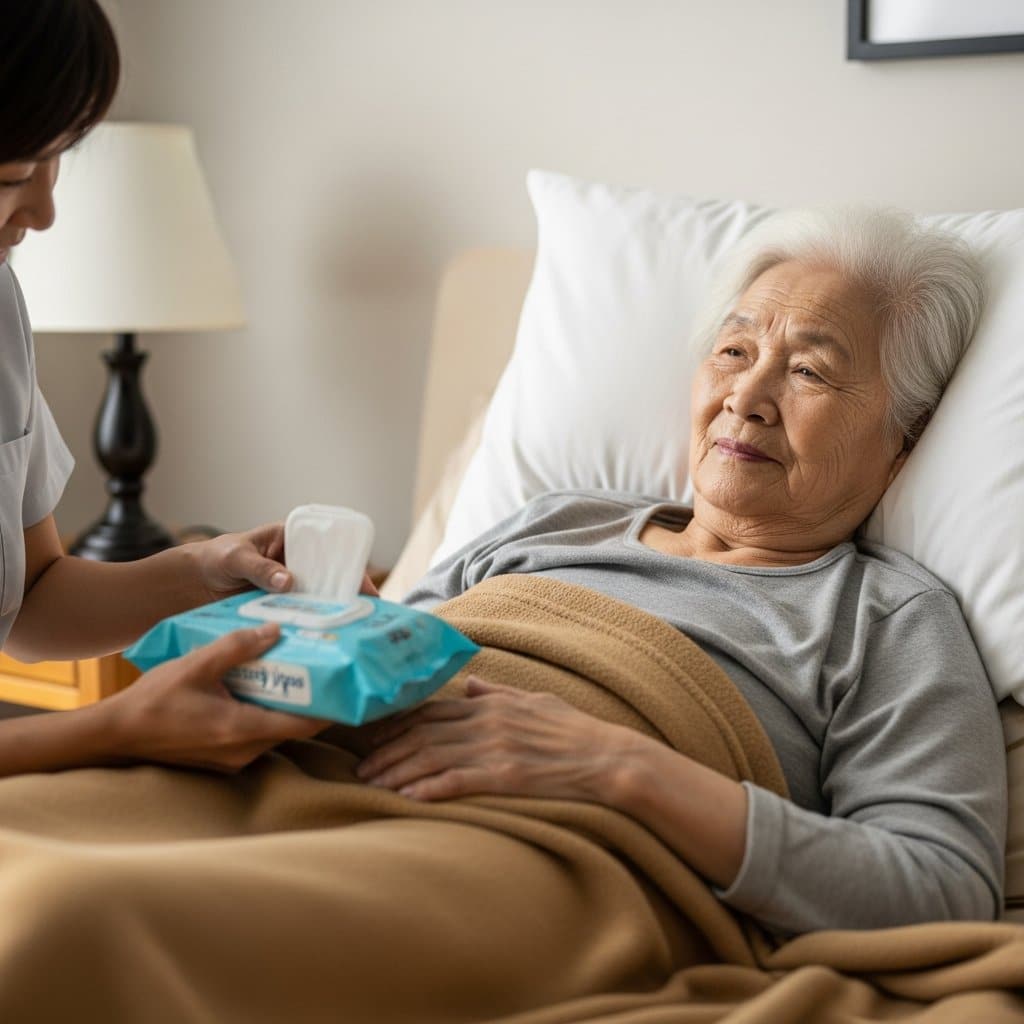
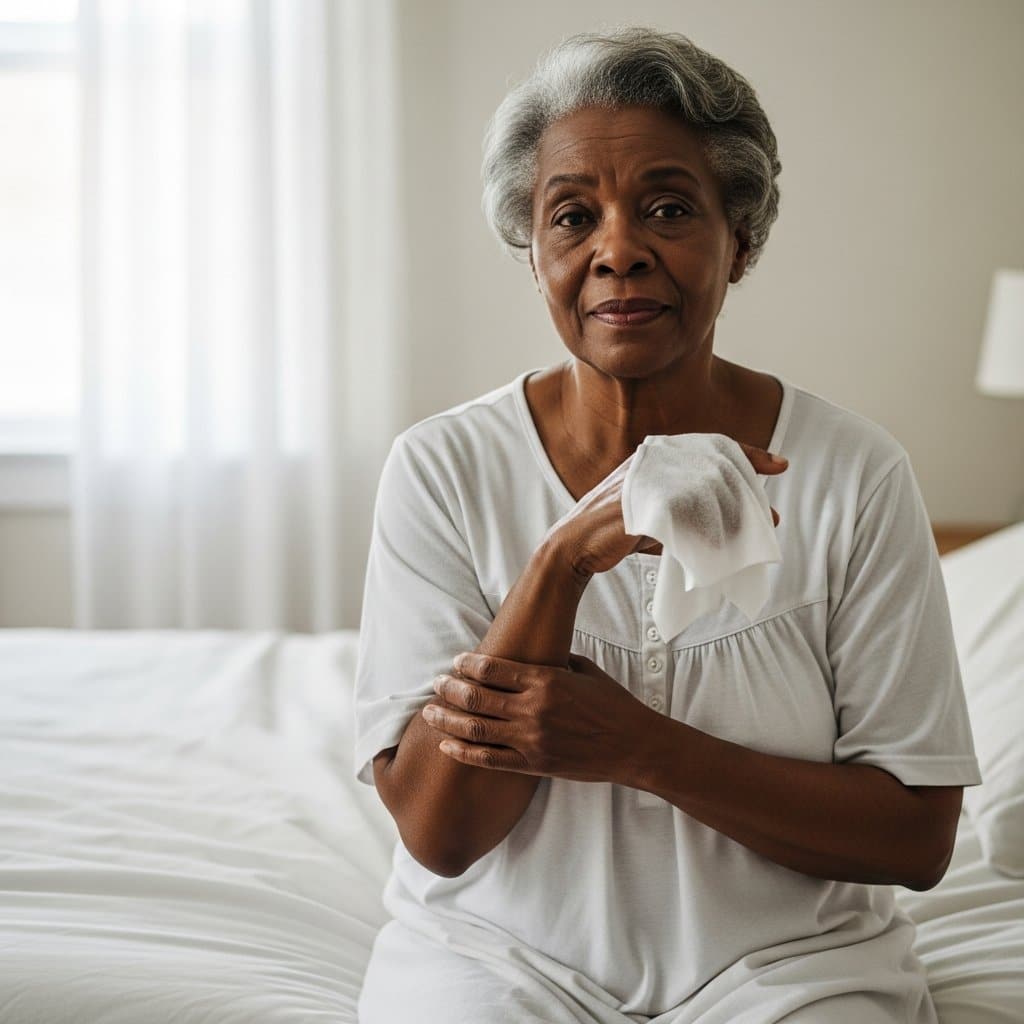
It’s been a long day, and your mom is exhausted.
She’s unsteady on her feet, and the thought of helping her into the shower — again — feels like more than either of you can manage right now.
You need to keep her clean, comfortable, and dignified. But tonight, the shower just isn’t the answer.
If you’ve been in that moment, you’re far from alone. Helping an elderly loved one maintain personal hygiene when traditional bathing becomes difficult is one of the most common — and quietly stressful — challenges in daily caregiving. It’s not a failure. It’s a reality that deserves real solutions.
No-rinse body wipes for elderly care are exactly that: a legitimate, effective bathing alternative that professional caregivers rely on every day. By the end of this guide, you’ll know exactly what to look for so you can choose with confidence — and provide the kind of dignified, comfortable care your loved one deserves.
One important thing to know upfront: not all body wipes are created equal. What works for a gym bag or a diaper change won’t work for aging skin. The right wipe makes all the difference.
The No-Rinse Body Wipe Buyer’s Checklist: 5 Things Every Caregiver Should Verify Before Buying
Download this five-point checklist to confidently select no-rinse body wipes that won’t tear, irritate aging skin, or waste your money—so you can focus on delivering comfortable, dignified care instead of managing product failures.
Why No-Rinse Body Wipes Deserve a Permanent Place in Elderly Care
Many caregivers feel uncertain the first time they reach for a body wipe instead of setting up a sponge bath or shower. It can feel like a shortcut — like you’re settling for less.
You’re not.
When Body Wipes Become the Most Practical Choice
There are moments in every caregiving routine when no-rinse bathing for elderly at home is simply the most appropriate option. These include:
- Post-procedure or post-hospitalization recovery, when movement is restricted
- High fall-risk days when transferring to the bathroom increases danger
- Episodes of extreme fatigue, illness, or weakness
- Resistance to bathing, which is especially common in seniors with dementia
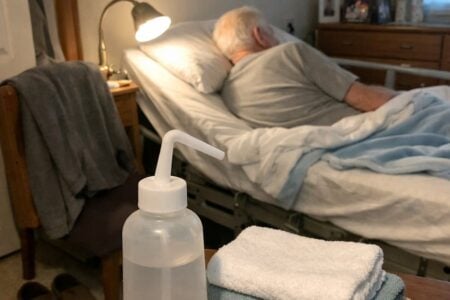
- Bedridden periods when a full bed bath isn’t feasible
In all of these situations, body wipes for elderly with limited mobility aren’t a compromise — they’re the clinically sensible choice.
How Body Wipes Compare to a Sponge Bath
Compared to a traditional sponge bath for elderly care, no-rinse body wipes require less setup, less physical effort from the caregiver, and far less disruption for the senior. There’s no basin to fill, no rinsing required, and no wet bedding risk.
When chosen correctly, these wipes clean thoroughly and actively support skin health — rather than compromising it.
Using body wipes isn’t settling for less. It’s choosing the tool that best fits the moment. Even professional home care aides use them routinely.
But choosing the right wipe requires knowing what to look for. Here are the five criteria that matter most.

Size Matters More Than You Think


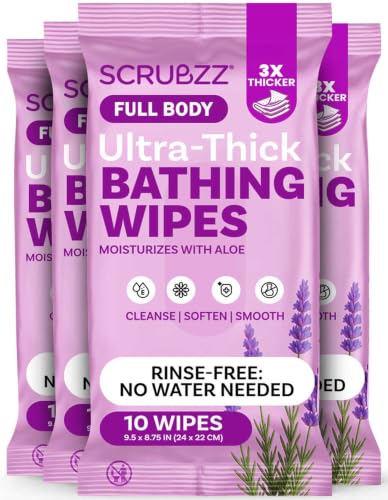
The single most overlooked feature when caregivers first shop for body wipes? Size. And it has a bigger impact on the caregiving experience than almost any other factor.
Why Standard Wipe Sizes Fall Short
Most wipes on store shelves — baby wipes, travel wipes, personal hygiene wipes — are designed for small-area cleaning. They were never intended for full-body elderly care.
Using undersized wipes for a bed bath means:
- More wipes used per session, driving up cost
- More repeated contact with fragile skin, increasing irritation risk
- More physical effort for the caregiver, especially for bedridden seniors
What to Look For on the Label
When evaluating large size body wipes for senior care, look for dimensions of at least 8×12 inches. Anything smaller is almost certainly not designed for full-body adult care.
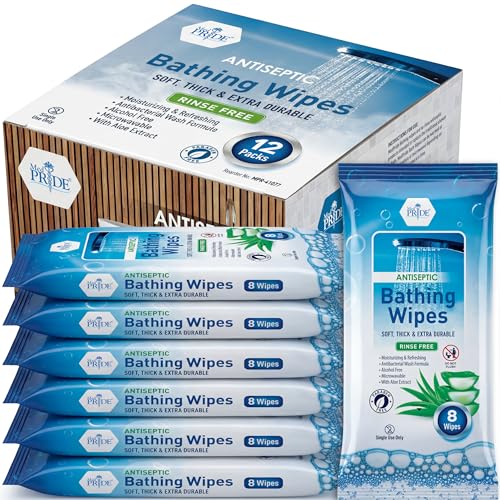
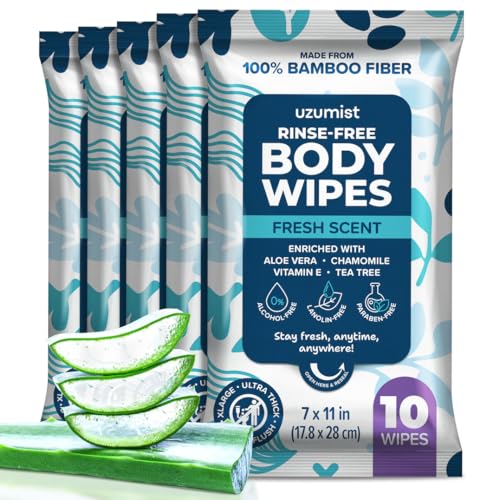
A wipe large enough to cover a senior’s back or the full length of a leg in a single stroke reduces both caregiver fatigue and the number of touches on sensitive skin.
The Practical Difference
Picture the difference between struggling through a bed bath with standard-sized wipes that keep running out — versus using a large-format wipe that cleans an entire limb in one smooth motion.
Bigger isn’t wasteful. It’s efficient. One well-sized wipe does the job of three small ones and causes far less discomfort for your loved one.
This is especially important when caring for seniors who already experience anxiety or discomfort around personal hygiene routines. Fewer touches, less time, and a smoother experience are always the goal. If you’re also thinking about shower safety for days when a full bath is possible, those principles of minimizing disruption apply there too.

GSM Thickness — The Feature Most Caregivers Don’t Know to Check
If you’ve ever had a wipe tear apart mid-use, you already understand why GSM matters — even if you didn’t know the term for it.
What GSM Means in Plain Language
GSM stands for grams per square meter. It’s simply a measure of how heavy and thick the fabric of the wipe is. The higher the GSM, the sturdier the wipe.
Low-GSM wipes:
- Tear or shred during use
- Leave fibers on the skin, which is unhygienic and uncomfortable
- Require multiple replacements mid-session, interrupting the routine
The Right GSM Range for Elderly Care
For reliable performance in elderly bed bath at home or daily use, look for wipes rated at 60 GSM or higher. At this weight, the fabric holds together through a full cleansing routine without pilling or breaking down.
Thickness also affects how the wipe feels against aging skin — a denser fabric retains warmth better and provides a more comfortable, cloth-like texture rather than a flimsy, cold sheet.
How to Find This Information
Look for GSM listed on product packaging or in the online product description. If it isn’t listed, read verified caregiver reviews that specifically comment on durability and whether wipes held up through a full session.
Thick body wipes for elderly bedridden care are worth a slightly higher per-unit cost because they reduce the total number of wipes needed per session.


A wipe that holds together is a wipe that actually does its job. Thickness is a quality indicator — full stop.
Ready to discover more trusted tools and tips for elderly caregiving at home? Subscribe to our newsletter for expert-tested recommendations designed specifically for caregivers and older adults.
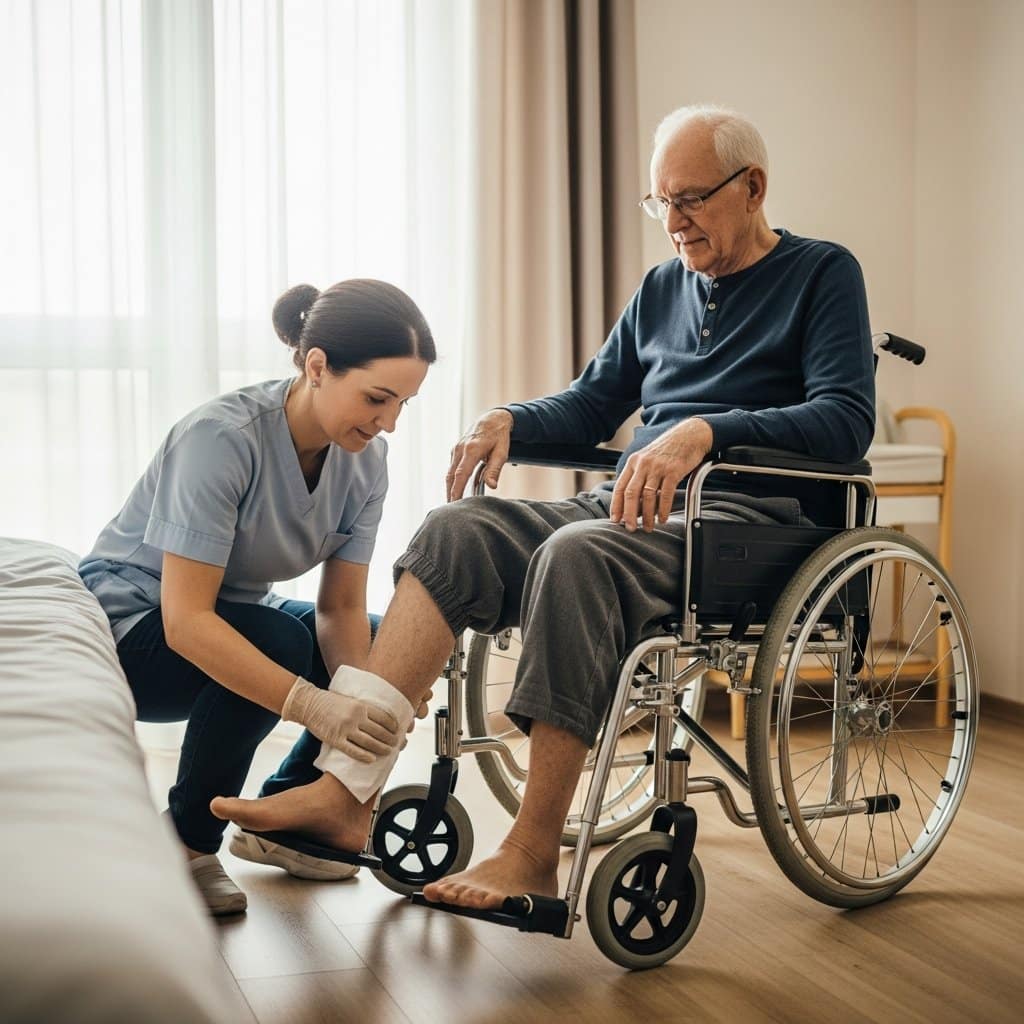
pH Balance and Skin Safety — Protecting Elderly Skin From the Inside Out


One of the most common questions I hear from caregivers is: Are no-rinse wipes safe for elderly skin? The answer is yes — but only when they’re formulated with aging skin in mind.
Why Elderly Skin Is More Vulnerable
As we age, skin becomes thinner, drier, and significantly more prone to irritation and breakdown. The natural moisture barrier weakens, making elderly skin less able to recover from exposure to harsh ingredients.
This is why the formulation inside that wipe matters just as much as its size or thickness.
Understanding pH Balance for Skin Health
Healthy skin has a slightly acidic pH, generally between 4.5 and 5.5. Products that fall outside that range — especially those that are more alkaline — can disrupt the skin’s protective barrier, leading to dryness, irritation, and over time, increased risk of skin breakdown.
Ingredients to watch for and avoid:
- Harsh alcohols — strip natural moisture from already-dry skin
- Strong preservatives — can cause allergic reactions in sensitive individuals
- Synthetic dyes — unnecessary and potentially irritating
What the Label Should Say
Look for wipes labeled:
- ✅ Alcohol-free
- ✅ Hypoallergenic
- ✅ pH-balanced
If your loved one has fragile or compromised skin — or is at risk for pressure injuries — ask their care team before introducing any new product.
Choosing a pH-balanced, skin-safe wipe isn’t being overly cautious. It’s protecting your loved one from preventable skin problems that can become serious complications. The goal of every caregiving tool should be to make your loved one more comfortable — and bathroom safety products and bathing alternatives alike should be held to that same standard.

Scent and Fragrance — When “Fresh” Becomes a Problem
It seems intuitive: a freshly scented wipe should leave your loved one feeling clean and refreshed. In practice, added fragrance in body wipes is one of the most common sources of unnecessary skin irritation and sensory discomfort in elderly care.
Why Fragrance Poses a Higher Risk for Seniors
Older adults are more likely to have:
- Increased sensitivity to synthetic scents
- Respiratory conditions like COPD or asthma that make strong fragrances physically uncomfortable or harmful
- Dementia-related sensory processing changes that make unfamiliar or strong scents disorienting or upsetting
- Skin that reacts more readily to allergenic fragrance compounds
Unscented vs. Fragrance-Free — Know the Difference
These two labels are not the same thing:
- Unscented may still contain fragrance chemicals used to mask the smell of other ingredients
- Fragrance-free means no fragrance compounds were added at all — this is the more protective label
When in doubt, fragrance-free is always the safer default for elderly care.
When a Lightly Scented Wipe Might Be Acceptable
Some individuals do tolerate and even prefer a very light scent. If you’re considering a scented product, introduce it slowly and watch carefully for any signs of skin reaction, respiratory discomfort, or agitation — particularly in seniors with dementia or COPD.
Fragrance-free body wipes for elderly with sensitive skin, respiratory conditions, or dementia are increasingly available from brands focused on adult and eldercare markets — and they’re worth seeking out specifically.


Fragrance-free isn’t odorless. It simply means the wipe won’t introduce unnecessary irritants. Clean is always the goal — not perfumed.
Resealable Packaging — The Practical Detail That Protects Every Wipe
Here’s a detail that rarely makes the headline but quietly determines whether half your package ends up wasted: how well the packaging reseals.
Why Wipes Dry Out Faster Than You’d Expect
Caregiving routines are rarely linear. Wipes get opened, used partially, set aside, and returned to — sometimes multiple times in a single session. Without a reliable reseal mechanism, the remaining wipes begin drying out almost immediately.
A dried-out wipe is less effective at cleansing, harsher on skin, and simply a waste of money.
What Good Resealable Packaging Looks Like
Look for:
- A firm adhesive flap that reseals cleanly after each use
- Packaging designed to lay flat and stay closed between sessions
- Reviewer comments specifically praising the seal — this is one of the most reliable quality signals you’ll find
Be cautious of packages with thin plastic tabs or press-strip seals that fail after the first or second use. These are common complaints in lower-quality products.
The Hygiene Consideration
Poor packaging doesn’t just cause wipes to dry out — it can also allow contamination between uses. A properly sealed package keeps every remaining wipe protected and ready.
Resealable body wipes for elderly at home are a searchable product category that prioritizes this feature — and caregiver reviews often call out packaging quality specifically as a deciding factor in whether they repurchase.


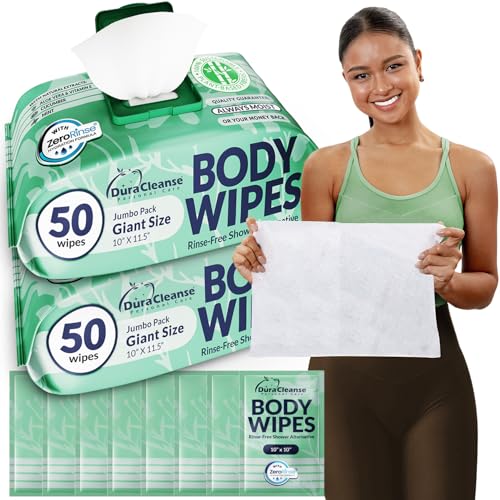
Resealable packaging protects your investment and ensures every wipe works as intended. It’s a small detail with a big impact on daily caregiving.
Other Ways to Keep Someone Clean
Wipes are not the only way to keep your loved one clean. There are a few other options, and it helps to know what each one is.
Washcloths are the plainest choice. You use a cloth instead of a disposable wipe.
Biodegradable wet wipes are another choice. They are still wipes, so the size, thickness, and scent advice above applies to them too.
A bed bath with bath sponges is the third. It is the old-fashioned way, and you will recall that it takes more setup than a wipe.
Back scrubber brushes are different from the rest. They make it easier for someone to clean themselves in the shower, so they suit a person who can still stand in the shower. They are not much help for someone who can’t.
So the choice mostly comes down to where your loved one is on a given day. If they can shower, a back scrubber lets them do more of the washing themselves. If they can’t, washcloths, sponges, or wipes do the job in bed.
The trade-off is that each of these asks something of you or of them. A back scrubber needs a shower, and a sponge bath needs more setup than a wipe. Pick the one that fits the day you are having.
How to Give a Wipe Bath, Step by Step
Once you have the right wipes, the bath itself is simple. Here is the order I would follow.
If you want the wipes warm, you can microwave them. Heat them in 15-second intervals until they reach the temperature you want, rather than one long stretch.
Before a wipe touches your loved one, test it against your inner wrist. That way no one gets scalded.
Start with the three key areas: the armpits, the private parts, and the feet. Use a new wipe for each of those spots.
After that, use extra wipes to clean the rest of the body. Take as many as you need to get the job done.
Once the “dry shower” is finished, you can apply some deodorant or perfume so your loved one feels fresh. A light touch is plenty, and the fragrance advice above still applies if their skin or breathing is sensitive.
Finish with clean socks and underwear. Fresh clothes help keep the body clean after the wipe bath.
The trade-off is the warming step. It takes a little extra time and attention, and the wrist test is not one to skip, since a wipe that is too hot can scald.
What Different Kinds of Bath Wipes Look Like in Practice
Once you know what to check, it helps to see how real wipes differ. They come in a few styles, and the sizes and features vary quite a bit.
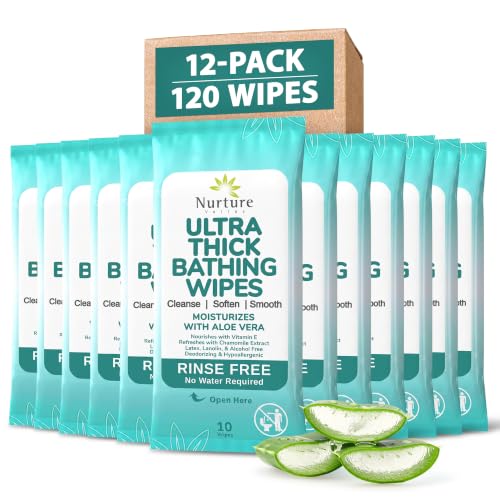
Some are a large 8 x 12 inches, with aloe vera and vitamin E added. These suit bathing, cleansing, and incontinence care, and they come in a dispensing pack that keeps the wipes ready to use.
Others are a square 8 x 8 inches, soft and medium weight, with a no-rinse formula that is antibacterial, hypoallergenic, and pH-balanced. They are just damp enough to do the job, so you get less wetness on the bed sheets.
One extra-thick style measures 9 x 9 inches. It is also pH-balanced and hypoallergenic, and free of lanolin, latex, and alcohol.
Another kind is thick and soft, 8 x 8 inches, and doesn’t roll up as you wipe. You can warm it in the microwave first for a more relaxing bed bath. Do that in 15-second intervals, and test the wipe on your inner wrist so no one gets scalded.
Some wipes are perfume-free, and some carry a light fragrance. Some are made to be flushed, and the maker says they are safe for sewers and septic systems. A slim, resealable pack is easy to carry, though the wipes in it are smaller than many others.
That last point is the trade-off to keep in mind. Many of these wipes are smaller than the 8 x 12 size you may be aiming for, so check the measurements before you buy.
Your Caregiver Checklist: 5 Criteria Before You Buy
The next time you’re evaluating no-rinse body wipes for elderly care, run through this checklist before adding anything to your cart:
- ✅ Size: At least 8×12 inches — designed for adult full-body care
- ✅ GSM Thickness: 60 GSM or higher — holds together through a full session
- ✅ pH Balance: Labeled alcohol-free, hypoallergenic, and pH-balanced
- ✅ Scent: Fragrance-free — especially for seniors with sensitive skin, respiratory conditions, or dementia
- ✅ Packaging: Reliable reseal mechanism — verified by caregiver reviews
Save this checklist to your caregiving board on Pinterest so you have it ready whenever you’re evaluating products.
The No-Rinse Body Wipe Buyer’s Checklist: 5 Things Every Caregiver Should Verify Before Buying
Download this five-point checklist to confidently select no-rinse body wipes that won’t tear, irritate aging skin, or waste your money—so you can focus on delivering comfortable, dignified care instead of managing product failures.
Choosing With Confidence Makes Caregiving a Little Lighter
Knowing what to look for transforms an overwhelming product search into a clear, confident decision. Size, GSM thickness, pH balance, scent, and resealable packaging — each one of these criteria protects both your time and your loved one’s comfort and dignity.
No-rinse body wipes for elderly care aren’t a workaround. They’re a professional-grade tool that belongs in every caregiver’s routine — right alongside the shower chairs, non-slip bath mats, and handheld showerheads that make bathing safer on the days when it is possible.
You’re doing meaningful, demanding work. Having the right tools at hand — tools you’ve chosen thoughtfully — makes that work a little lighter.
I’d love to hear from you: which of these five features has made the biggest difference in your own caregiving experience? Share your thoughts in the comments below. Your insight might be exactly what another caregiver needs to make a better choice today.