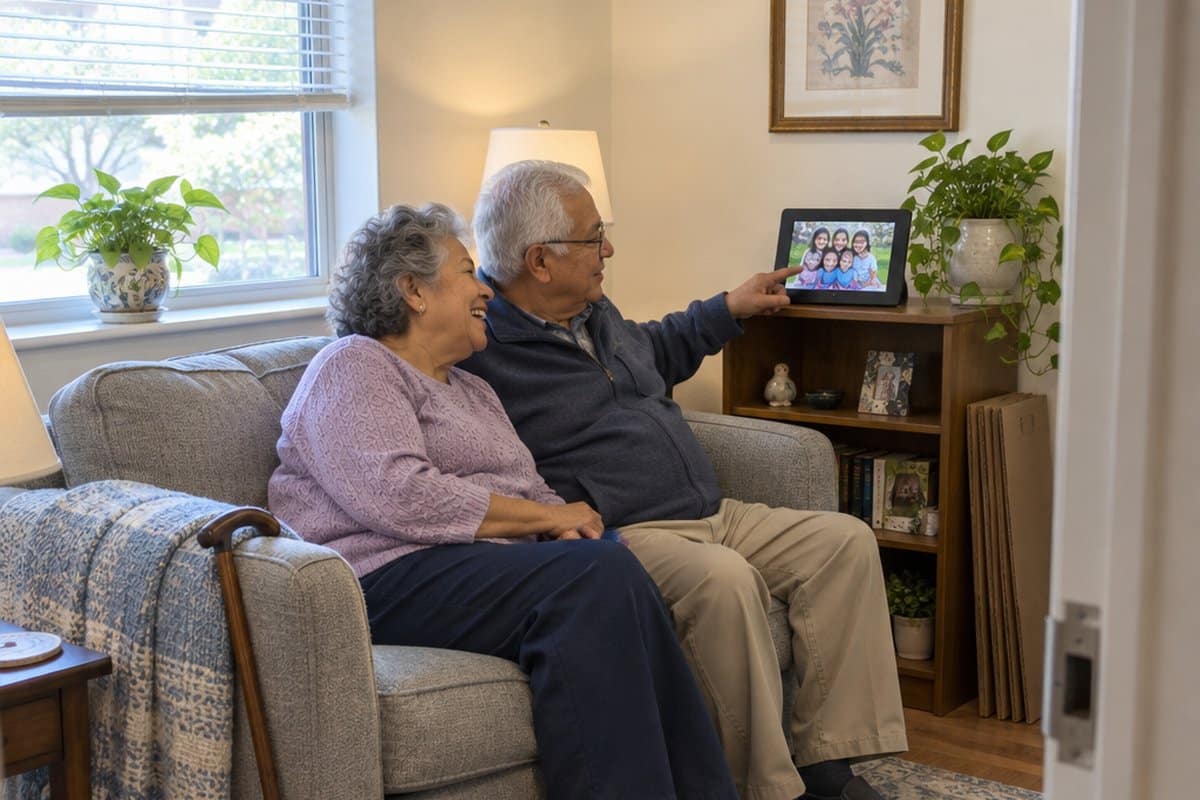
If you want the short list, these are my top assisted living packing picks for move-in day, and you’ll find the details on each one further down.




Families put so much effort into choosing an assisted living community, then very little into deciding what to bring. I’ve seen that gap cause more tears than the move itself, and it is almost always preventable.
Before you pack, it also helps to know the house rules, so here is what you are actually allowed to do in assisted living, from pets to alcohol.
This guide covers what to bring, what to leave behind, and how to make the room feel like home from the first day.
Assisted Living Move-In Checklist: Pack Right the First Time
Download our free guide of conversation starters designed specifically for older adults to reconnect and deepen relationships with family and friends—no awkward silences or forced small talk required.
The Room Size Reality Check — Measure Before You Move a Single Item

The single most empowering thing you can do before packing a single box is to find out exactly how much space you’re working with.
Room sizes vary a lot from one community to the next, so ask the facility for the exact measurements of your loved one’s room. That sounds like a lot until you’re standing in it with a full bedroom set.
Once the furniture is sorted, don’t forget the little things, like the grooming tools that matter for a parent moving to assisted living, which are easy to overlook and make daily routines easier.
What Families Consistently Underestimate
Emotional attachment drives overpacking. Families want to bring everything because it feels like reassurance — for themselves as much as for their loved one. The impulse is loving. The result is chaos.
Steps to Take Before Move-In Day
- Call the facility and request the exact room dimensions — most will provide a floor plan
- Ask what furniture is already provided — beds, dressers, and chairs are often included, and duplicating them wastes precious space
- Sketch a simple layout or use a free room-planning app to map furniture placement before anything leaves the house
- Confirm electrical outlet locations — this affects where lamps, chargers, and small appliances will realistically live
Knowing the space in advance isn’t pessimistic — it’s how you avoid the single most common move-in mistake. Understanding how an unsafe or cluttered environment affects a senior’s sense of security is a good reminder of why getting the room layout right matters so much.
Action step: Call the facility this week. Ask for the room dimensions and a list of what’s already provided. Sketch your layout before packing anything.
Drawer Organizer Sets
Drawers go quickly in a small room, and dividers keep socks, undergarments, and small personal items from turning into one big pile. They only help if the drawers are a decent size, so get the measurements from the facility before you buy.
The Must-Bring List — Comfort Anchors, Personal Essentials, and Items That Actually Help

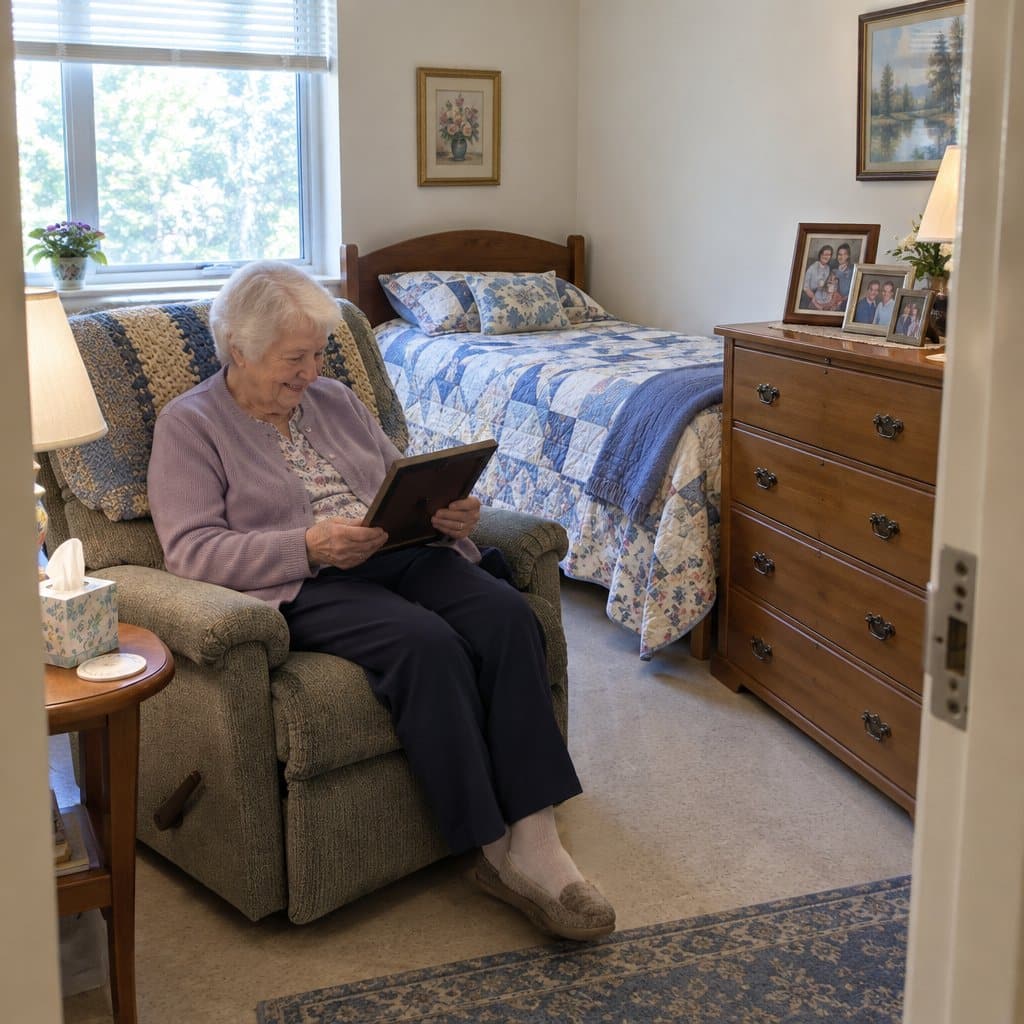
The right items don’t fill a room — they make it feel like home. A curated, intentional selection works far better than bringing everything from the old house.
Comfort Anchors (Pick 3–5 That Carry the Most Meaning)
- A favorite chair or recliner (if it fits — measure first)
- Familiar bedding in their preferred colors or patterns
- A beloved lamp, clock, or small piece of furniture that carries sensory memory
- A few pieces of meaningful artwork or framed photos
These items do the emotional heavy lifting. They signal: this is still my space.
Personal Identity Items
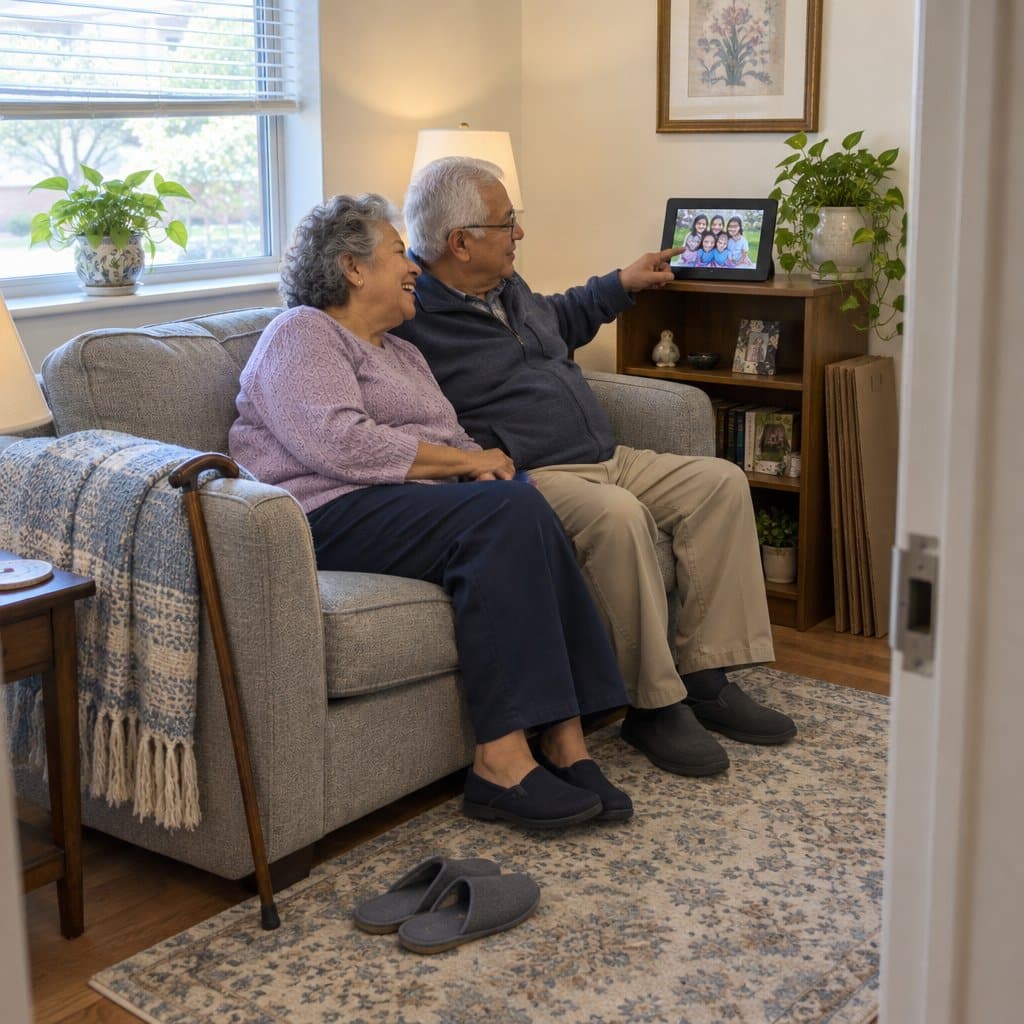
- A small curated collection of family photos — or better yet, a pre-loaded digital photo frame set up with rotating family pictures before move-in day. It provides immediate warmth and requires zero wall space.
- Two to three meaningful keepsakes that reflect who this person is — not just where they are
- A memory book or small scrapbook if photos can’t all make the move
Wifi Digital Photo Frames
A digital photo frame holds a whole album without taking up wall space, and a wifi model lets family send new pictures after move-in day. It does need a wifi connection in the room, so ask the facility about that first.
Practical Daily Essentials
- Clothing (labeled — more on this in Section 4), sized to what actually fits in the provided storage
- Personal care items: toiletries, skincare, grooming tools
- Medications and medical supplies — coordinate with the facility on what they manage vs. what stays in the room
- Comfortable, non-slip footwear. Preventing nighttime falls starts with the right shoes and a familiar, uncluttered floor plan.
Connection Items
- A pre-loaded tablet or simplified smartphone for video calls
- A simple written address book or contact card — don’t assume they’ll always have their phone nearby
- A reliable alarm clock with large numbers — something familiar from home if possible
The First-Week Essentials Bag
Pack one clearly labeled bag with everything needed immediately on day one:
- Favorite snacks or a comfort food item
- Phone charger
- Basic toiletries
- A comfort item (a familiar throw blanket, a small meaningful object)
This bag prevents the ‘where did I pack it?’ panic when everything else is in boxes.
Action step: Create a short ‘comfort anchor’ list with your loved one — ask them which five to ten items feel most like home. Their answers may surprise you.
The Do-Not-Bring List — What Families Insist On That Causes Problems

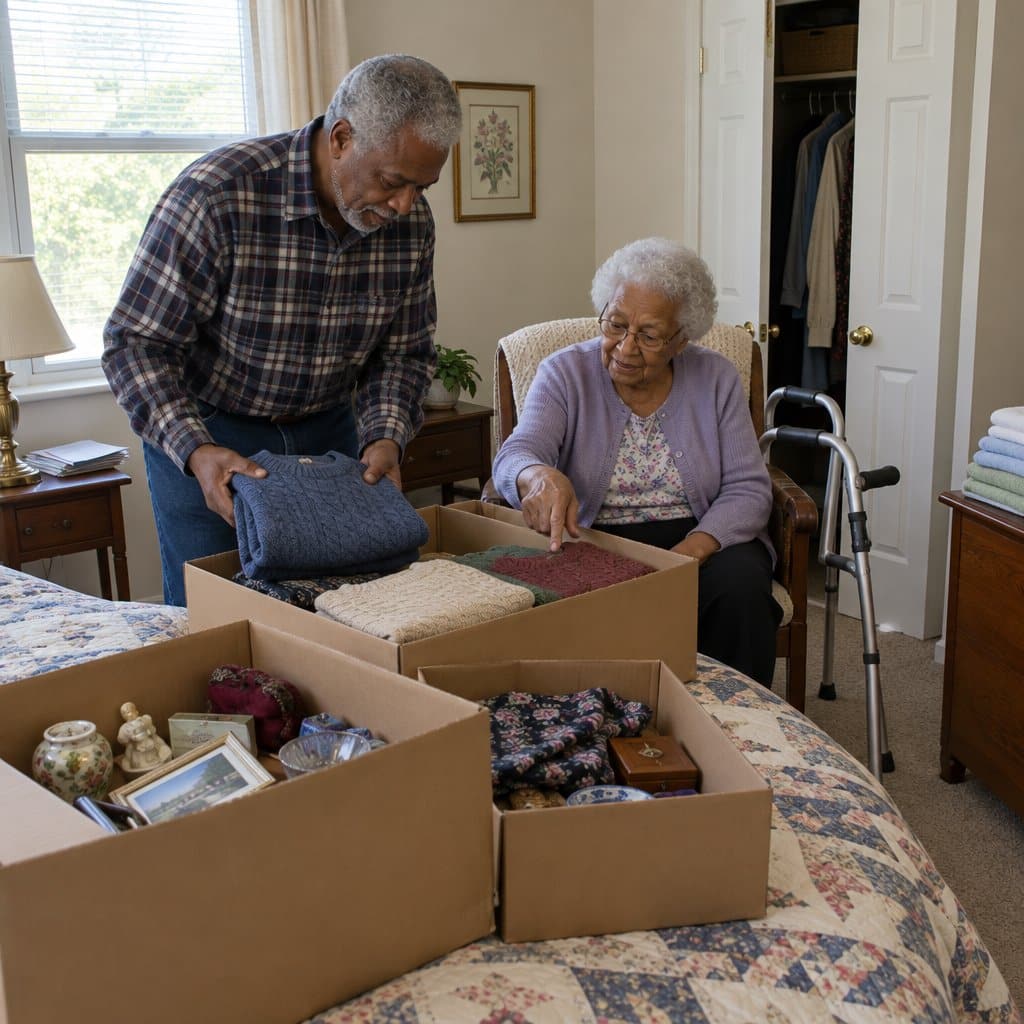
Overpacking is the most common move-in mistake — and it almost always comes from love. That doesn’t make it less disruptive.
Leave These Behind
- Large furniture that overwhelms the room or creates fall hazards — bulky recliners that don’t fit, oversized dressers, extra side tables that block walking paths
- Irreplaceable valuables — jewelry, family heirlooms, sentimental items with high risk of loss or damage in a communal setting. Keep these safe at home or with a trusted family member.
- Excessive clothing — most facilities recommend a streamlined wardrobe that fits available storage. Large wardrobes create lost laundry and closet chaos.
- Extension cords and personal appliances that may violate the facility’s safety policies. Always check the written policy before packing anything with a cord.
- Duplicate items the facility already provides
Here’s something worth sitting with: a room packed floor-to-ceiling doesn’t feel like home — it feels like a storage unit in transition. A room with breathing space, familiar anchors, and thoughtful arrangement settles a person emotionally far faster.
Leaving things behind isn’t abandonment. It’s a gift of clarity.
Want more practical guidance for navigating caregiving transitions with confidence? Subscribe to our newsletter for trusted, experience-tested advice delivered directly to your inbox.
Action step: Before packing anything, request the facility’s written policy on personal belongings. Ask specifically about prohibited items, storage limitations, and what happens to items families decide not to keep in the room.

The Labeling System That Prevents Lost Items — and Preserves Peace of Mind

Lost personal items are one of the most frustrating and emotionally charged experiences in assisted living. A simple labeling system goes a long way toward preventing it.
Why Items Go Missing
Shared laundry facilities, multiple caregivers, and similar belongings among residents create an environment where unlabeled items disappear quickly. This isn’t negligence — it’s the reality of communal living.
What Needs to Be Labeled
- All clothing and shoes
- Personal care items
- Glasses cases and hearing aids
- Assistive devices (canes, walkers, rollators)
- Electronics and chargers
- Any item that leaves the room regularly
Most Effective Labeling Methods
- Iron-on or heat-transfer name labels for clothing and fabric items — these survive repeated washing far better than written tags
- Waterproof adhesive labels for hard surfaces: glasses cases, toiletry bottles, electronics
- Engraving for durable valuables that justify the investment. For hearing aids and medical devices, ask the audiologist or supplier how to mark them safely.
Consider involving your loved one in choosing a label style or color. What feels clinical to a caregiver can feel personalizing to the person whose name is going on everything.
Iron-On Clothing Labels
Name labels on every piece of clothing are what keep a favorite sweater from walking off in the shared laundry. Iron-on labels take a little time to apply, so do them before move-in day, and know they won’t suit every fabric, so check the care tag first.
Digital Calendar and Reminder Display
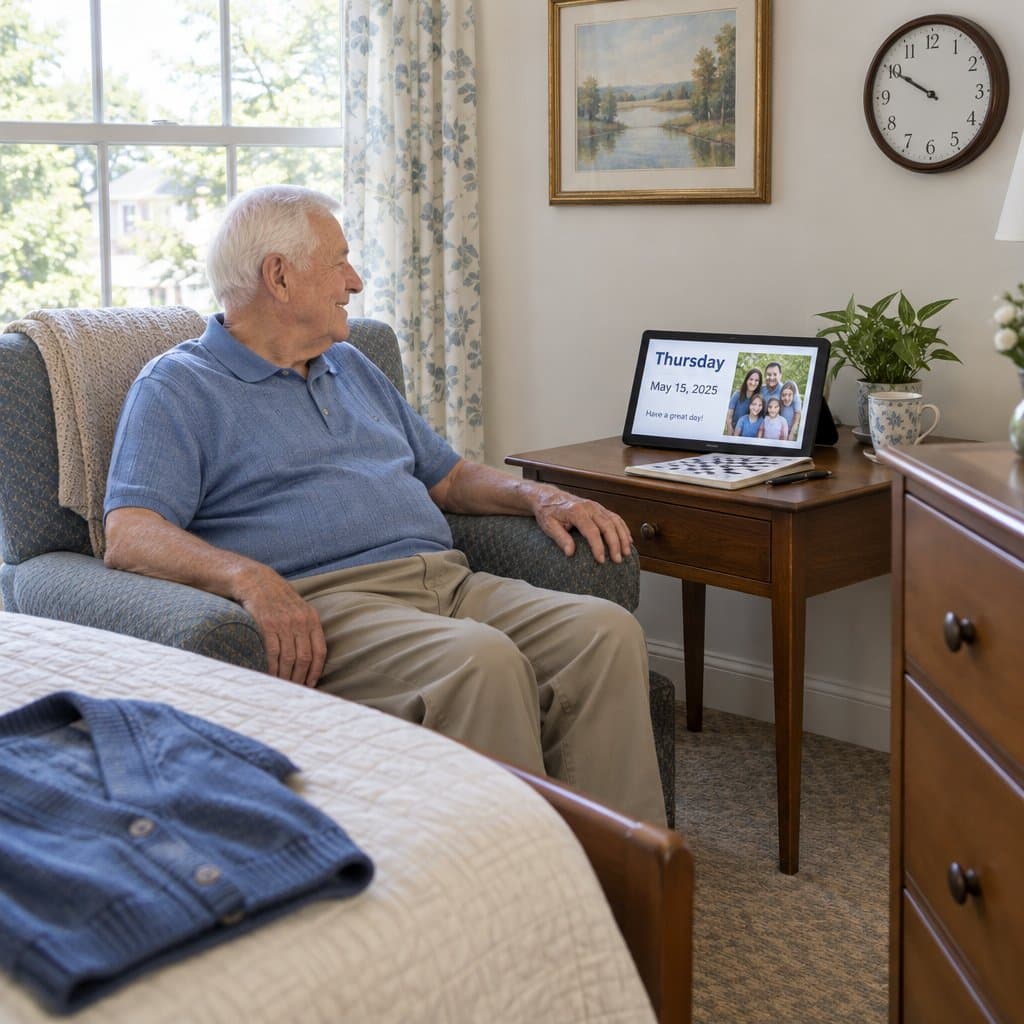
Once the labels are on and the boxes are unpacked, there is one more thing that causes trouble: the days start to blur together. In a new place, the routine is different. Meals, activities, and visits all happen on a new schedule. A digital calendar and reminder display is a screen that sits on a shelf or table and shows the day, the date, and whatever you want to tell your loved one. Family can add appointments, short messages, and photos from their own phone, even from far away.
Here is what to look for. The day and date should be in large print that is easy to read, with the word for the day spelled out (“Tuesday,” not “Tue”). It should be simple to set up, and it should not need your loved one to touch anything or learn anything. Check whether it needs Wi-Fi, because some assisted living buildings have weak signal in the rooms. Check whether there is a monthly fee, since some of these come with a subscription. Also ask the facility whether a screen is allowed on the wall or the nightstand. The downside is that it is one more thing to plug in. It also only helps if someone in the family actually sends messages, so it works best when a few people share the job.
Memoryboard Digital Calendar


The Memoryboard is a digital calendar and reminder display. Family members send messages, reminders, and photos to it from their phones, wherever they are.
It suits a family that wants to stay in the daily picture after a move. A note about the afternoon activity, a reminder that you are visiting Thursday, or a new photo of the grandchildren can show up on the display without anyone having to call. For someone settling into a new room, that steady thread of contact can make the place feel less strange.
The company says there is no subscription required, and it offers a 120-day return window. Both are worth knowing about before you buy.
The trade-off is that it only works as well as the people sending to it. If your family is not going to add messages and reminders regularly, it becomes a plain screen on a shelf. It also needs a family member comfortable with the phone side of things to run it.
This connects to a broader truth about the transition: staying connected and feeling seen in a new environment matters as much as any physical object in the room.
Action step: Order labels at least one to two weeks before move-in day. Label everything before the first item enters the facility.

What to Do With Treasured Items That Can’t Come — Storage, Rotation, and Honoring What Matters
‘It can’t come with you’ doesn’t have to mean ‘it’s gone.’ A thoughtful plan for treasured items reduces grief, preserves dignity, and keeps the door open.
The Rotation Strategy
Instead of forcing a decision between ‘bring it’ and ‘lose it,’ consider a rotation system: keep a small selection of treasured items in the room and swap them out monthly or seasonally. The room stays fresh, and the connection to meaningful items stays alive.
Other Options for Items That Don’t Fit
- Climate-controlled storage for larger furniture or items families aren’t ready to make permanent decisions about
- Gifting to family members before the move — frame it as sharing a legacy, not clearing a house. This can be a genuinely meaningful conversation.
- A memory book or digital archive of items that can’t make the move — photograph heirlooms with their stories written alongside them. This preserves the item’s meaning even when the object isn’t present.
- Compact drawer organizers and small storage solutions help maximize the room’s limited storage and keep daily essentials tidy and accessible


How to Have These Conversations Well
Lead with curiosity and choice, not efficiency. Instead of ‘we need to decide what to do with this,’ try ‘which of these would you most want in your new room?’ Small language shifts make an enormous difference in how the conversation feels.
Involving your loved one in this kind of decision-making honors their autonomy at a moment when they may feel like things are happening to them rather than with them.
The goal isn’t to get every possession into one room. The goal is to make sure your loved one feels seen, valued, and at home.
Action step: Schedule a specific conversation focused entirely on which treasured items they most want with them. Frame it as building their new space together — not deciding what stays behind.
Assisted Living Move-In Checklist: Pack Right the First Time
Download our free guide of conversation starters designed specifically for older adults to reconnect and deepen relationships with family and friends—no awkward silences or forced small talk required.
Making Move-In Day the Beginning of Something Good
The families who navigate this transition most gracefully aren’t the ones who bring the most — they’re the ones who bring the right things, plan ahead, and involve their loved one in every decision they can.
Move-in day doesn’t have to be a moment of loss. With the right preparation, it can be the beginning of something genuinely good: a space that’s safe, personal, and recognizably home.
Start with one step this week:
- Call the facility and ask for room dimensions
- Order labels so they arrive before move-in day
- Sit down with your loved one and ask which five items feel most like home to them
Small steps taken now prevent big tears on moving day.
If you’re also thinking about how to stay connected with your loved one after the move and helping them adjust to a new place, that matters just as much as the packing list.
What’s one thing you’re unsure about bringing — or leaving behind? Share your question in the comments. Someone else is wondering the same thing.