
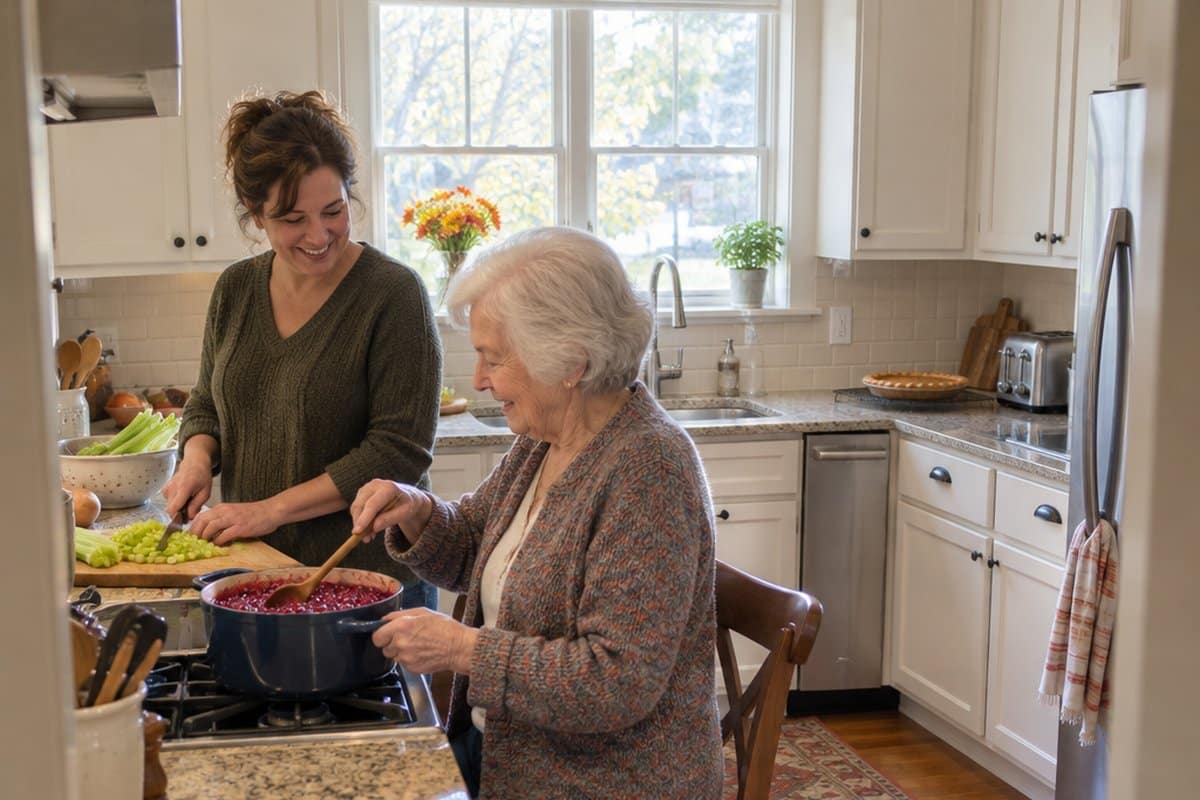
This year, create a memorable day with activities that everyone, including seniors, can enjoy.
These insights make Thanksgiving dinner easier for caregivers and seniors alike making it possible to focus more on enjoying precious moments together.
Here are my detailed strategies to make Thanksgiving a special time for everyone.
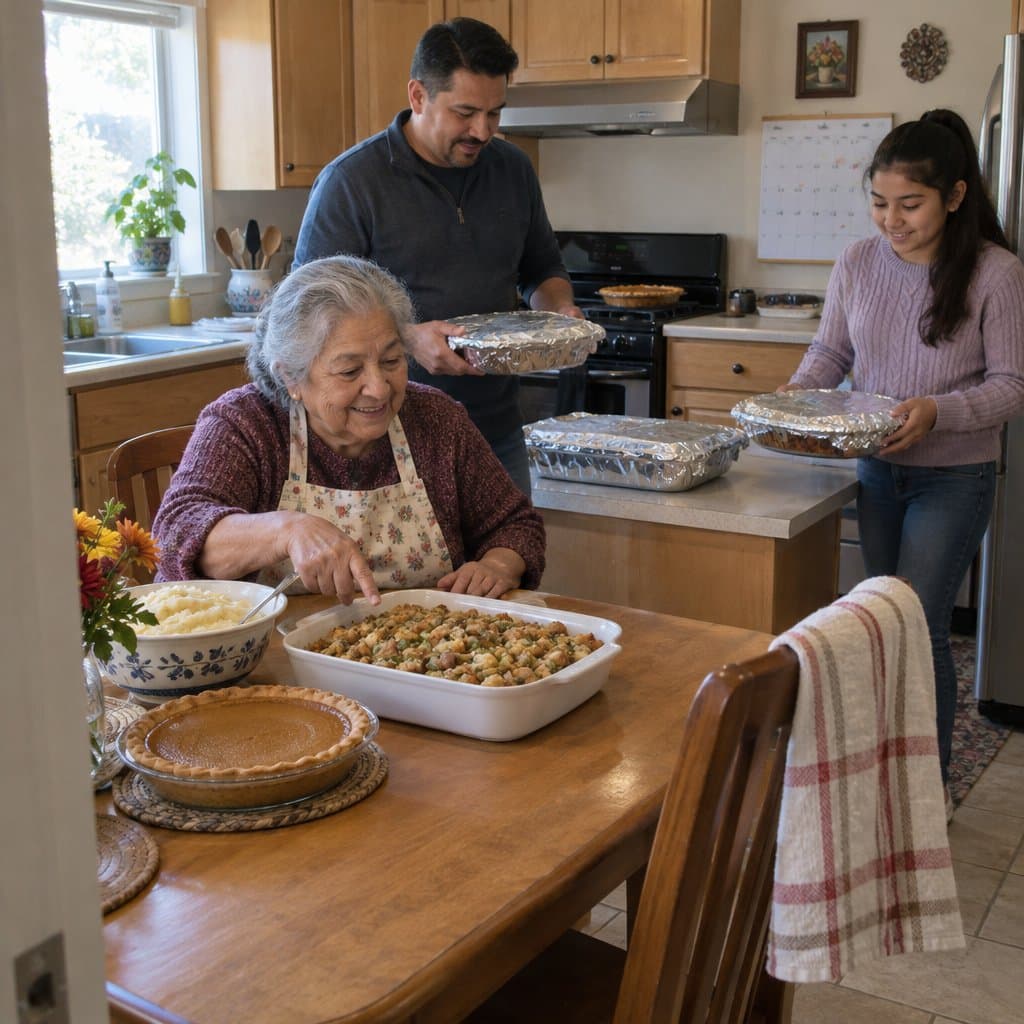
Health And Safety
When family visits for Thanksgiving, keeping everyone safe and healthy is key, especially for seniors. It’s important to have a plan and make sure everyone knows it.
Maintain a Clean Kitchen
Kitchen safety is vital during meal prep. Don’t leave cooking food unattended. Keep flammable items like dishtowels and paper away from the stove. Have a fire extinguisher on hand and make sure everyone knows where it is. Check for sharp knives and use them carefully. You might consider getting cut-resistant gloves.
Limit Personal Contact
If you’re worried about germs, it’s okay to limit personal contact. Use air hugs, fist bumps, or waves instead of handshakes or hugs. Place hand sanitizers around the house. Encourage guests to wash hands frequently, especially before eating.
Safe Spaces for Kids
Kids love to explore, but safety matters. Establish a play area where they can have fun without getting hurt. Keep breakables and sharp objects out of reach. If you have a pet, make sure kids know how to interact with them safely.
Comfortable Environment
Create a cozy environment for everyone. Have plenty of seating with cushions for comfort. Keep walkways clear of obstacles. Consider using nightlights in dim areas like hallways to prevent trips or falls.
Keeping everyone safe helps make a happy holiday for all. By planning ahead, from the menu to the holiday decorations, you can enjoy Thanksgiving with more peace of mind.
Meal Preparation
Getting ready for Thanksgiving dinner can be a big task. Simplifying can make the day easier and more enjoyable for everyone, especially seniors.
How about starting with a simple menu? A few main dishes and sides can take some stress off your shoulders.
Make a Plan
Creating a plan helps keep everything organized. Write down all the dishes you want to serve. Think about whether some items can be baked ahead of time. Baking pies or casseroles a day early can save energy and time on the big day.
Consider Ordering
Ordering some of your Thanksgiving menu items can also be a lifesaver. Whether it’s a side dish or dessert, ordering part of the meal can ease your workload. Local stores or online services offer great options for prepared meals.
Delegate Tasks
Don’t hesitate to ask for help. Have everyone bring a dish. Family members or friends can pitch in with cooking or setting the table. You can form a prep team and divide the tasks among them. This not only lightens your load but also makes meal preparation a fun group activity.
Technology and Tools
Leverage tools to simplify meal prep. Tools like slow cookers, food processors, or even timers can assist in the cooking process. You can also use shopping list apps to keep track of ingredients.
Enjoy the Day
Meal preparation should be about making wonderful meals while also enjoying the day with loved ones. With these tips, Thanksgiving dinner can be a delightful experience. Relax, cook, and savor the moments.
When Your Mother Wants to Keep Cooking Thanksgiving Dinner
Say your mother announces she is hosting Thanksgiving again, and you are worried about her in the kitchen. Cooking the holiday meal is often tied to who she is. It can be how she shows love and keeps family traditions going, so “you can’t do this anymore” can feel like an attack on her identity. If you want practical ways to keep her in the kitchen and keep everyone safe, see these Thanksgiving safety solutions when aging parents want to cook.
First, sort real red flags from general worry. Real ones include forgetting food on the stove or leaving burners on, confusion over recipes she has made for years, trouble lifting heavy pots or the turkey, balance problems near a hot stove, and food left out too long. If nothing specific has happened and she is cooking well, your anxiety may need more attention than her abilities do.
Plan the talk 4 to 6 weeks ahead, in a calm moment when she is rested. Never raise it right after an incident. Write down what you have seen, with dates, and decide what is negotiable and what is not. Bring options she can choose from, such as a few ways to remind her without nagging.
Start with what the tradition means to her, then offer teamwork. Try something like: “I know how much hosting means to you, and I want to help keep that going. Can we talk about making this year easier?” Don’t compare her to other people, don’t pile on several concerns, and don’t use ultimatums. If memory is part of your worry, these communication strategies for dementia can help.
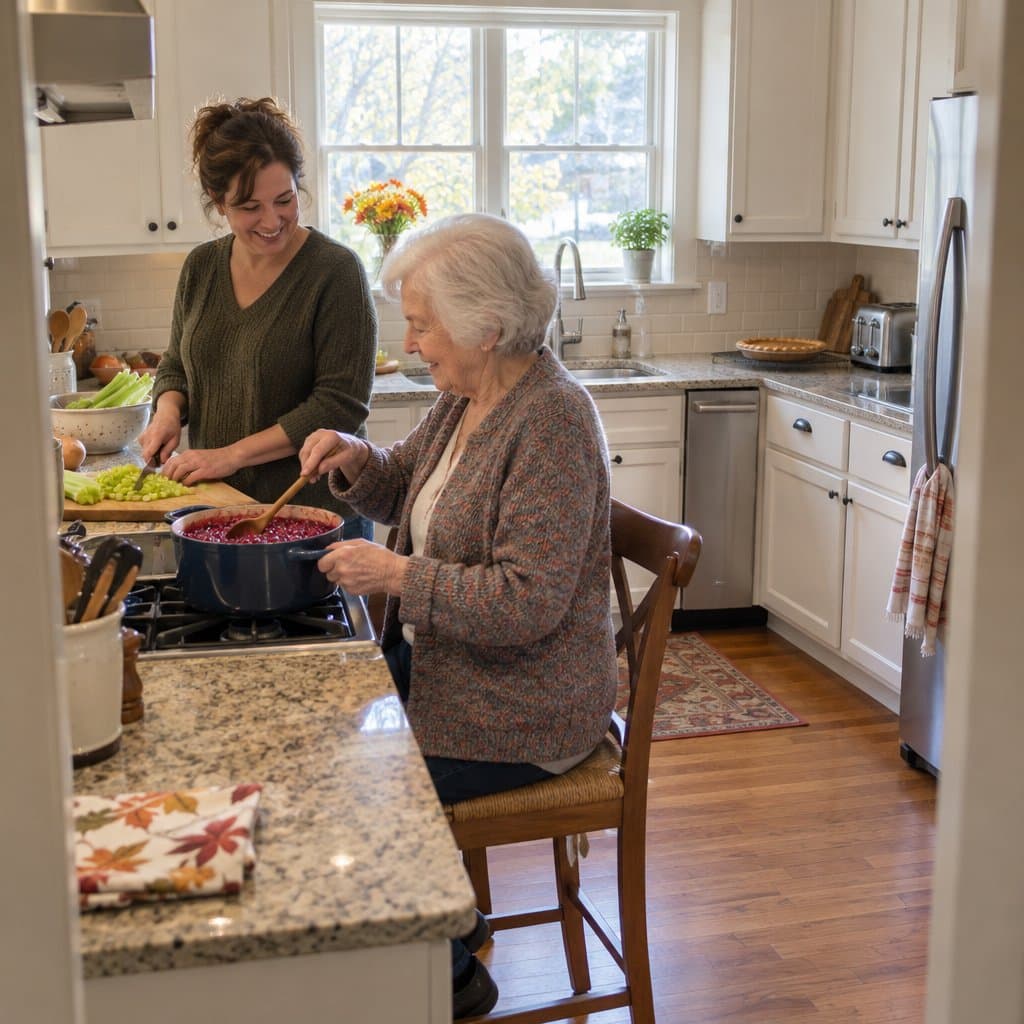
Then divide the dishes. Take over the big turkey, heavy roasting pans, anything that needs long standing, deep frying, and dishes that must finish at the same moment. Let her keep her signature dish, and things she can do seated, like cranberry sauce. She can also direct while you do the physical work.
Some safety steps need no discussion. Set backup timers, clear tripping hazards, light the kitchen well, and keep a fire extinguisher handy. A stove monitor that shuts off burners is worth considering, and so are simple, passive safety devices if she dislikes new technology. Have someone with her, and make sure the family is on the same page about who handles what. If you are far away, these long-distance ideas may help.
If she insists on cooking alone, ask for three minimums: she calls you when she starts and finishes, she uses timers for everything, and a neighbor or friend checks in once. Keep a backup meal in your own refrigerator, and know which dishes can be dropped. If she refuses everything, you can suggest a practice meal, ask her doctor to bring up kitchen safety, or move dinner to your house.
One trade-off: the gentle approach takes time and patience, and it may not be settled in one conversation. Think in years, with her cooking a little less and guiding a little more as time goes on.
Mobility And Accessibility
When planning a Thanksgiving celebration, ensuring that seniors can move around comfortably is key. Start by creating clear walkways. Remove rugs that could be tripping hazards and ensure that paths are wide enough for walkers or wheelchairs if needed.
Think about seating arrangements. Place chairs with armrests in various spots to offer rest opportunities. This makes it easier for seniors to sit down and stand up. For dining, consider a foldable table that allows more flexible seating.
Accessible restrooms are a must. Ensure that pathways to the bathroom are free from obstacles. Adding grab bars in bathrooms can offer extra support. If possible, designate a bathroom on the same floor to avoid stairs.
Consider mobility aids like portable ramps and electric scooters for outdoor events. These can make it easier for seniors to enjoy backyard barbecues or a crisp autumn walk.
Finally, ask yourself, what would make the environment more comfortable for everyone? By keeping mobility and accessibility in mind, everyone can share in the joy of Thanksgiving without worry.
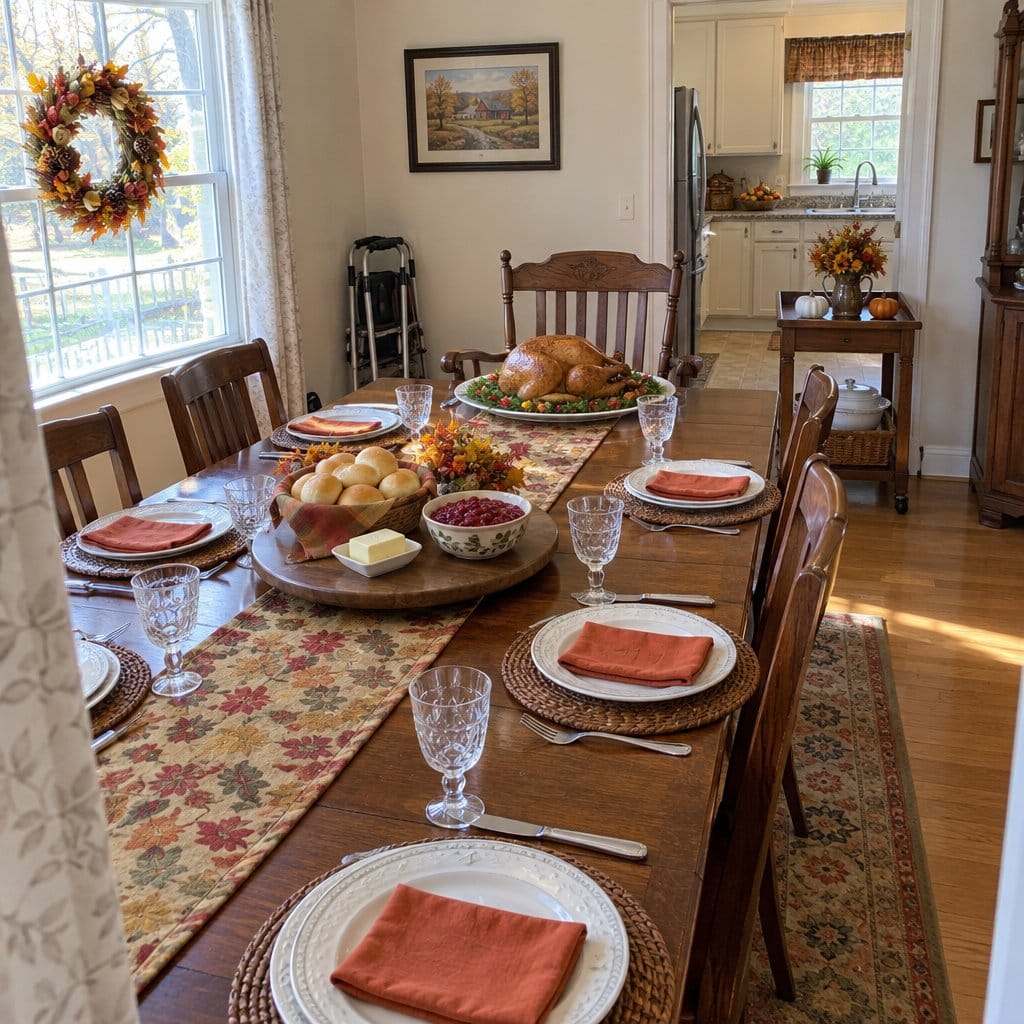
Setting Up the Table to Save Your Energy
Hosting doesn’t have to cost you a sore back. A few setup choices made before anyone arrives can cut a lot of lifting, bending, and walking.
Start with your own chair. Place it no more than three feet from the kitchen entrance, so you aren’t adding a dozen extra steps every time you need something. If you use a walker or cane, move the side table now and leave yourself a clear path. That is part of a wider fall prevention plan for your home.
Put the turkey and the heaviest dishes right in front of your seat, where you can reach them without standing or leaning. Lighter items like rolls, butter, and cranberry sauce can go at the far end for guests to pass. A small side table or rolling cart beside your chair gives dishes a place to land before they go on the table.
A lazy Susan at least 18 inches across saves reaching and passing. Wood or bamboo is sturdy and stays put. On a long table, use two. You can tell guests, “I’m trying something new this year so we can all stay seated and enjoy the meal while it’s hot.”
A buffet moves the carrying to your guests, and most don’t mind. Set it up at a comfortable height, with plates first, then turkey, sides, and silverware and napkins last. If a buffet feels too informal, serve family-style and keep the heavy dishes near you.
Spread the work over a few days:
- Two days before: move furniture, set out serving dishes and utensils, and rest between tasks.
- One day before: do the prep you can do seated, like chopping and assembling casseroles. If your hands hurt, kitchen tools made for arthritic hands can help.
- Thanksgiving morning: finishing touches only, and sit down every 20 to 30 minutes.
For getting dishes to the table, a rolling cart with sturdy wheels, a flat top, and a lower shelf carries several dishes in one trip. Lightweight cookware eases the load too. Carve the turkey in the kitchen and bring it out on one platter. Gravy can ride in a thermal carafe.
A few small things help. Pre-pour drinks and keep them in the fridge. Use name cards to seat helpers near you. Set up a kids’ table away from the main traffic. Keep a quiet room for 10-minute breaks, and a frozen lasagna on hand as a backup.
One trade-off: a lazy Susan or buffet changes how your table looks, and some families will notice. Be ready to explain it, or serve family-style.
Travel Logistics
Traveling during Thanksgiving presents unique challenges. You’re not alone in facing crowded airports or highways. Careful planning can make a big difference in your travel experience.
Choose Your Travel Method Wisely
Are you flying, driving, or taking a train? Each option has its pros and cons, but comfort and safety should come first.
Flying non-stop flights can help avoid stress from layovers. When driving, rest stops can prevent fatigue and stiffness.
Packing Smart for Comfort
Think of what items make your trip easier. Travel pillow, lightweight blanket, and slip-on shoes? These can make long journeys more bearable. A tablet with your favorite books or audio gives comfort and entertainment.
A checklist ensures you don’t forget anything important. Medications, snacks, and water should be easy to reach.
Using Technology and Apps
Why not use apps to simplify your travel? GPS apps like Google Maps can guide you through traffic. Flight trackers update you with any changes. Alerts can keep you informed about weather conditions impacting your travel.
Accommodation Considerations
While booking a place, what priorities do you have? Ground-floor rooms or elevator access can be crucial if mobility is a concern. Many hotels offer accessible features, so it’s good to ask in advance.
Prepare for the Unexpected
Weather can be unpredictable during the holidays. Packing a small umbrella or raincoat is a simple precaution. Having a backup plan and knowing emergency contacts can make you feel more secure on your journey.
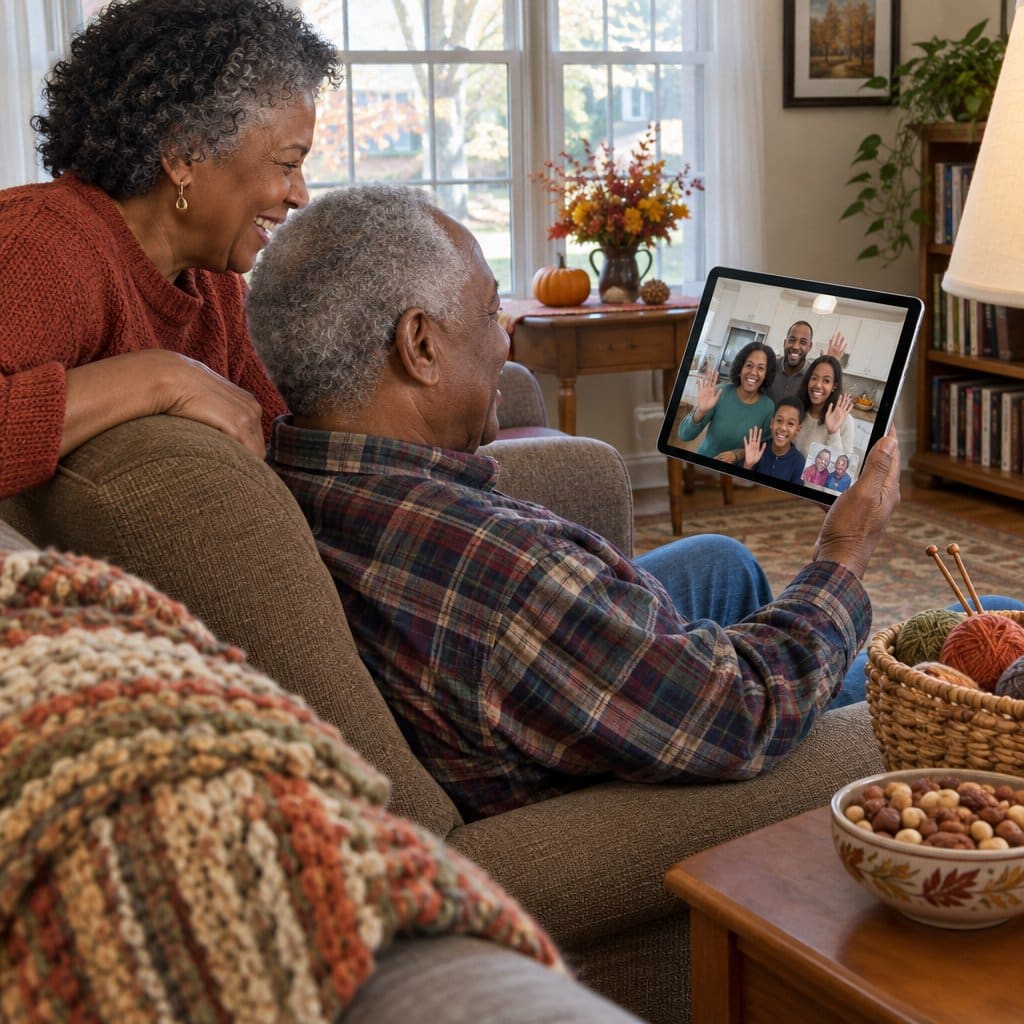
Family Dynamics
Prepare for Reunion
Getting everyone together for Thanksgiving can be heartwarming but sometimes a bit challenging. You might wonder how to keep things light and happy. Consider icebreaker activities like sharing funny memories or organizing a simple board game.
Communication is Key
Think about discussing plans and boundaries with family members ahead of time. Would setting up a family group chat work for you? This way, everyone stays informed and engaged without misunderstandings.
Create a Calm Environment
Setting up designated spaces for relaxation can help. Maybe a cozy corner with books or a quiet room for resting. It helps reduce tension and allows for personal space during hectic times.
Encourage Participation
Getting everyone involved makes a gathering feel more inclusive. Ask if someone would like to lead a Thanksgiving toast or share some fun stories. Potluck-style dinners could also bring a sense of sharing and cooperation.
Use Technology for Connection
Not everyone may be able to attend in person, and that’s okay. Technology can bridge gaps. Video calls are a great way for distant family members to join the celebration, much like the online gatherings many people enjoy the rest of the year. Have you tried apps like Zoom or FaceTime for this?
Embrace Grace and Humor
Accept that not everything will go perfectly. Laugh at small mishaps and offer grace when needed. Sometimes, the best memories come from unexpected moments. Wouldn’t it be nice to look back and laugh together?
Answering Nosy Questions About Living Alone, Driving and Assisted Living
Somewhere between the cranberry sauce and the sweet potatoes, a relative may ask whether you are lonely, whether you should still be driving, or whether it is time to think about assisted living. These questions often come from love, but they can feel like doubt about your judgment.
You can honor the concern without giving up your say in your own life. A simple three-step method works for almost any question: acknowledge, assert, redirect.
First, acknowledge the feeling behind the question by telling them you know they care. Second, assert your boundary by saying you are handling this yourself. Third, steer the talk somewhere neutral, like how their daughter’s soccer season is going.
Living alone
You might answer a loneliness question with a light joke about how busy your book club keeps you. Or you could say you value your independence, you have a strong circle around you, and you will speak up if that changes. A third option is to say your living situation works well, then ask about their new job.
Driving, cooking and daily tasks
For driving, you can tell them you and your doctor talk about it regularly and you are both comfortable. If they keep pressing, say this is not a dinner-table topic and suggest something more fun.
For cooking, mention the new recipe you made last week. For general “can you manage” questions, you might say you have a system that works, and you know how to ask for help if something changes.
Assisted living
You might say you have looked into your options and have a plan for different situations, and right now you are where you want to be. Or tell them that when the time comes, you will talk with your doctor, your friends and yourself first.
If they will not let it go, you can say that decisions about where you live are yours, and you would like them to respect that.
Keeping the peace
If Aunt Martha circles back, give the same answer again. Most people eventually see a closed door.
You may feel guilty afterward, and relatives may grumble that you got defensive. That is normal, and a little temporary discomfort is a fair price for your dignity.
Before Thursday, pick one or two replies that sound like you and say them out loud a few times. Decide which topics are off limits.
The catch is that a firm answer may still leave a relative hurt for a while. Keep the tone warm and the answer short.
Accepting Help Without Losing Control
Say your daughter calls to ask what she can bring, and you answer, “Nothing, I’ve got it covered.” If that answer feels heavier this year, you are not alone. Hosting is how you show love and hold traditions together, so accepting help can feel like giving up your place in the family story.
Here is the twist. Refusing all help hands control to exhaustion. If you do everything, you may spend the meal worn out and thinking about cleanup. If you delegate, you are at the table, enjoying the gathering you planned. Think of yourself as the director, not the person playing every role. Learning to ask for help while keeping your independence is worth the effort.
Start by sorting your tasks into three groups. Non-negotiables carry deep meaning, like your stuffing recipe or carving the turkey. Tasks to hand off drain energy and mean little, like moving furniture, peeling potatoes, and cleanup. The middle ground is supervised help: you taste and adjust while someone else chops and stirs.
Take 10 minutes before the holiday to list every task and mark each one: must do myself, open to help if done my way, or fully delegate.
Be specific when you answer an offer. Try: “I’d love help with dessert. Would you pick up a pie on your way?” If someone wants your job, you can say: “Cooking the turkey is something I enjoy. What would help me more is keeping everyone’s drinks filled so I can stay seated.”
A week or two ahead, send the family a message. Say what you are handling, what you would like help with, and who you are asking for what. Name people and tasks, such as one person bringing two sides and another arriving early to move furniture. The written plan also gives you something to point back to if someone forgets or takes on extra.
On the day, wait 10 minutes before correcting anything. Ask yourself whether it will matter tomorrow. If you feel control slipping, name three things you are grateful for in that moment. Some grief or frustration is normal. For more on staying well at gatherings, see these holiday gathering health tips.
Help respects your leadership, and takeover dismisses it. If someone keeps rearranging your kitchen, say: “I appreciate your help, but I’d like to handle this part myself.” If it continues, be more direct and ask them to step back and let you lead.
One trade-off: you may feel some frustration when things aren’t done your way. Start small with one task, and know that accepting help now can protect your ability to keep hosting later.
Switching to Potluck Hosting Without Family Drama
Say your mom has hosted every holiday for 30 years, and now it is wearing her out. The change doesn’t have to be “Mom stops hosting.” It can be “the family hosts together,” with her still at the center.
Potluck spreads the work, the cost, and the responsibility. It also means the gathering doesn’t fall apart if one person gets sick. Sharing the expense can make holidays easier on everyone, and there is more on managing holiday costs with less stress.
Timing matters. Raise it several months ahead, not right before the holiday or right after a disaster. Pick the family member she trusts most, ideally not the one who would take over hosting. Talk to her alone first, then bring it to the family as a joint proposal.
Frame it as keeping the tradition going for decades and letting her enjoy the day. Avoid “Mom can’t handle this anymore.” If she says it won’t be the same, agree that it will be different, and that being together stays the same. If she worries about losing her role, tell her she is still the host and coordinator, just with a team. If she resists, suggest trying it once. Many older adults find it hard to ask for help without feeling helpless, so patience helps.
Hold the family meeting six to eight weeks ahead. Don’t ask “Who wants to bring what?” That leads to duplicate dishes. Instead, list what is needed (turkey, sides, salad, rolls, desserts, drinks, paper products) and match people to categories. You can also assign specific dishes yourself, or use a sign-up sheet, though someone has to fill any gaps. Put it all in a shared document, and see these tips on getting siblings and family members on the same page. If some siblings won’t help, start with those who will.
Store-bought food, drinks, setup, and cleanup all count as contributions. Give your mom one signature dish she loves, such as her stuffing, and let her approve the menu. Put someone else in charge of timing, and don’t let her clean up. When you check in with her, learn how to remind her without nagging.
Confirm dishes two or three days ahead, and keep a frozen side or dessert as backup. If she heads for the kitchen anyway, say, “Mom, you’re off duty today. Come sit with me.” Afterward, thank her, take photos that highlight her role, and try a gratitude round before the meal.
One trade-off: she may feel sad about the change, and that is normal. Acknowledge it, give her time, and don’t reverse the decision.
Dietary Needs
Eating well matters a great deal for staying healthy. It’s key to adapt traditional Thanksgiving meals so everyone, including seniors, can enjoy them comfortably and healthily.
Shopping List for Senior-Friendly Meals:
- Soft Vegetables: Soft, tender vegetables like roasted carrots, squash, and Brussels sprouts are easier to chew and digest, while still being nutritious. Try roasting them to keep the nutrients intact.
- Lean Proteins: Choose options like turkey breast over skin or fatty cuts, which are lower in fat and easier to digest.
- Whole Grains: Use brown rice or whole grain bread for more fiber. Skipping white bread can help with digestion.
- Low-Sodium Broth: To prepare stuffing or gravy, opt for low-sodium broth. It helps reduce salt intake.
Do you need to cater to specific dietary restrictions?
Plan for guests with lactose intolerance or diabetes by asking ahead what works for them. For instance, you might offer dairy-free mashed potatoes and a lower-sugar dessert, and keep in mind that starchy sides like rolls and stuffing count too for someone with diabetes.
Cooking Tips:
- Small Portions: Serve food in smaller portions to prevent overeating and make it easier to manage.
- Herbs and Spices: Use herbs instead of salt to keep dishes tasty without increasing sodium levels.
Using tools like slow cookers can help keep dishes warm and ensure that food stays tender and flavorful without constant attention. Preparing a senior-friendly Thanksgiving meal doesn’t mean removing favorite dishes—it’s about making subtle changes that keep everyone happy and healthy.
Weather And Transportation
When it comes to Thanksgiving travel, weather can really play a big role in your plans, especially if you’re a senior or have older family members. Winter weather can be unpredictable, with snow and ice causing roads to become dangerous. Why not check the forecast ahead of time with the National Weather Service or your phone’s weather app to stay prepared?
Flying might be an option to consider if driving becomes difficult due to weather. Airports generally have systems to handle snow and ice, though you should expect delays during peak times. Plan plenty of extra time to get through security and find your gate.
Driving Tips:
- Leave Early: In AAA’s Thanksgiving travel forecast, nearly 9 in 10 holiday travelers went by car, and Tuesday and Wednesday afternoons were the most crowded times on the road. Leaving in the morning helps you miss the worst of it.
- Vehicle Safety: Make sure your car is ready for winter by checking the tires, brakes, and oil. A car emergency kit is also a smart idea.
Technology Solutions:
- Navigation Apps: Use apps like Waze or Google Maps to find the quickest route and get live traffic updates.
- Weather Alerts: Apps like AccuWeather can provide you with real-time updates on weather changes.
Considering these tips can make your Thanksgiving travel smoother and help keep you and your loved ones safe. Safe travels!
Rest And Overexertion
Planning your Thanksgiving day is key to avoiding overexertion. Think about your energy levels when deciding how long to stay at gatherings. Need a break? It’s okay to step away from activities and rest for a bit.
Helpful Tips:
- Schedule Breaks: Regular pauses can recharge your energy. Consider a short nap or some quiet time.
- Ask for Help: Is lifting the turkey too hard? Ask a family member to help out. Sharing tasks lightens the load.
- Use Technology: A phone alarm or a smartwatch reminder can prompt you to stop and take it easy.
Imagine you’re at a family dinner, buzzing with energy. A little while later, you might feel tired. Don’t push through it. Instead, plan for this by sitting back and sharing stories with loved ones.
Restful Activities:
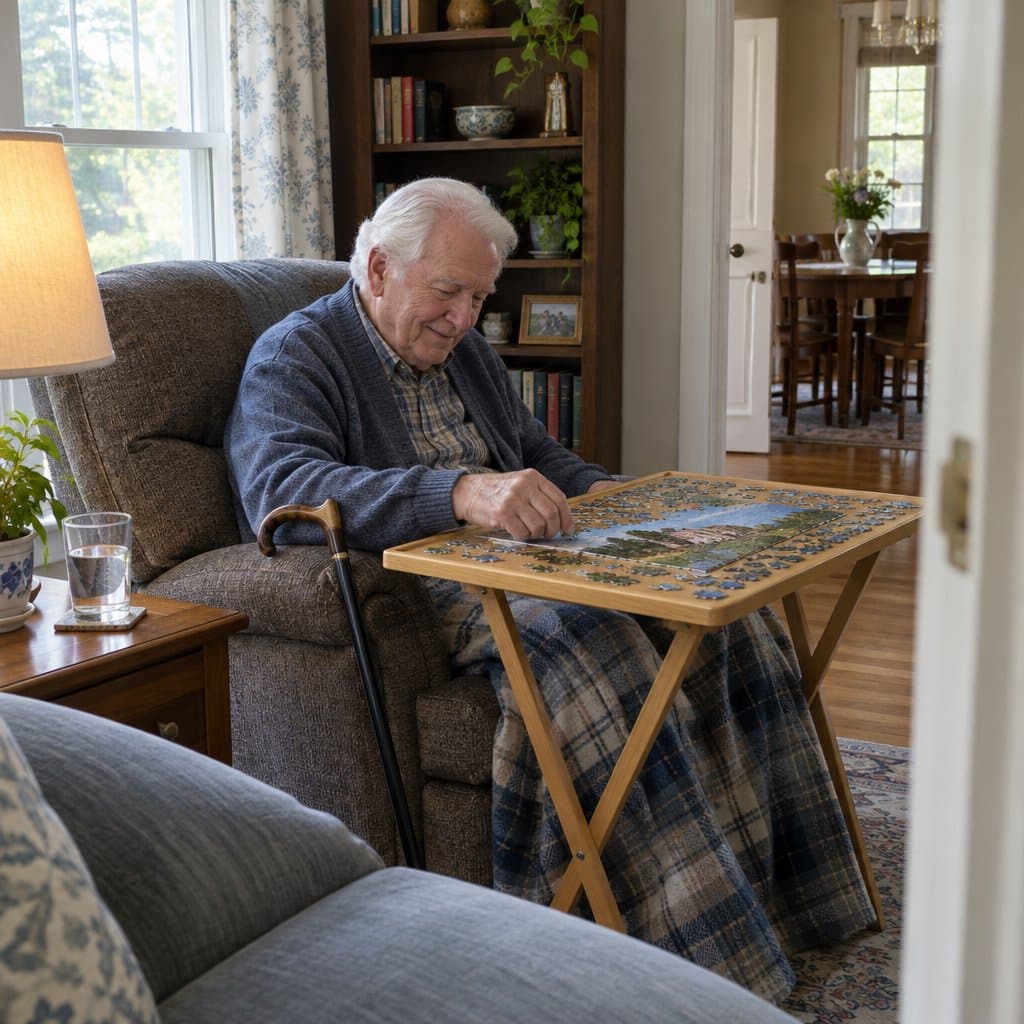
Sometimes a puzzle or book can be restful. How about spending a bit of time relaxing with these? It’s a way to bond without moving too much.
Balance and enjoyment are what matter. Want to join a walk after dinner? Give it a try, but listen to your body. Make your moments count, and you’ll cherish the day without exhaustion!
Backup Plans and Letting Traditions Change Over Time
Hope for the best, but keep a Plan B, and even a Plan C, ready. If the day goes sideways, a backup means your family still gets dinner.
Say your mother gets worn out halfway through cooking. Have someone ready to step in quietly, without making a big production of it. Decide ahead of time which dishes can be dropped or simplified.
Keep a few prepared sides from the grocery store on hand to add without anyone noticing. Keep the number of a good local restaurant handy too. Your family will survive if a dish is missing or swapped.
You might also order a complete backup meal and keep it in your own refrigerator. Your mother never needs to know it exists unless you need it.
Tell the family the plan in advance: if she seems overwhelmed, please don’t make a big deal of it. Her safety and dignity come first, and getting dinner on the table somehow comes second. Decide who takes over the cooking if something does happen, and who stays with her. If you are managing all this from far away, these tips on keeping long-distance aging parents connected may help.
Think of this Thanksgiving as one step in a longer change. This year she cooks some while you help a lot. Next year she directs more and cooks less. Later on, she may be there for the presence and the special touches.
Treat this holiday as a pilot. Notice what worked and what didn’t, then build on it once emotions have settled.
If cooking is no longer safe, help her find other ways to contribute in the kitchen. She can be the menu consultant and official taste tester. She can teach her recipes to the grandchildren, put together a family cookbook, or share stories of past Thanksgivings.
One trade-off: the change will probably come in stages, not all at once. It takes patience with her and with yourself.
Hidden Thanksgiving Dangers: Falls, Medications, Dehydration and Overwhelm
Thanksgiving can bring more risk than usual for older adults. The turkey is not the problem. A familiar house with twenty people moving through it, a disrupted routine, and signs of exhaustion mistaken for holiday excitement are.
Take falls first. Say your mom has lived in her house for thirty years. Today there are coats on the chair she uses to steady herself, the ottoman has moved, and kids are running down the hallway to the bathroom.
Her muscle memory says “turn here, reach there,” but the room has changed. Walk through your home this week and look for choke points. Then set up one safe zone: one chair, one lamp, and one clear path to the bathroom, with no coats, bags, or kids playing. Protect it first on Thursday morning. For year-round ideas, see this fall prevention checklist.
Medications are next. Say your dad takes pills at 8 AM, noon, and 6 PM, but breakfast slides to 10 and dinner lands at 2. Call his doctor’s office and ask which medications have strict timing and which have flexibility.
Set three phone alarms for Thursday: one for you, one for him, and one on a phone that stays in the kitchen. Take a photo of all medications and dosages now, in case you can’t find the pill organizer. An automatic pill dispenser can help if the schedule is complicated all year. Alarms and dispensers can still be missed, so have one person check that each dose was taken, and ask his pharmacist if you’re unsure.
Dehydration is easy to miss. Older adults often don’t feel thirsty, and grazing on salty appetizers makes it worse. Start with a full breakfast at the usual time. Keep a clear water bottle within reach so you can see how much is gone. If his doctor limits fluids, as with heart failure or kidney disease, follow that limit instead. Serve a real lunch at noon, like a sandwich or soup, so there is no long fast before a 2 PM dinner. Other gatherings carry their own risks too, as in these hidden hazards at summer gatherings.
Overwhelm rarely gets announced. Look for someone growing quieter, saying “what?” more often, nodding along, gripping armrests, leaning on furniture, or looking tense around the eyes. Set up a quiet room with a door, comfortable seating, dim light, a bathroom nearby, water, a snack, and a blanket. Then say, “Let’s take a quick break.” Plan thirty minutes of quiet for every two hours of activity. A simple phone call script can help you check in beforehand.
Here is the week: Monday or Tuesday, call the doctor. Wednesday, do the walkthrough, mark the safe zone, fill the water bottle, prep breakfast and lunch, set the alarms, and put the medication photo on your phone’s home screen. Thursday morning, set up the quiet room and review the plan with another adult. If siblings are involved, family caregiver coordination helps everyone stay on the same page.
One trade-off: you can’t prevent every problem, and your loved one may still get tired. The plan lowers the risk, and it asks you to put safety ahead of a perfect dinner.
Loneliness And Memories
Thanksgiving can be a challenging time for many seniors, as memories of past celebrations might remind you of loved ones who are no longer around. This feeling is natural, and it’s okay to feel a mix of happiness and sadness.
How can you cherish these memories while creating new ones? Start by sharing stories. Gather your family around and talk about the funny or heartwarming moments from past Thanksgivings. Invite your loved ones to share their stories too.
Participating in activities can also help. Try out creative outlets like scrapbooking or digital photo albums. These can help keep cherished memories alive while also engaging your mind in something joyful. Plus, sharing these with family reconnects everyone with shared history.
If you’re feeling lonely, consider using technology. Video calls let you connect with family and friends living far away. Apps like Zoom or FaceTime make it easy to share a virtual dinner or just chat.
Do you have a favorite recipe that once belonged to someone special? Cooking it can bring back fond memories. Try involving younger family members, teaching them the recipes and their stories, which might create new traditions.
Finally, activities like crafting Thanksgiving decorations or maintaining a gratitude journal can help shift focus to positive memories. What are you thankful for today? Write it down, and you might just find a comforting balance between the past and the present.
Budget
Creating a budget for Thanksgiving can help you stay on track, especially if you’re living on a fixed income. By planning carefully, you can enjoy a festive holiday without stressing about overspending.
Meal Planning
Start by listing the essential dishes. Do you really need five desserts? Probably not! By narrowing down menu items, you can focus your spending on what truly matters. For instance, a roasted turkey might be the highlight, while sides like mashed potatoes and green beans keep costs low.
Smart Shopping
Check your grocery store’s own app or loyalty card for discounts. If you order groceries online, a browser tool like Honey or a site like RetailMeNot may find a coupon. Make a shopping list to prevent impulse buys, and if possible, watch for sales on non-perishable items weeks ahead.
Decor on a Dime
Decorations don’t need to be expensive. Use nature’s bounty to beautify your space. Collect colorful autumn leaves, pinecones, and acorns for a lovely centerpiece. If you do purchase decor, look for sales or visit dollar stores for budget-friendly choices.
Hosting Tips
Consider a potluck-style dinner, where each guest contributes a dish. This not only cuts costs but also allows everyone to share their favorite recipes, enhancing the holiday spirit. If you’re attending an event rather than hosting, offer to bring a simple side like cranberry sauce or dinner rolls.
Tech Savvy Savings
Using budgeting apps can help keep your finances in check. An app like YNAB (You Need A Budget) lets you track expenses as you go, so you know where your money is going.
By planning carefully and using available tools, you can make your Thanksgiving special without breaking the bank.
Putting Together Your Plan
Planning for Thanksgiving can be enjoyable if you approach it step by step. Start by making a checklist of what you need. Do you have enough dishes and utensils? Will you need additional seating? Consider using a simple spreadsheet or an app like Google Sheets to organize everything.
Create a Menu
Decide on the main course and side dishes. Are you planning a turkey, or perhaps something non-traditional like a vegetarian option? Make sure your menu caters to different dietary needs. Having a plan B is always a good idea!
Shopping List
After setting your menu, make a shopping list. Do you already have some ingredients at home? You can use your phone’s notes app to keep this list handy. Don’t forget beverages – will you serve wine or non-alcoholic drinks?
Delegate Tasks
Why manage everything yourself? Ask family members to bring a dish or help with setup. This not only lightens your load but also makes everyone feel involved. Does someone in the family excel at baking pies?
Timing is Key
Think about timing. When should you start cooking the turkey? Do you need to prep anything the day before? Consider using a smart assistant, like Alexa or Google Home, to set reminders for critical tasks.
Entertainment and Comfort
Ensure your guests feel comfortable. Will you have background music? Setting up a playlist ahead of time can add to the friendly atmosphere. You might even plan some activities or games for everyone to enjoy while waiting for the meal.